CARROLL GARDENS RESIDENCE
When longtime S8A clients invited the firm to join them on their next chapter in Brooklyn, the team was delighted to embark on the journey. Following the passing of a family member, the clients had the opportunity to acquire a building composed of three apartments above an old Italian bakery that has welcomed neighborhood children for generations. With their young family growing, they saw an opportunity to trade the intensity of their former Gramercy neighborhood in Manhattan for a more spacious, grounded environment.
Their vision for the property was both ambitious and intimate: transform the three separate apartments into a single, unified home that could nurture family life, welcome friends, and still offer quiet, personal space for work and retreat. They wanted a modern aesthetic—but one imbued with warmth and character.
Collaborating with Blejer Architecture, S8A undertook a full-scale reimagining of the entire building, reshaping it to meet the family’s evolving needs. With support from the clients, the team curated the selection of finishes and fixtures that expressed their sensibilities, while custom-designed doors and millwork ensured that every space functioned with purpose and precision.
“We feel like we are waking up in a hotel every day.”
A FAMILY HOME GETS A NEW LIFE
This project marked the second Brooklyn townhouse renovation in which S8A partnered with Blejer Architecture. Having collaborated seamlessly on a previous townhouse project, the two studios approached this home as a true partnership. BA guided the overall architectural restoration with careful diligence, allowing S8A to focus on the interior architecture and design. While responsibilities overlapped when needed, the collaboration felt effortless.
The journey to completion included its share of challenges, yet the clients, contractors, and design teams persevered. The result is a home that offers the family generous space to live fully and peacefully, enveloped in warmth and comfort. In the words of the client: “We feel like we are waking up in a hotel every day.”
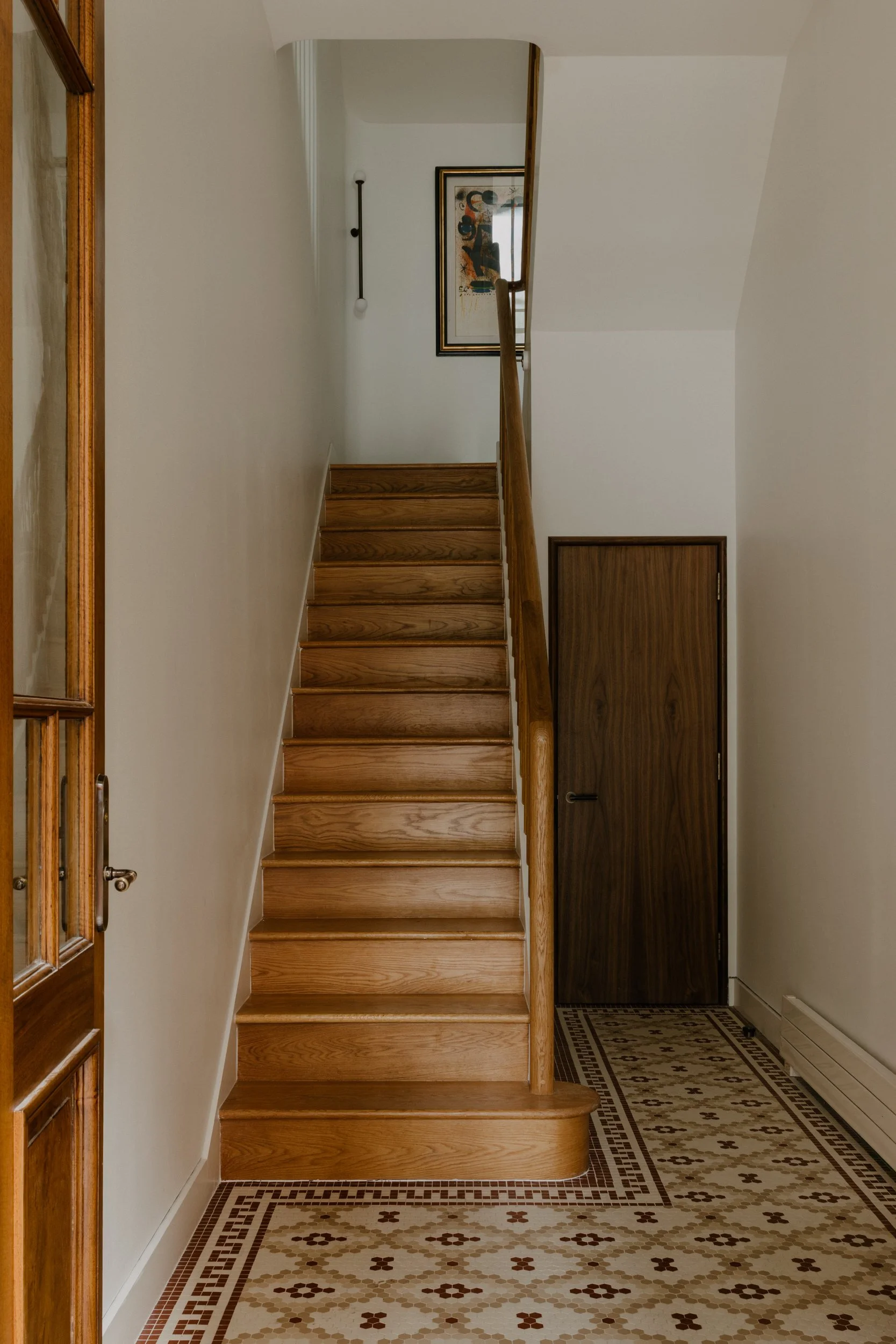
On the ground floor, the space was entirely reimagined to accommodate a new staircase, one shaped by both updated code requirements and a shift in its landing. With the original elements removed, S8A embraced the opportunity to weave history back into the architecture. Carefully curated antiques and bespoke pieces sit alongside newly sourced materials, creating a dialogue between past and present.
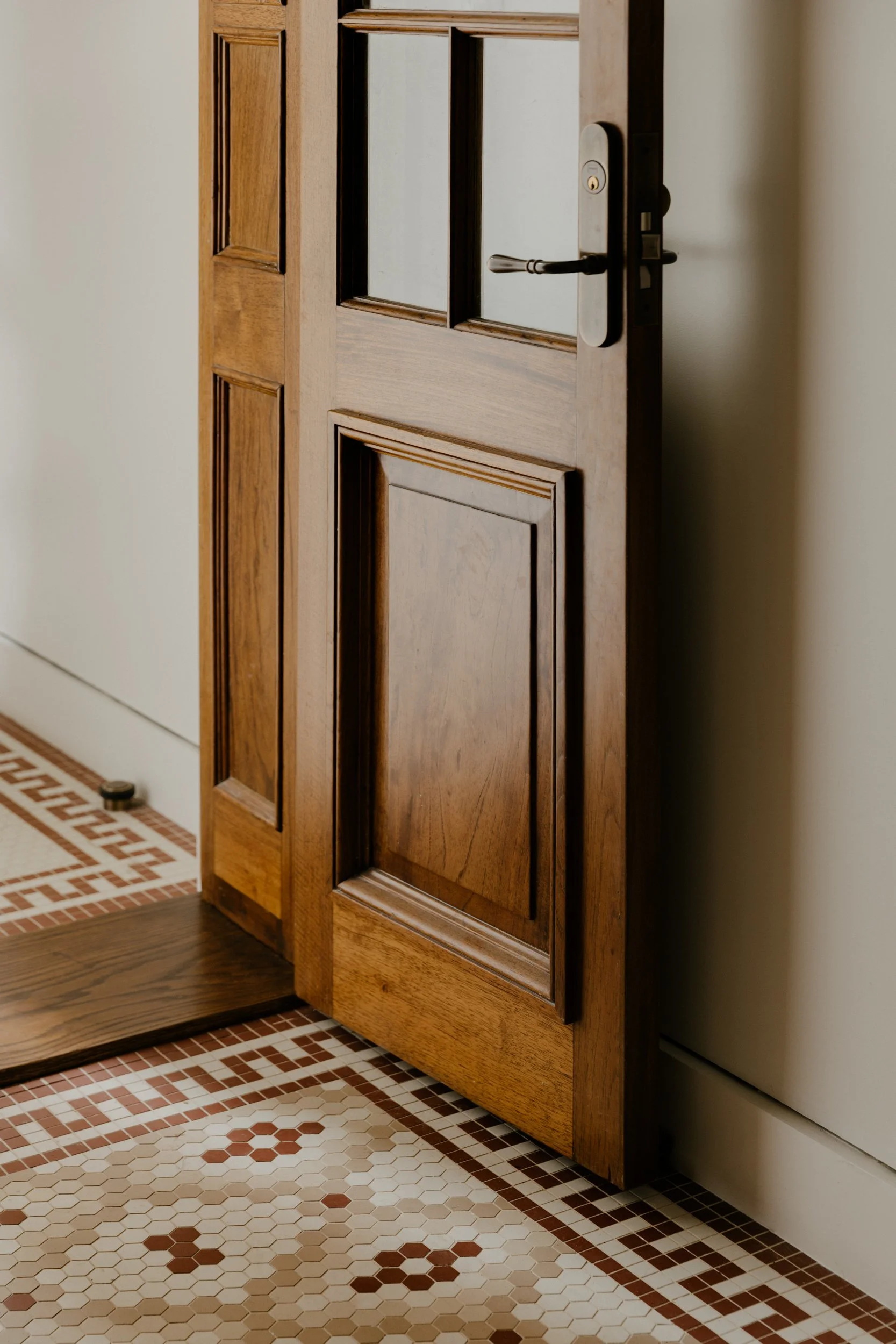
The antique interior mahogany foyer doors, salvaged from a building in Argentina, introduce warmth and elegance, while a tree hall—likely originating in Brooklyn—grounds the space in local history. Even elements newly fabricated were designed to age gracefully, evoking the patina of time. The result is a foyer that feels both lived-in and deliberate, a tactile introduction to the home’s layered narrative.
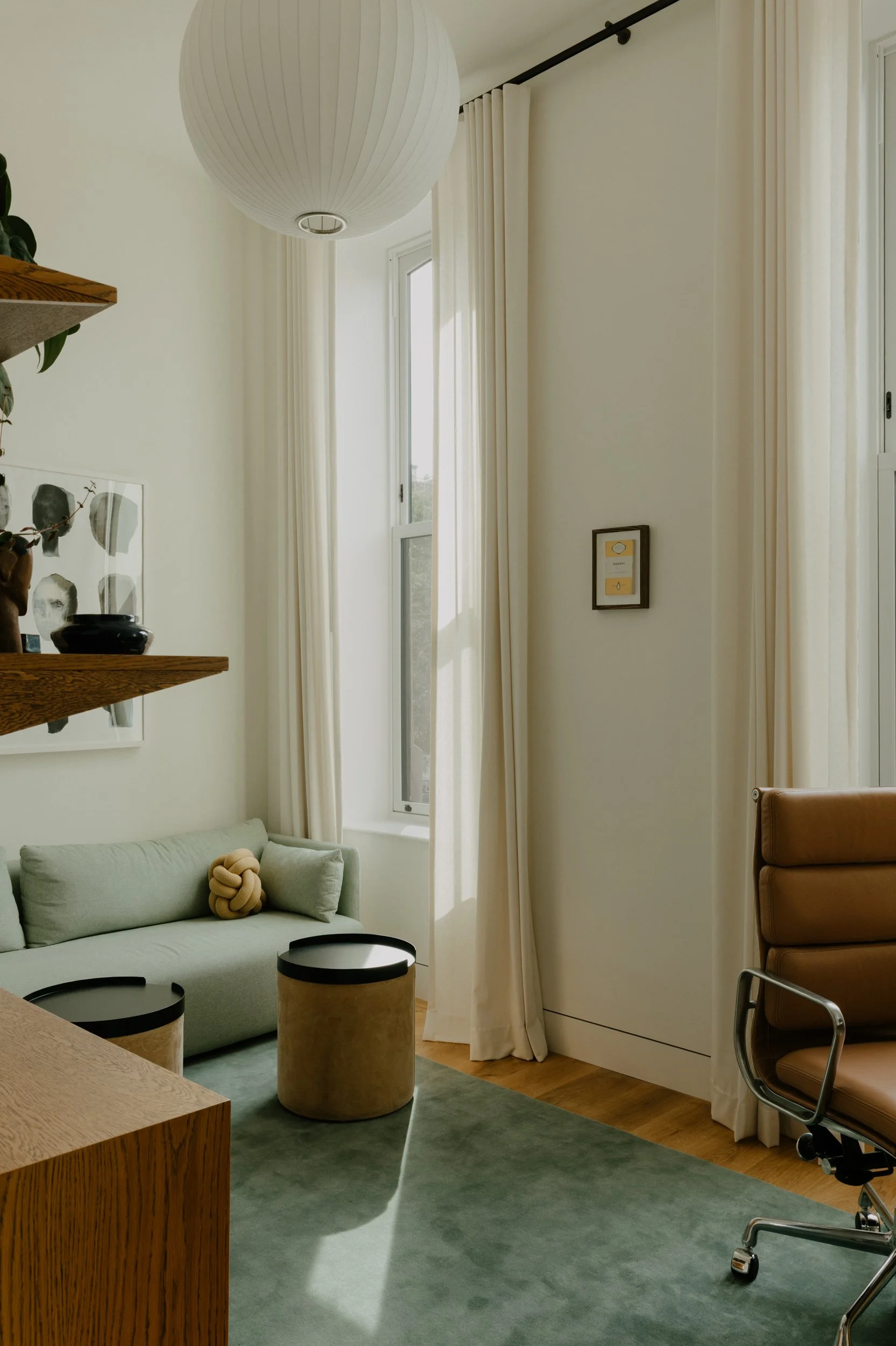
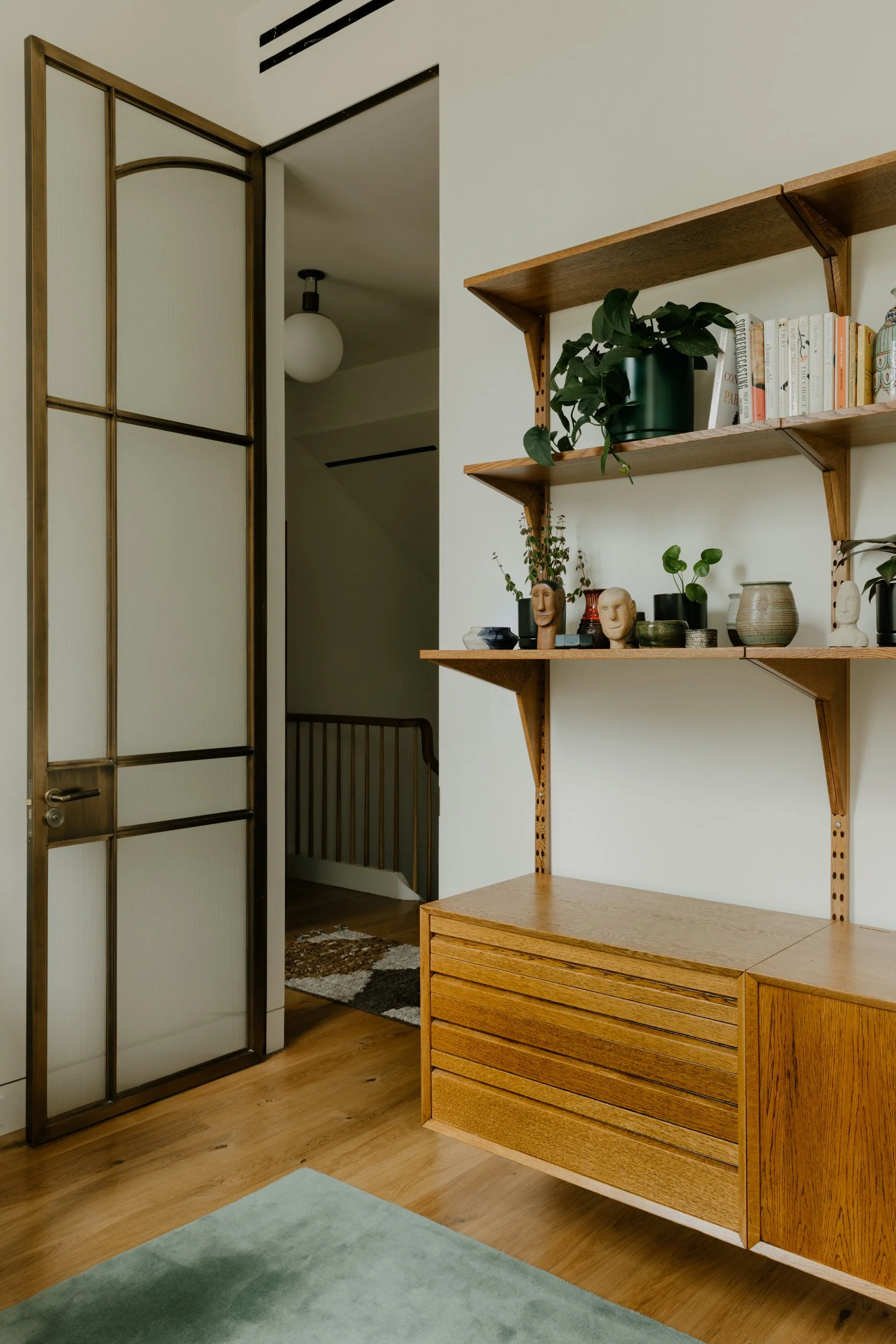
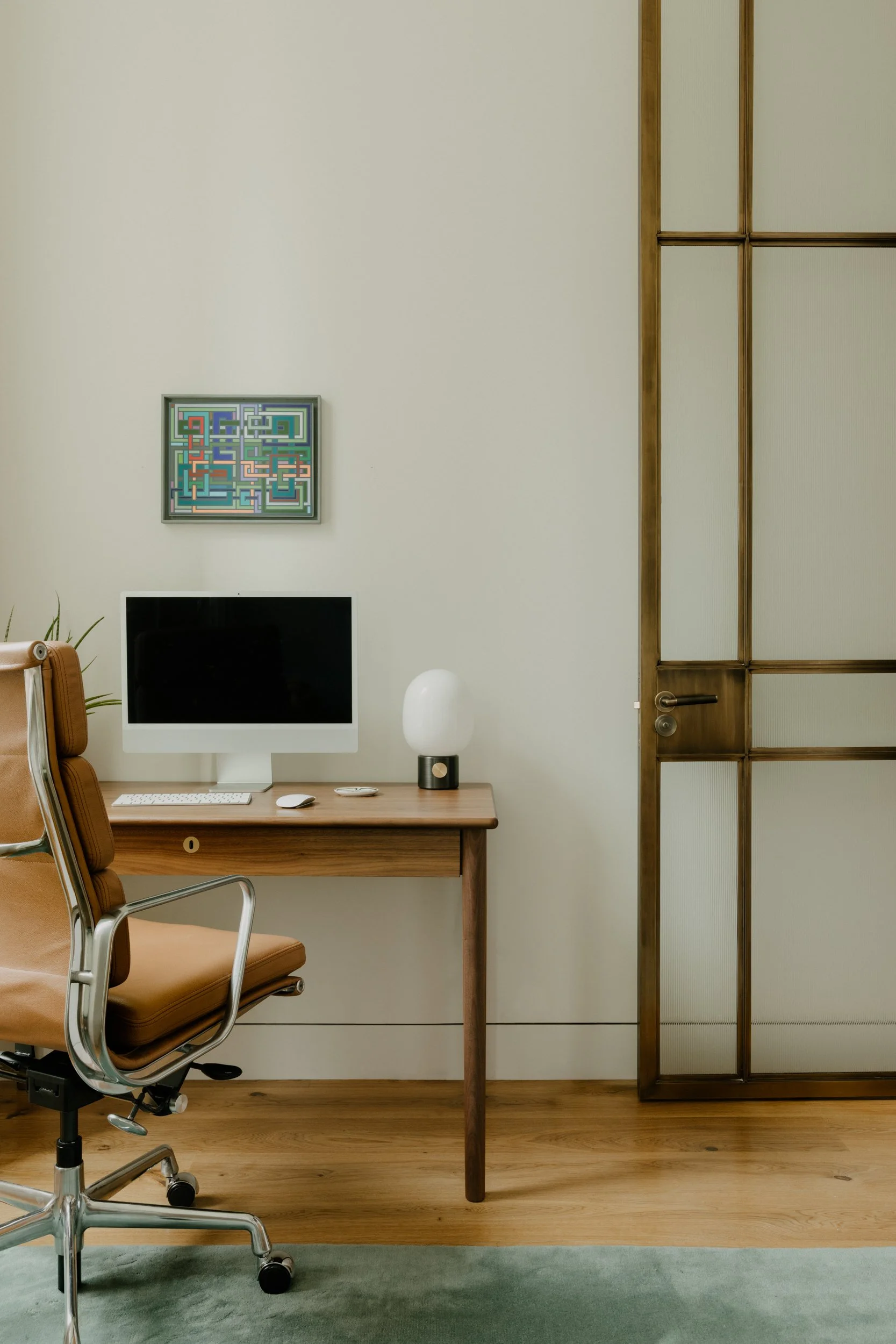
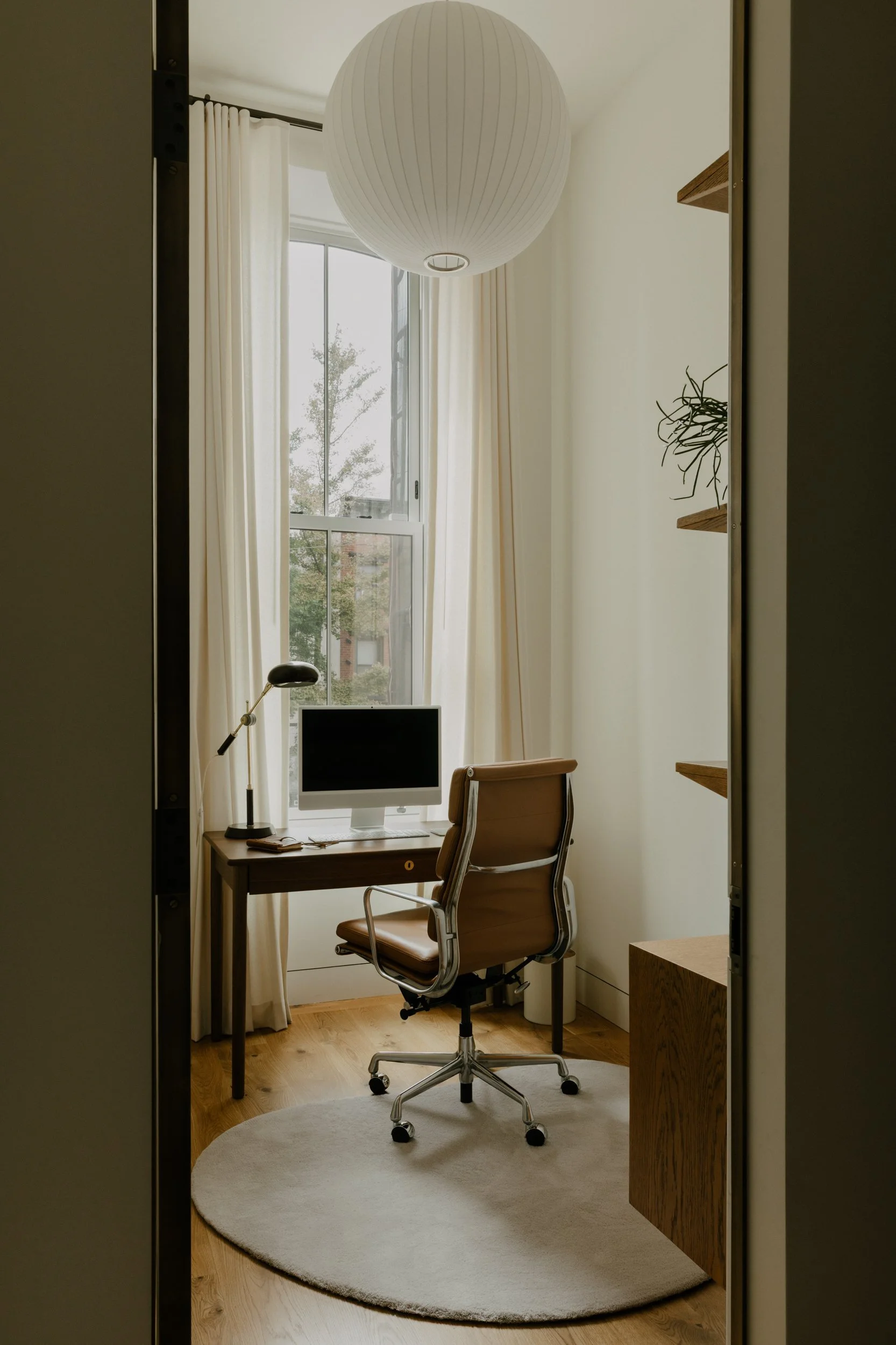
The owners reserved space at the front of the apartment for their home offices, a thoughtful placement that not only prioritizes functionality but also creates a subtle buffer between the living areas and the lively street below. The result is a serene workspace that feels quietly removed from the city’s rhythm while remaining fully connected to the home.
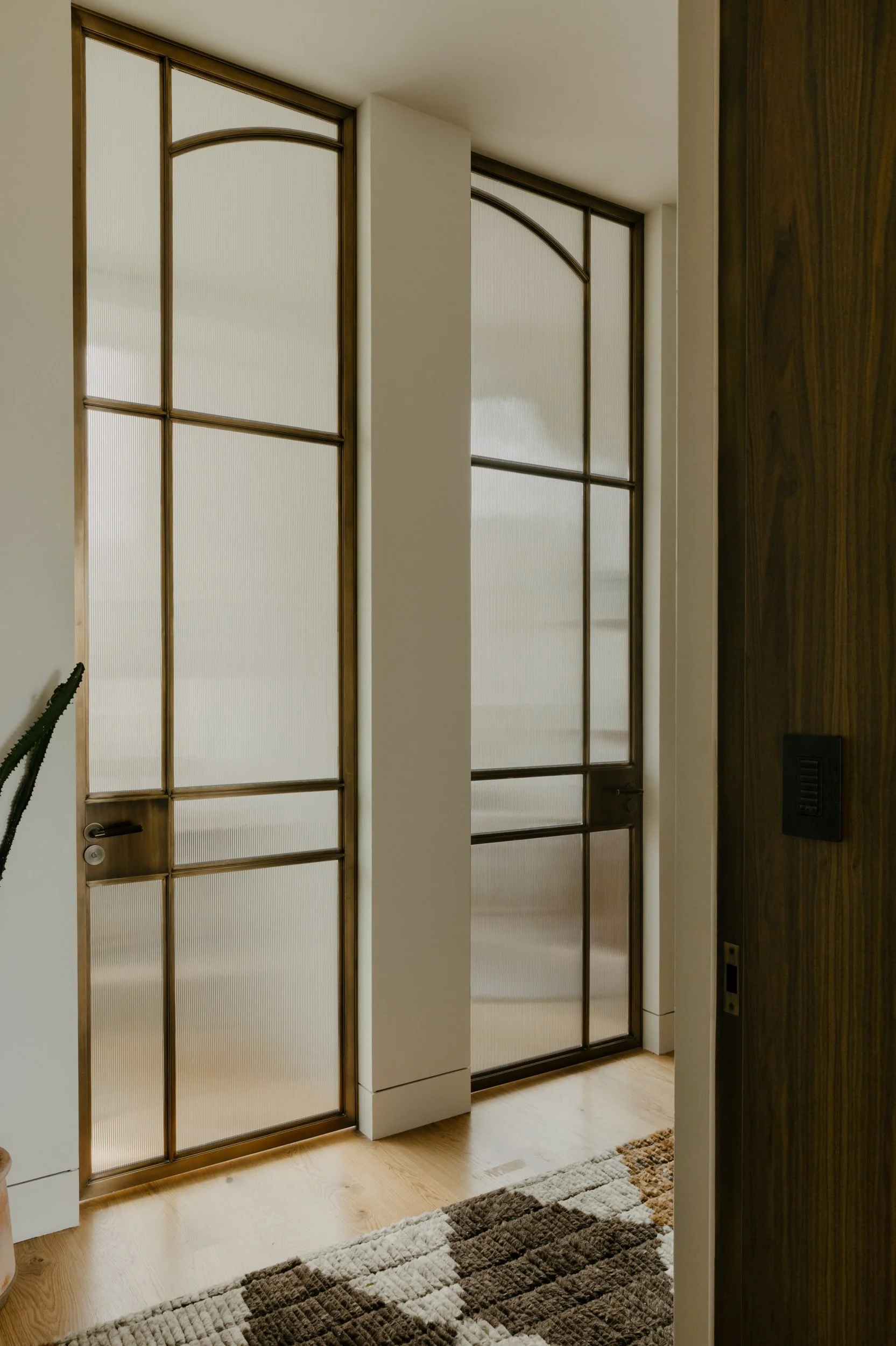
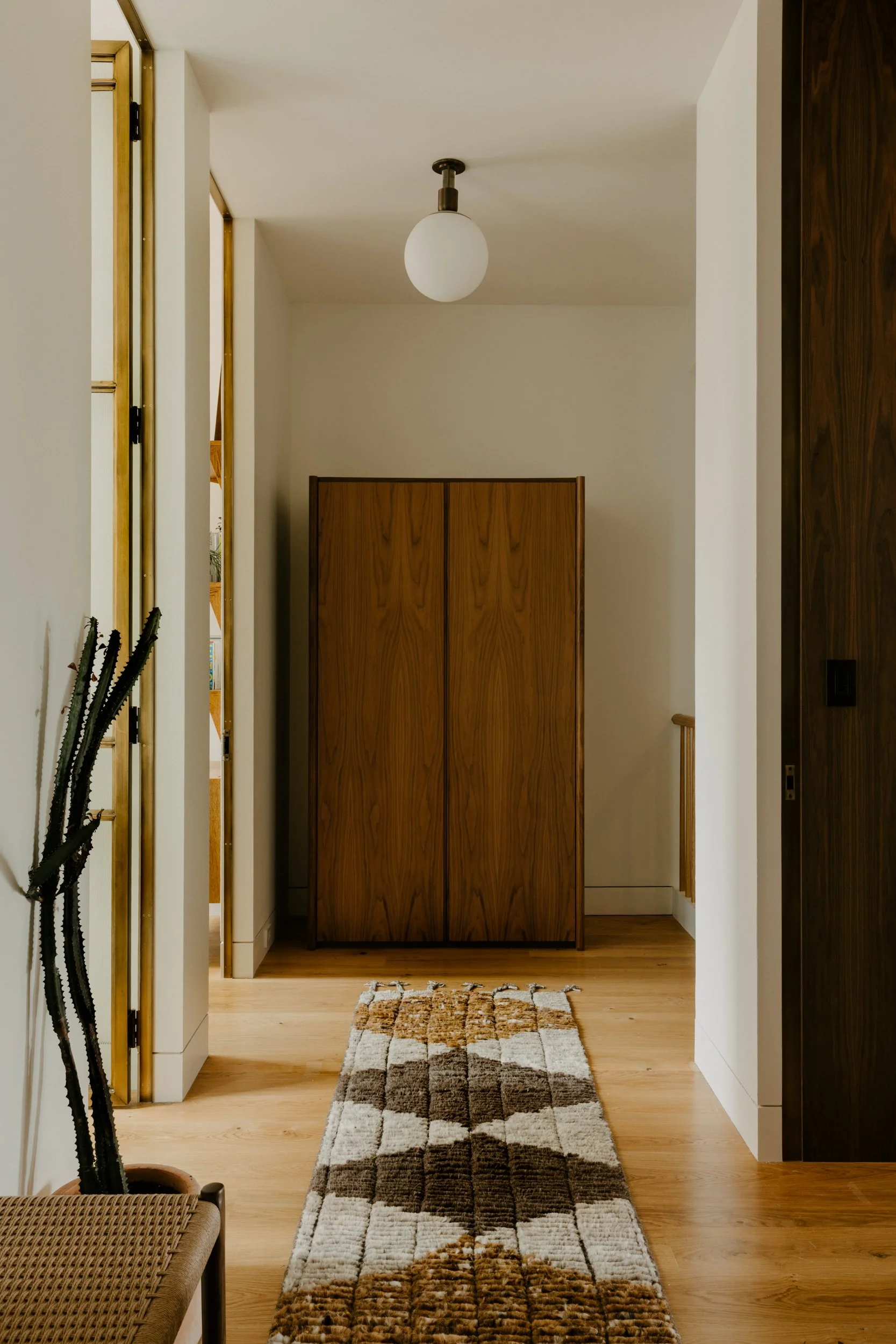
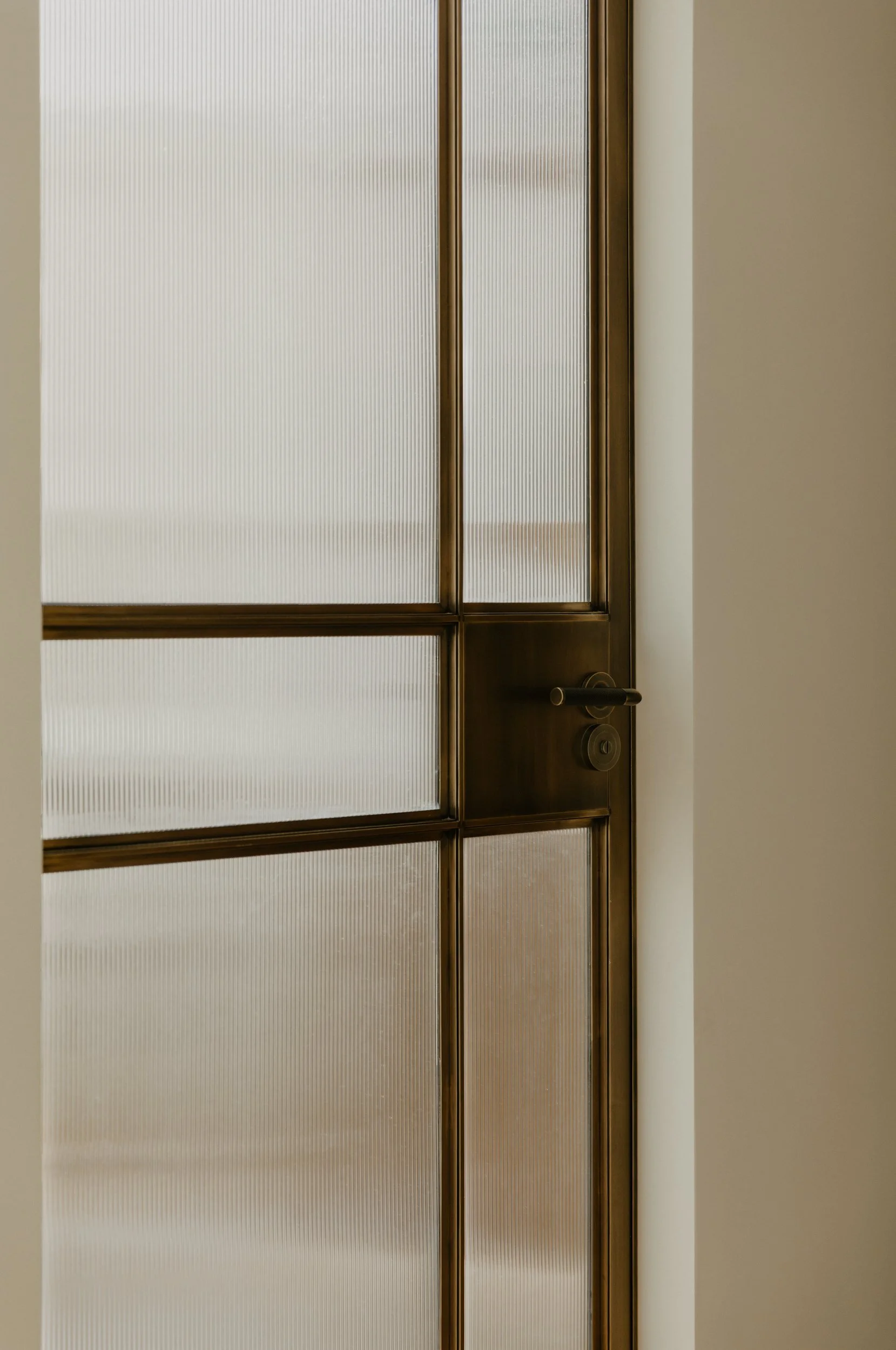
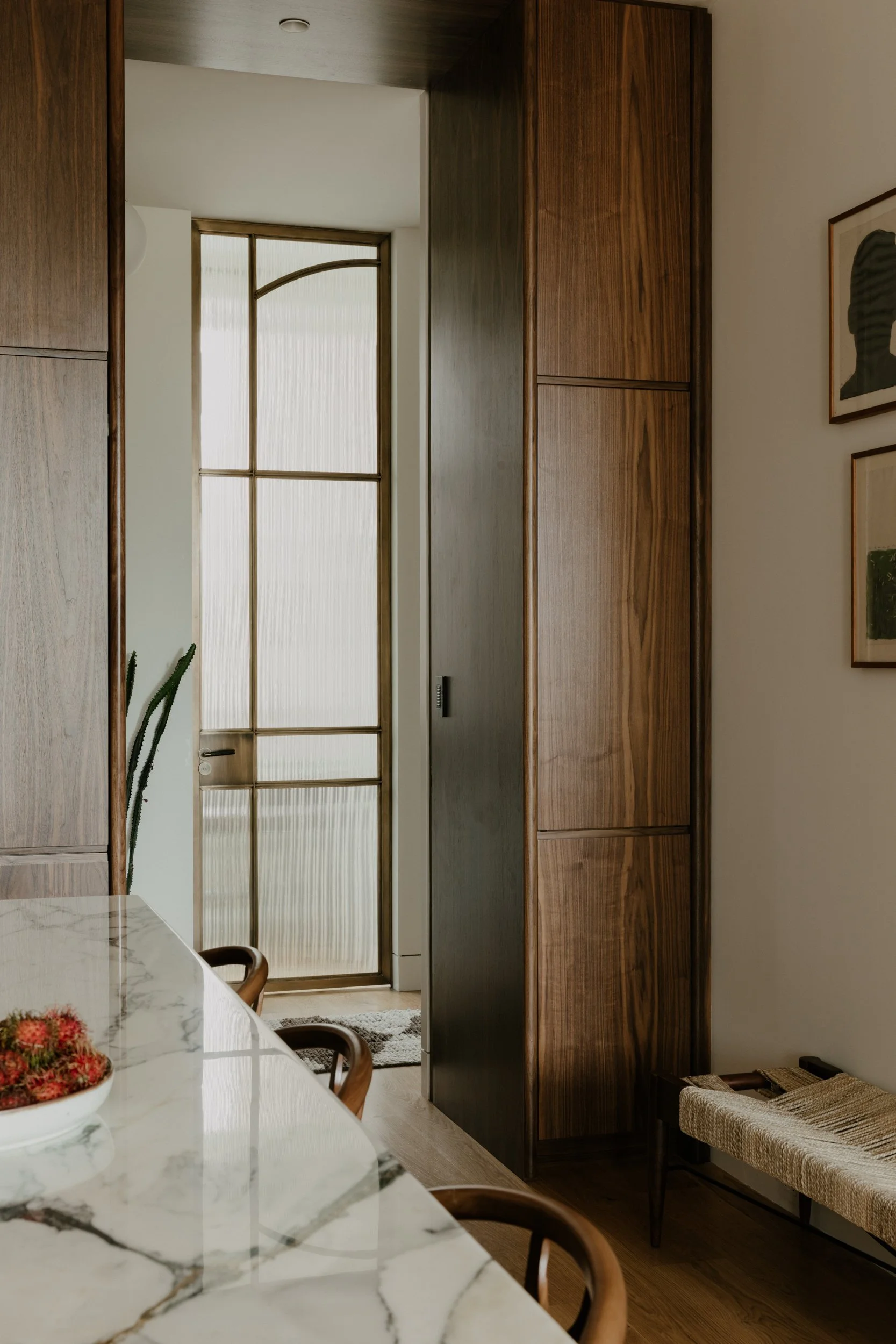
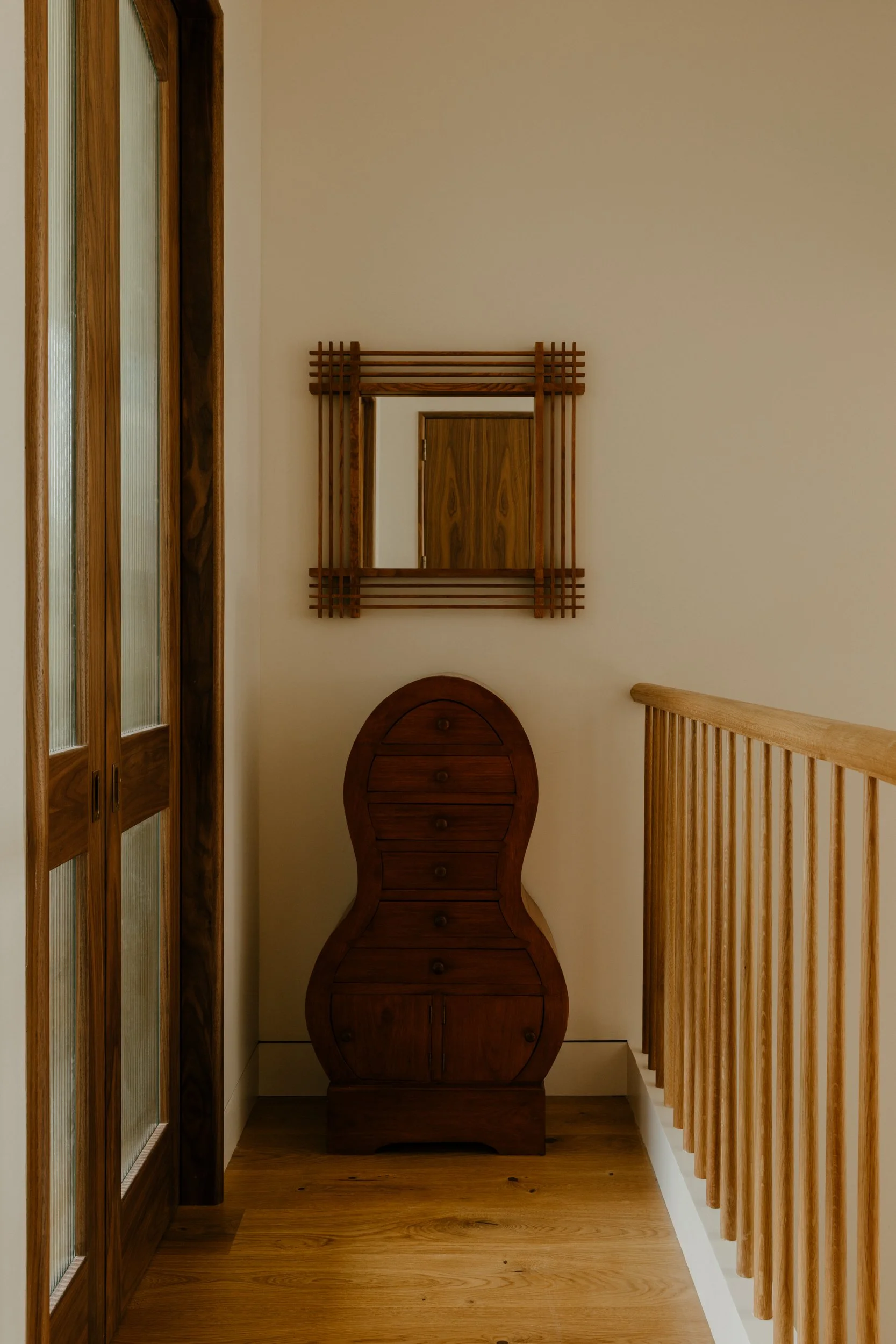
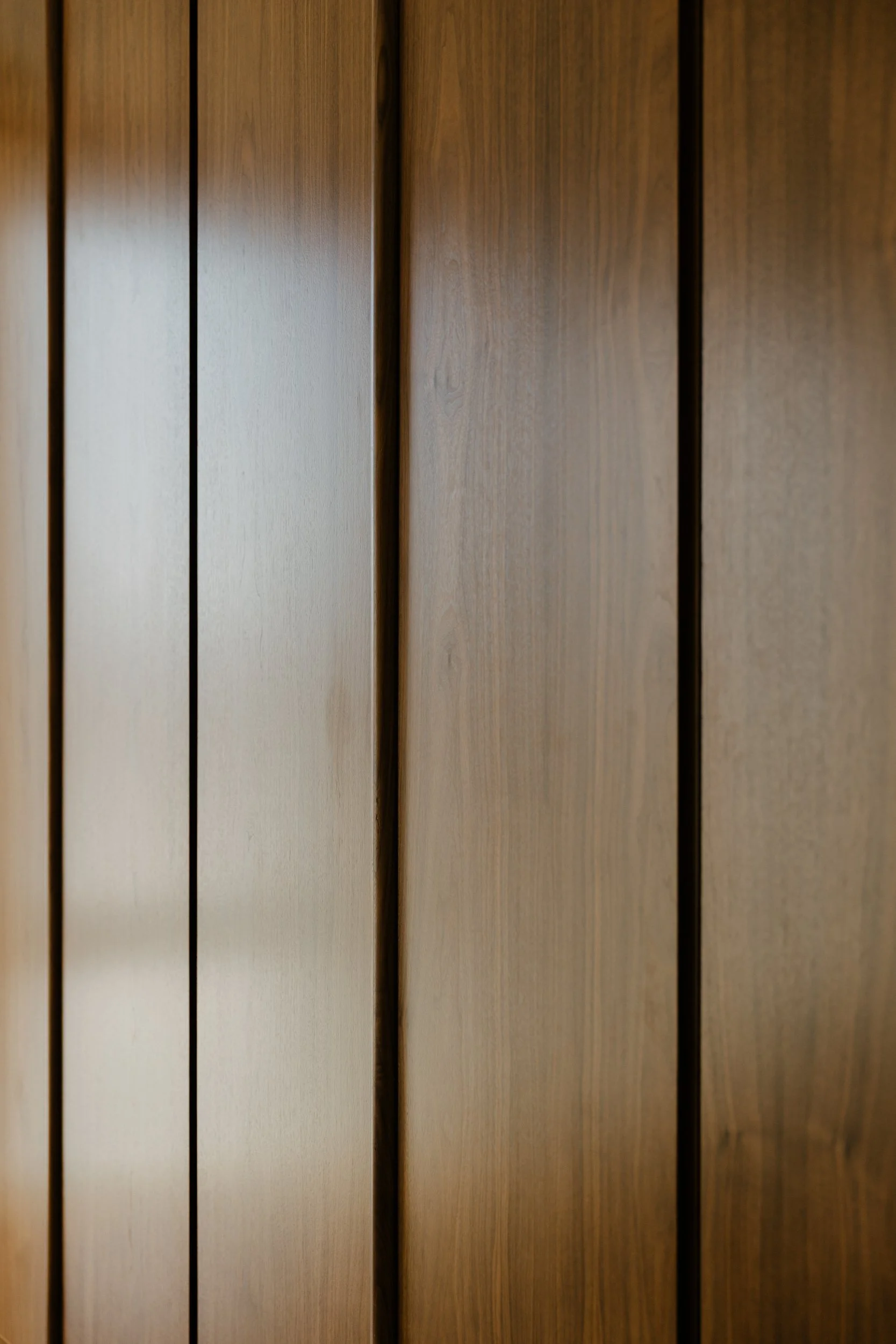
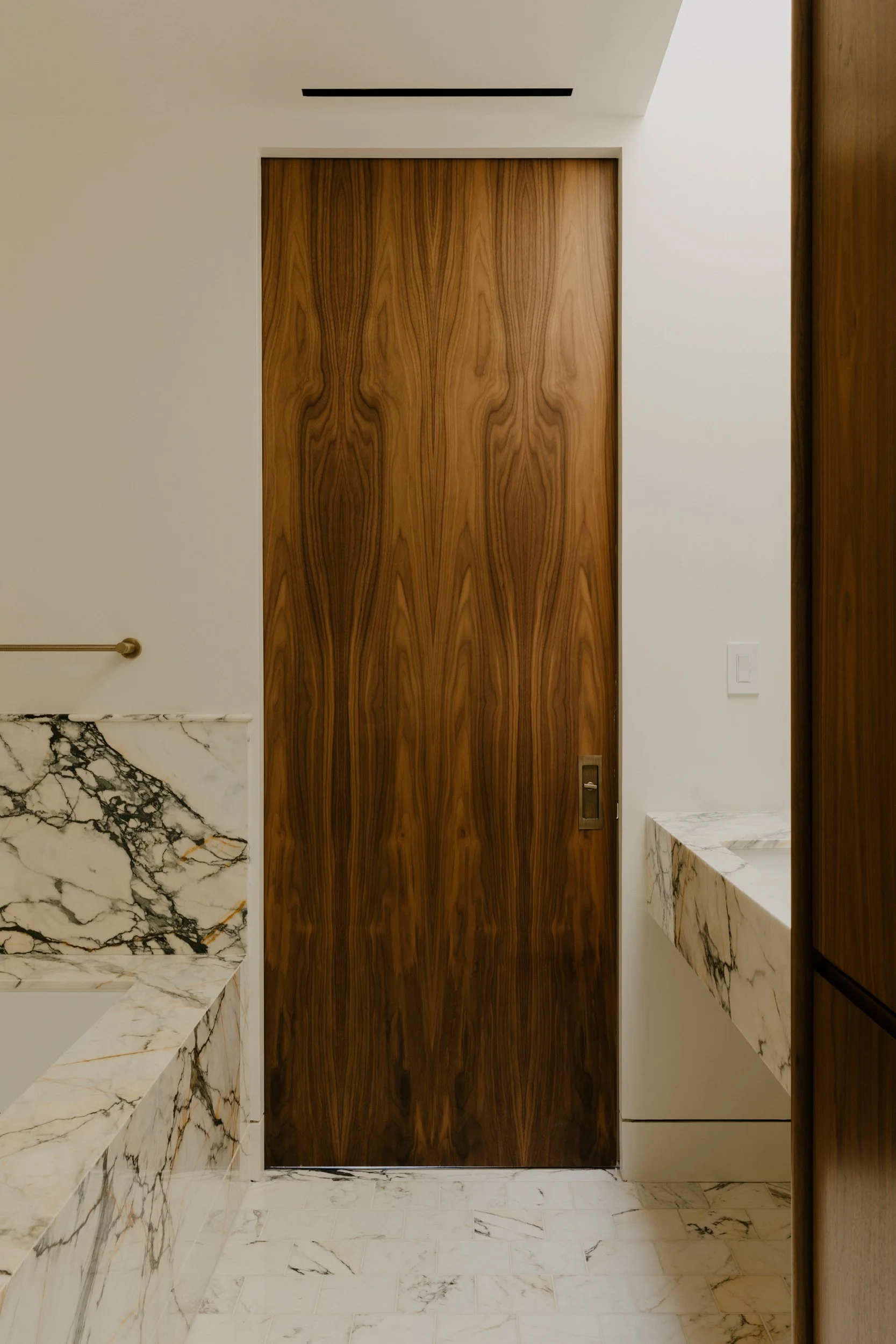
Light and material define the rhythm of the house. Three ten-foot-high bespoke bronze doors, elegantly brought to life by Gunnar Design, separate the home offices from the main living spaces, their reeded glass panels capturing and diffusing sunlight into the stairwell and hallway. The walnut coat closet, tucked discreetly at the end of the hall, hints at the home’s custom millwork throughout—edge details carefully echoing the wood door casing throughout, uniting form and function. Above and beyond, Allied Maker light fixtures punctuate all four levels, casting sculptural warmth that guides the eye and illuminates the home’s layered textures. Each element, from door to fixture, orchestrates a seamless dialogue between architecture and interior design, creating a home that feels both considered and effortlessly lived-in.
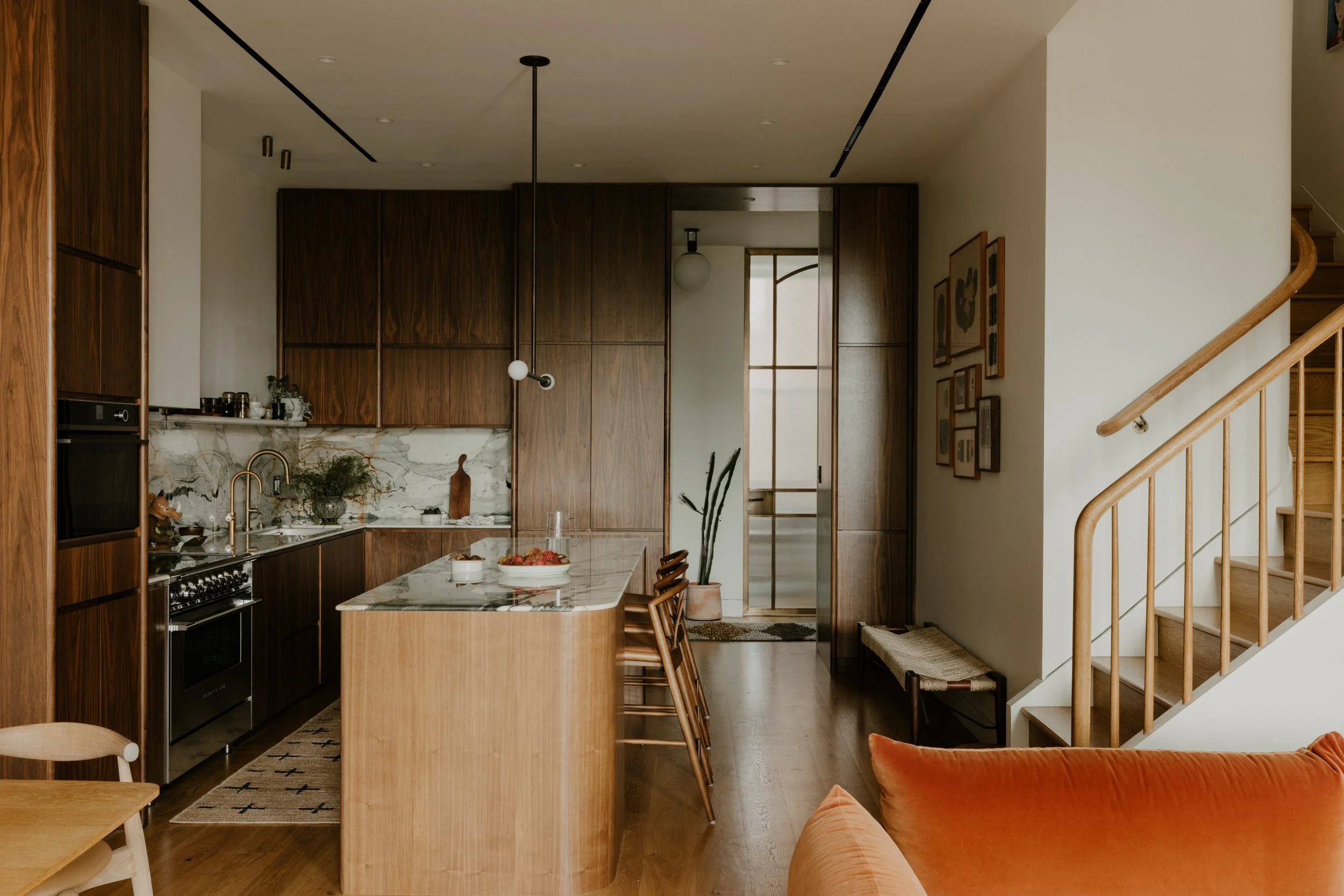
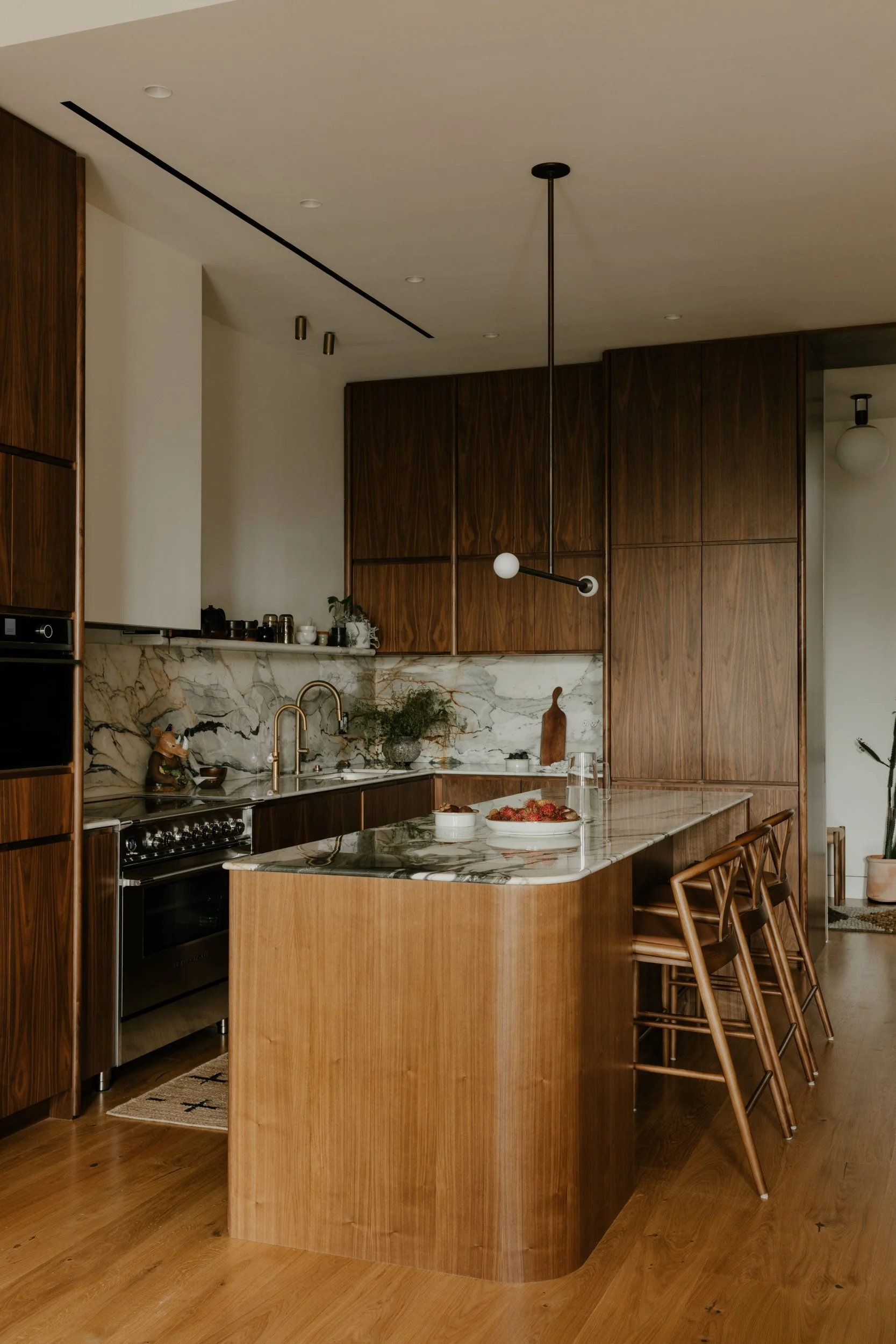
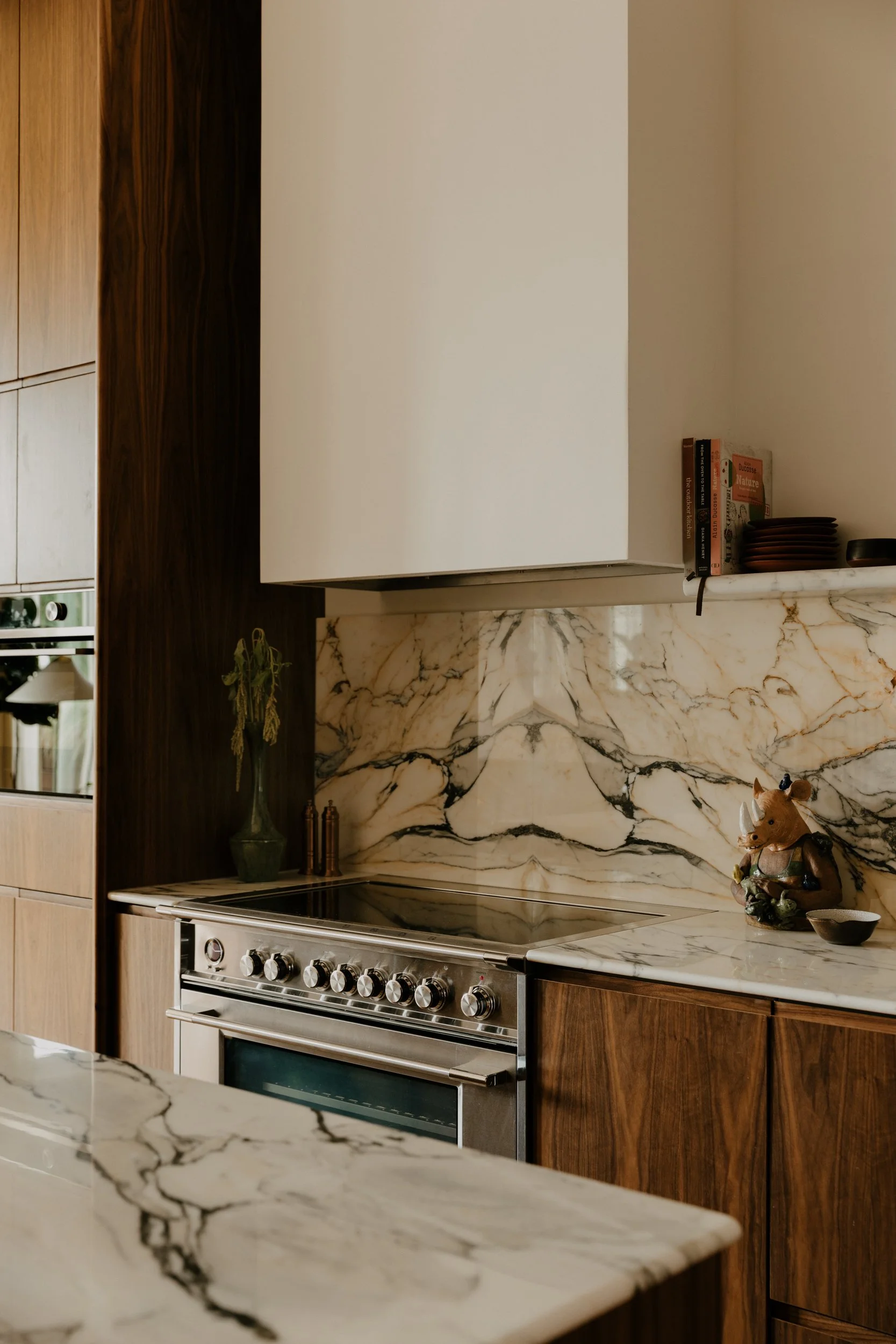
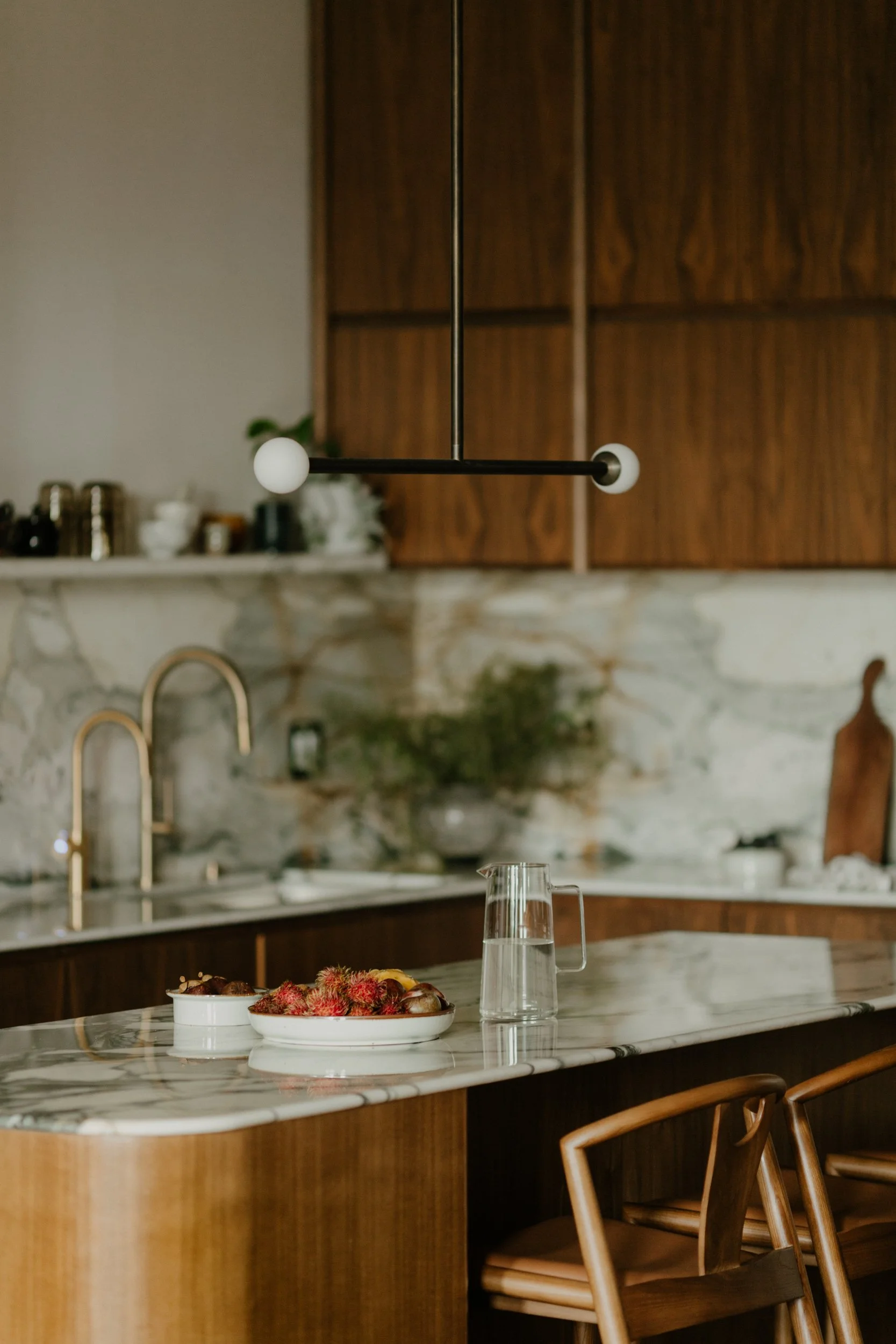
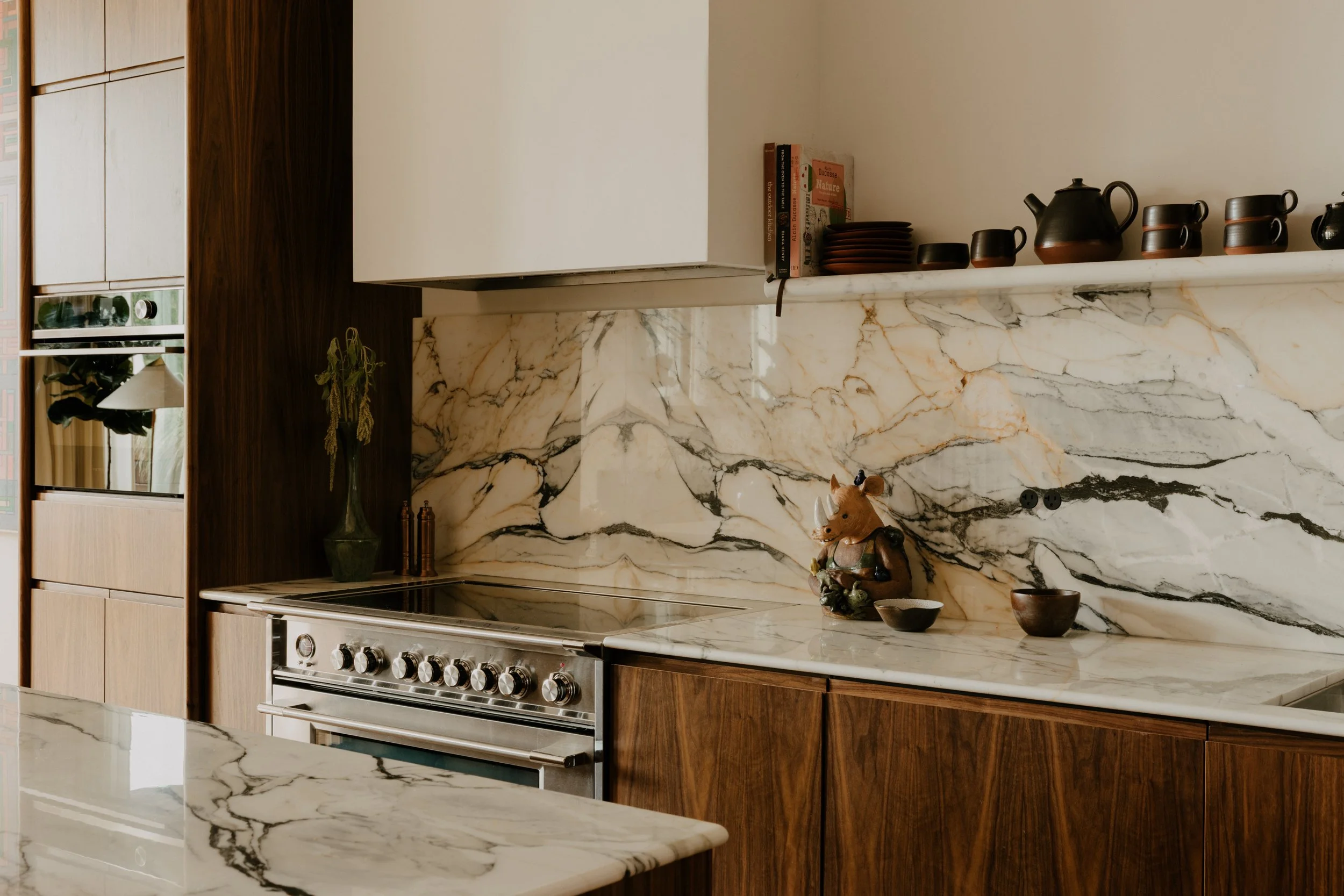
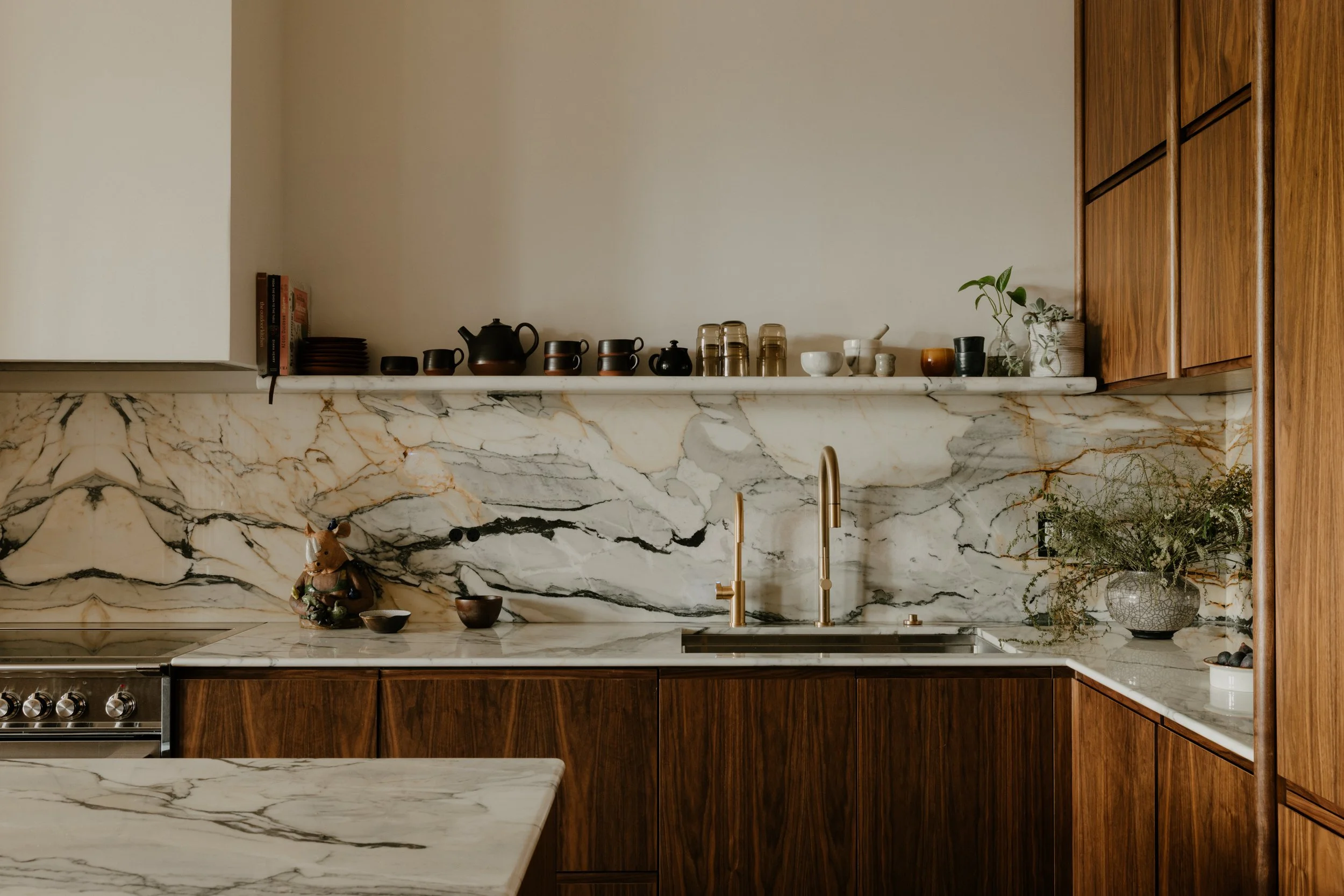
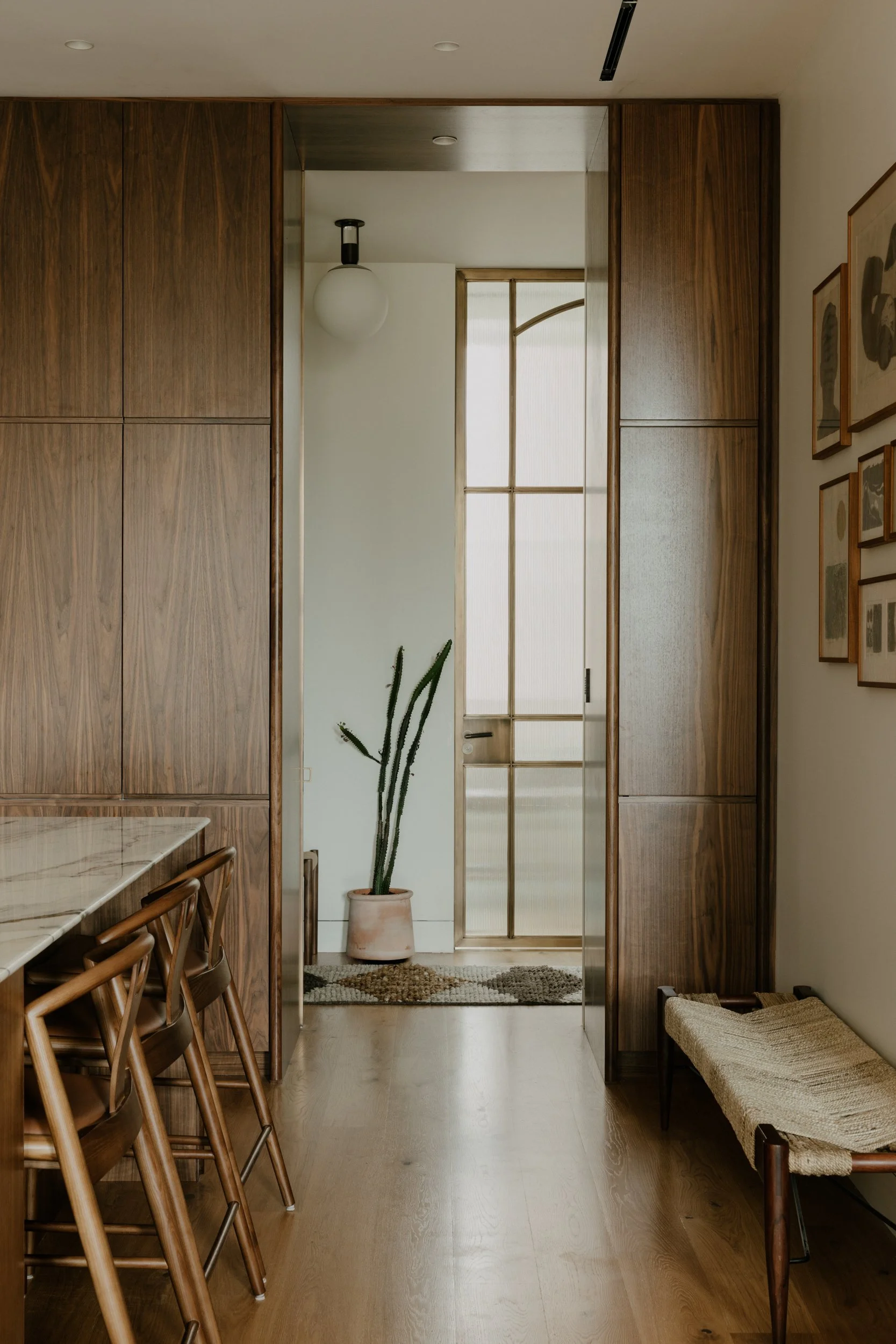
A ten-by-four-foot bronze and glass door cleverly pockets behind the millwork hiding the panel-clad refrigerator, allowing the home to read as a cohesive whole when focus is not required. Custom millwork provides both accessible storage for daily essentials and hidden space for items used less frequently. Throughout the kitchen, expressive marble punctuates the design with visual drama, while the surrounding materials blend seamlessly, creating a space that is at once functional, elegant, and quietly layered.
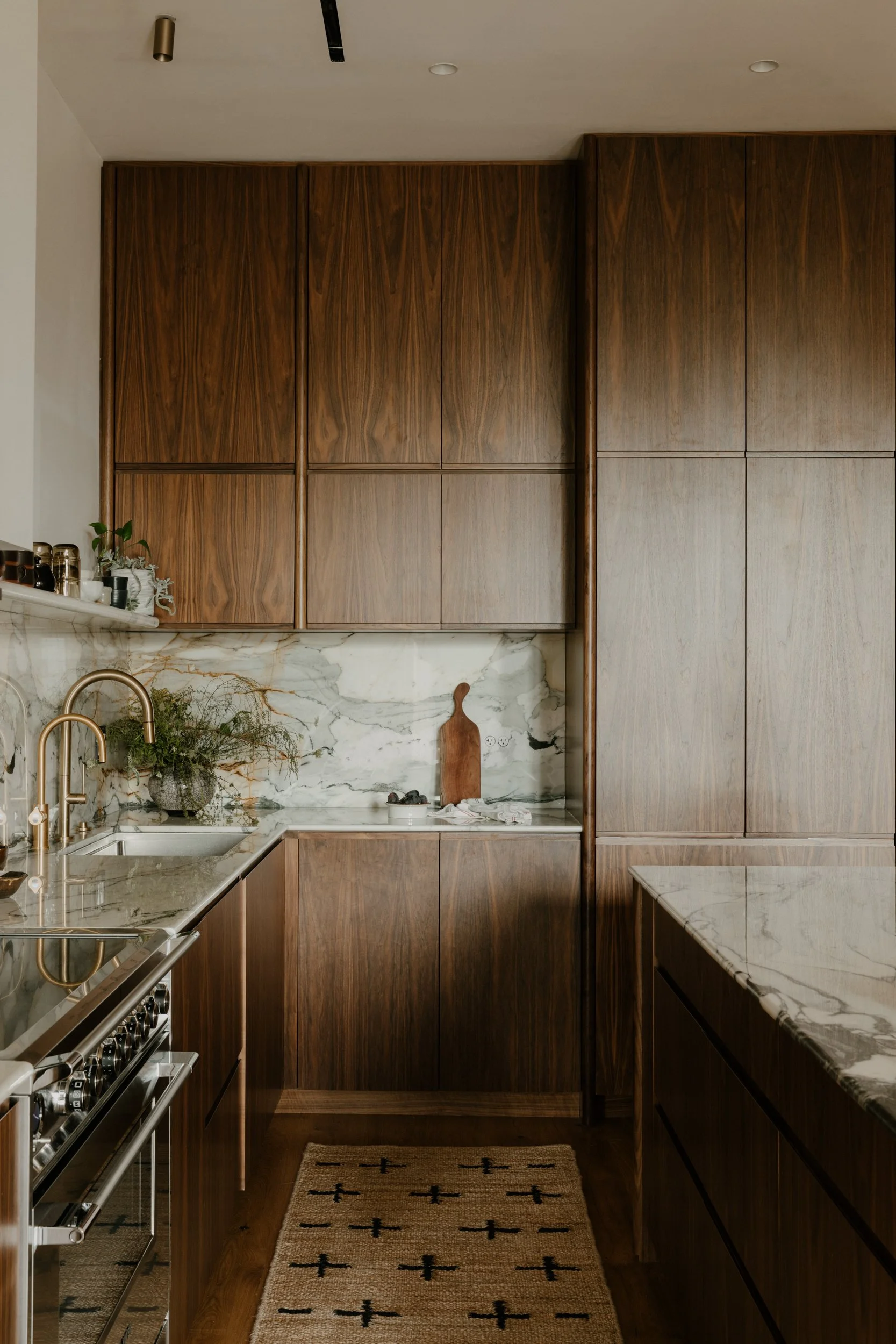
A floating marble shelf helps keep often needed objects close at hand.
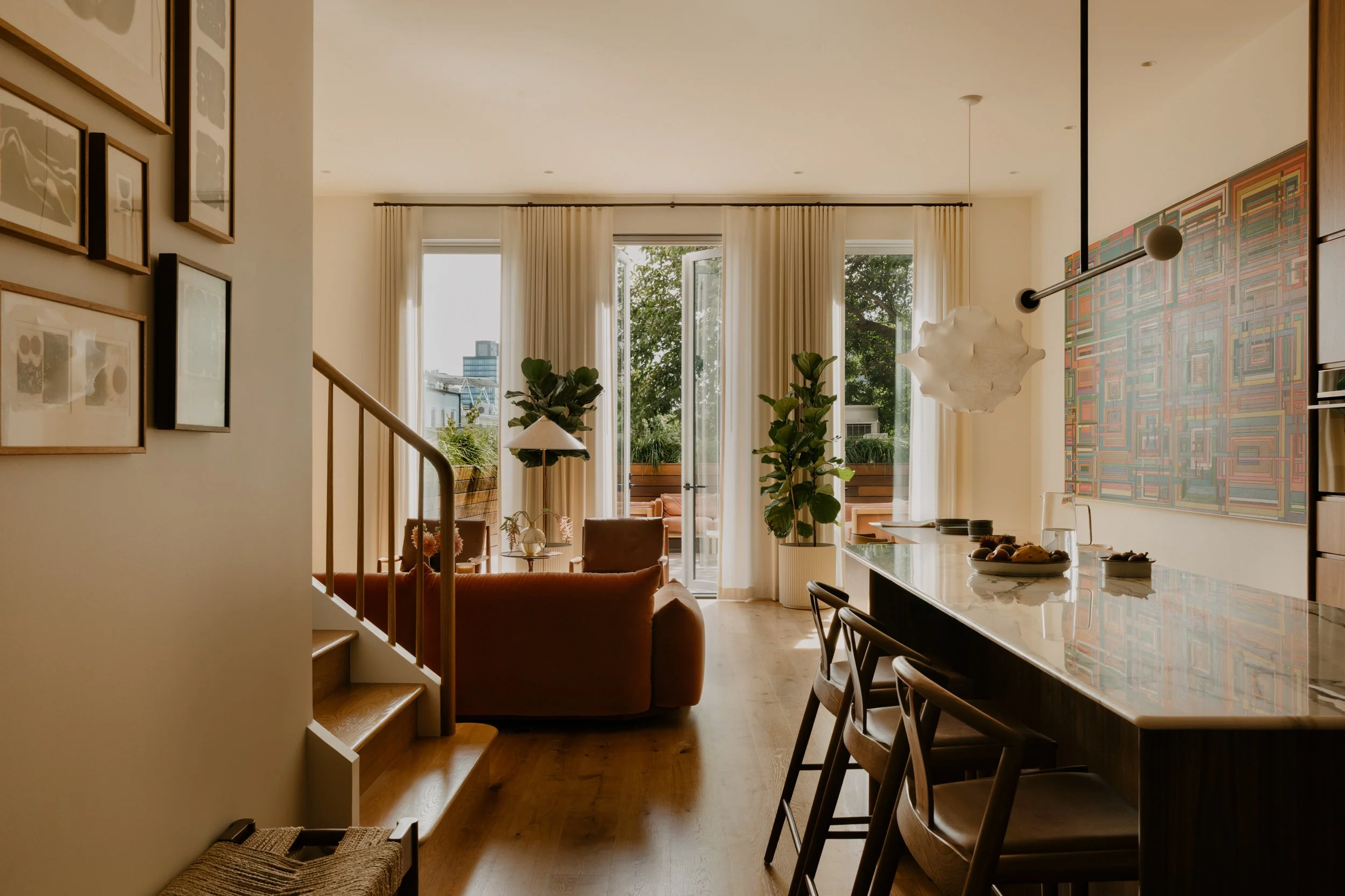
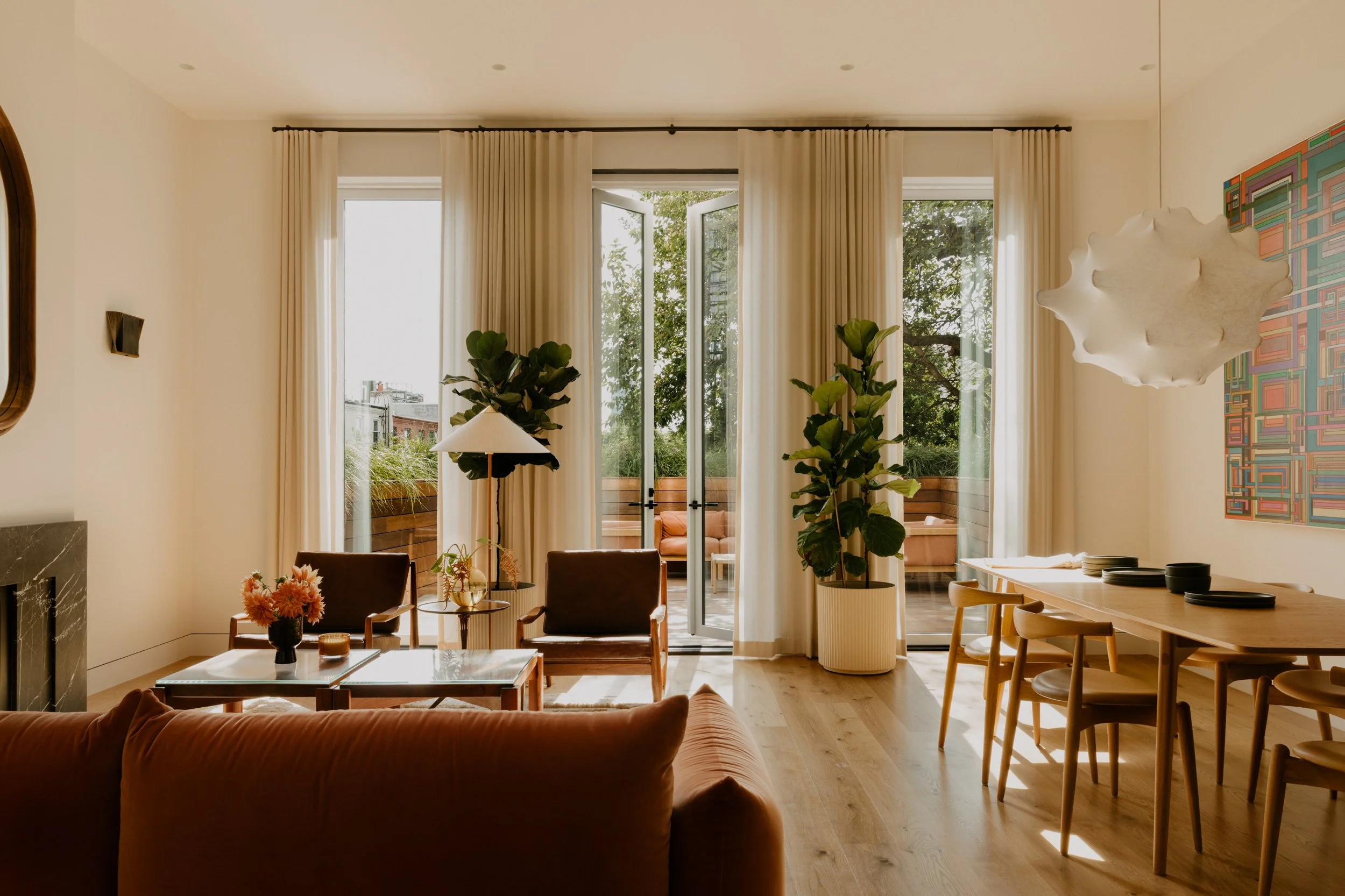
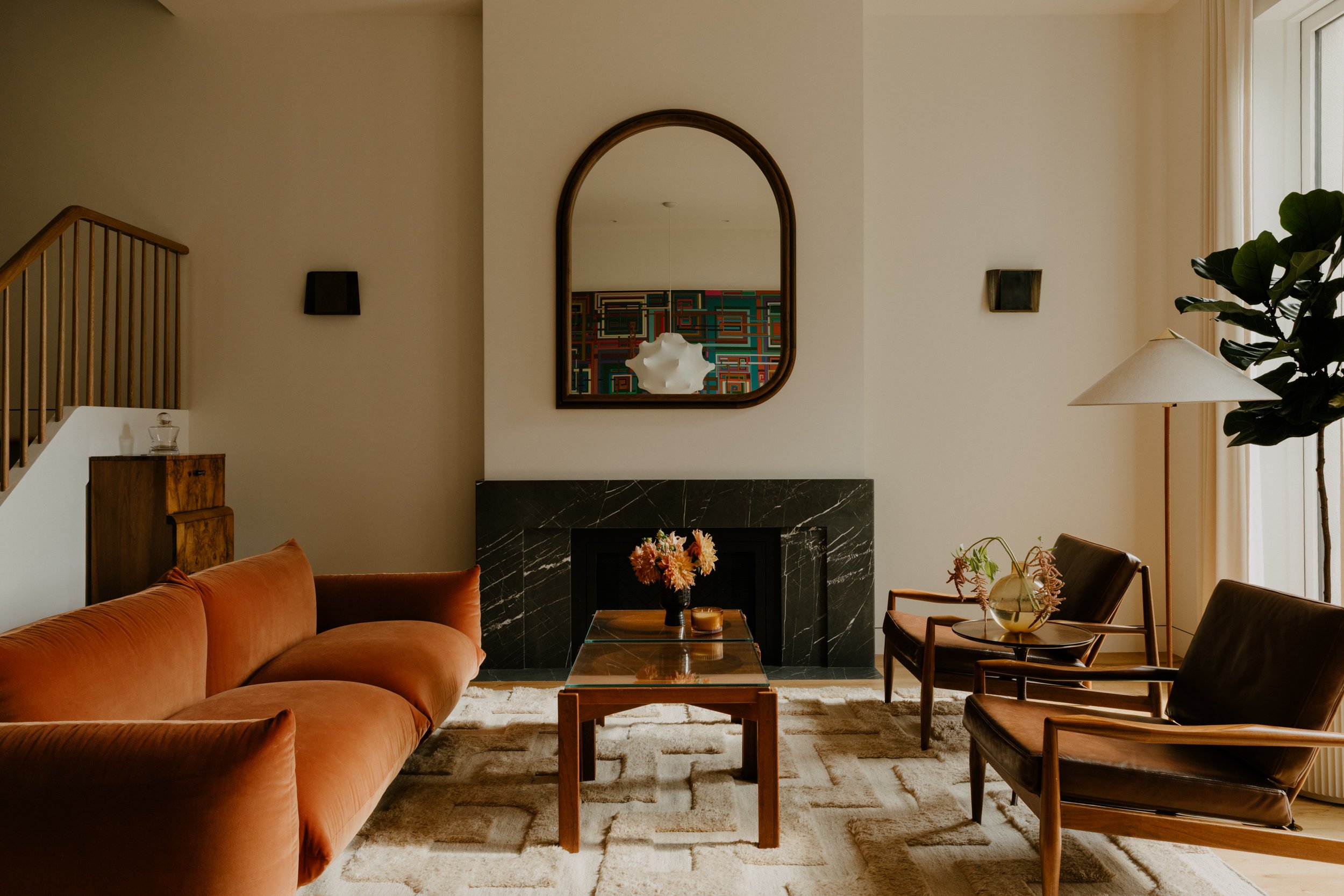
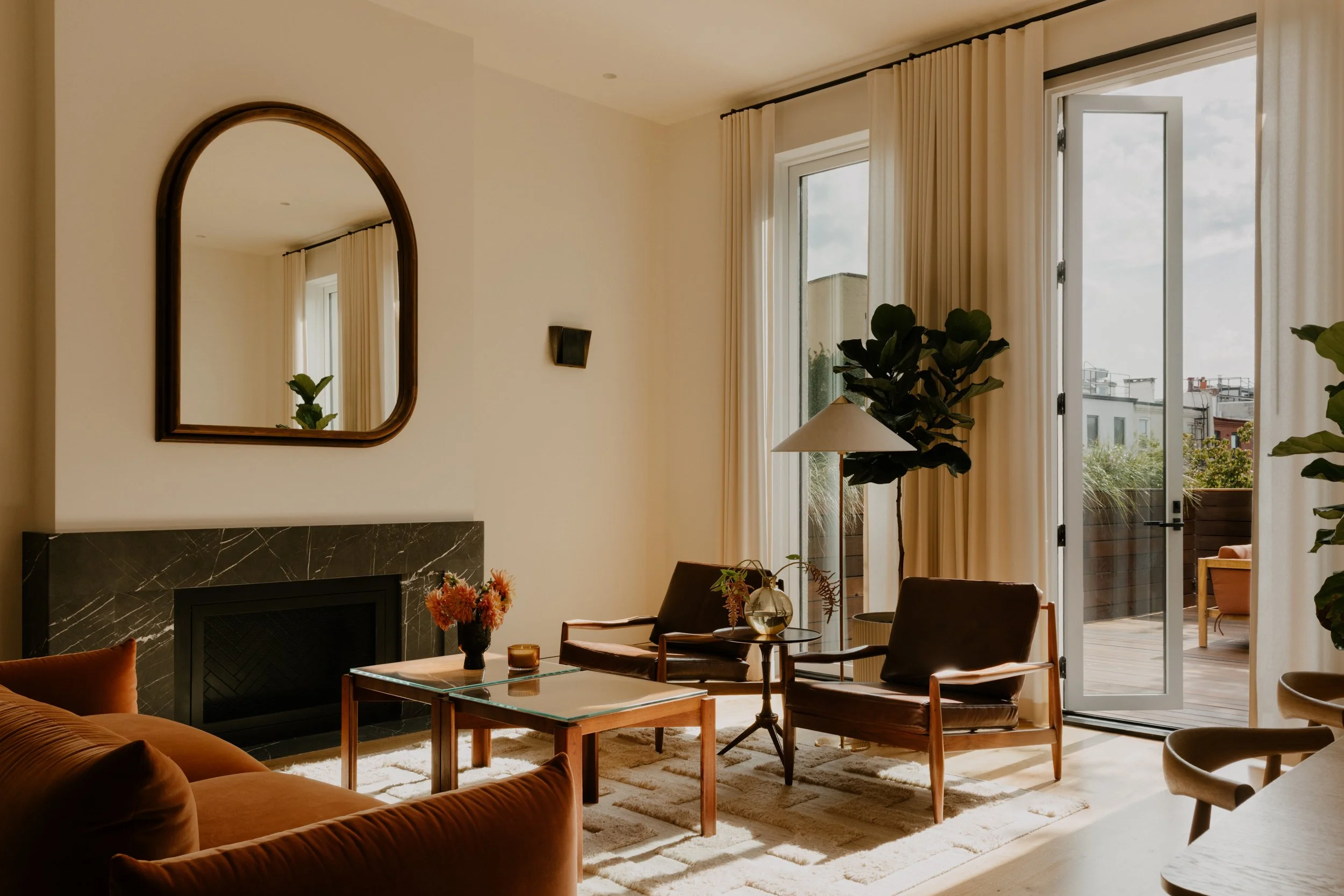
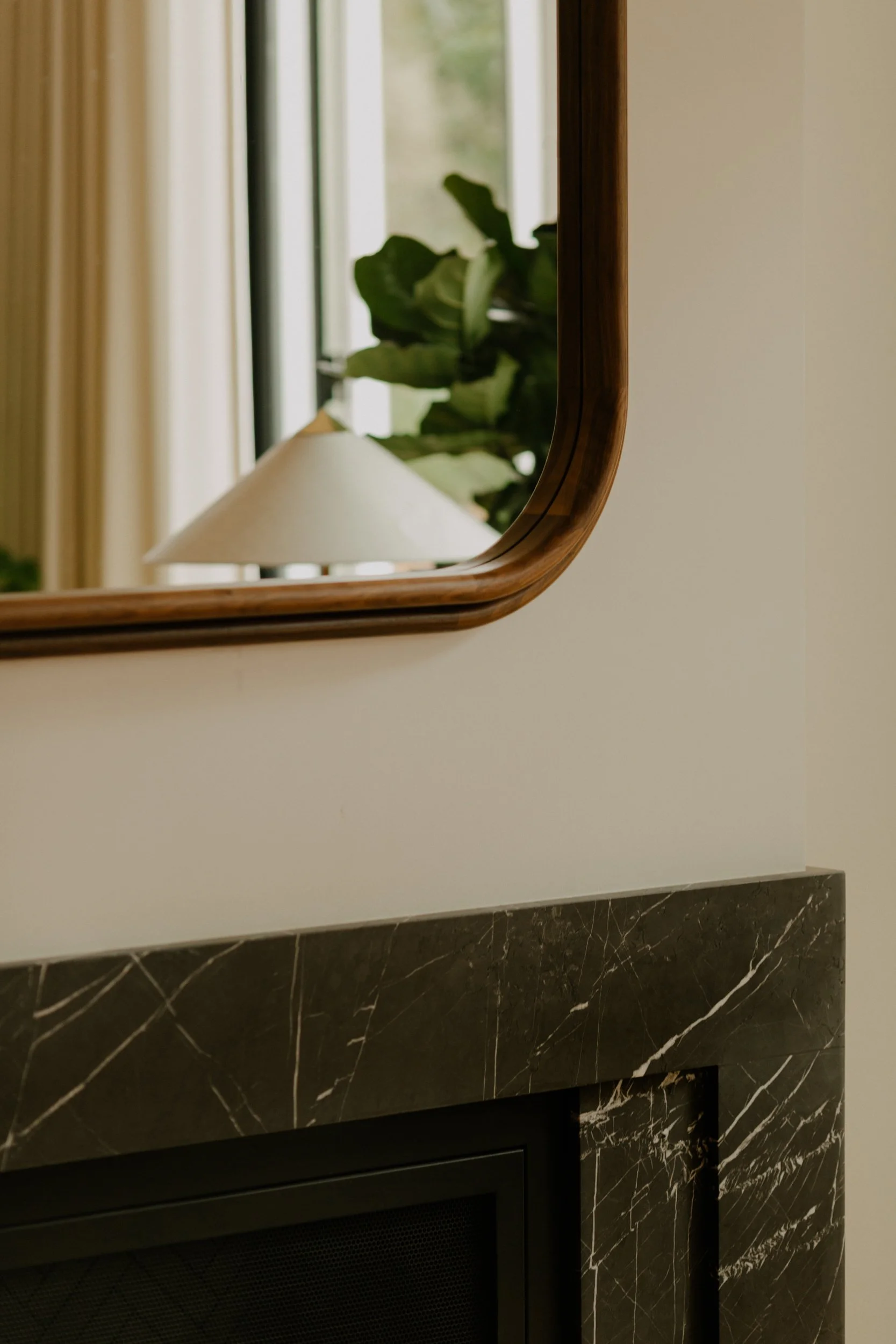
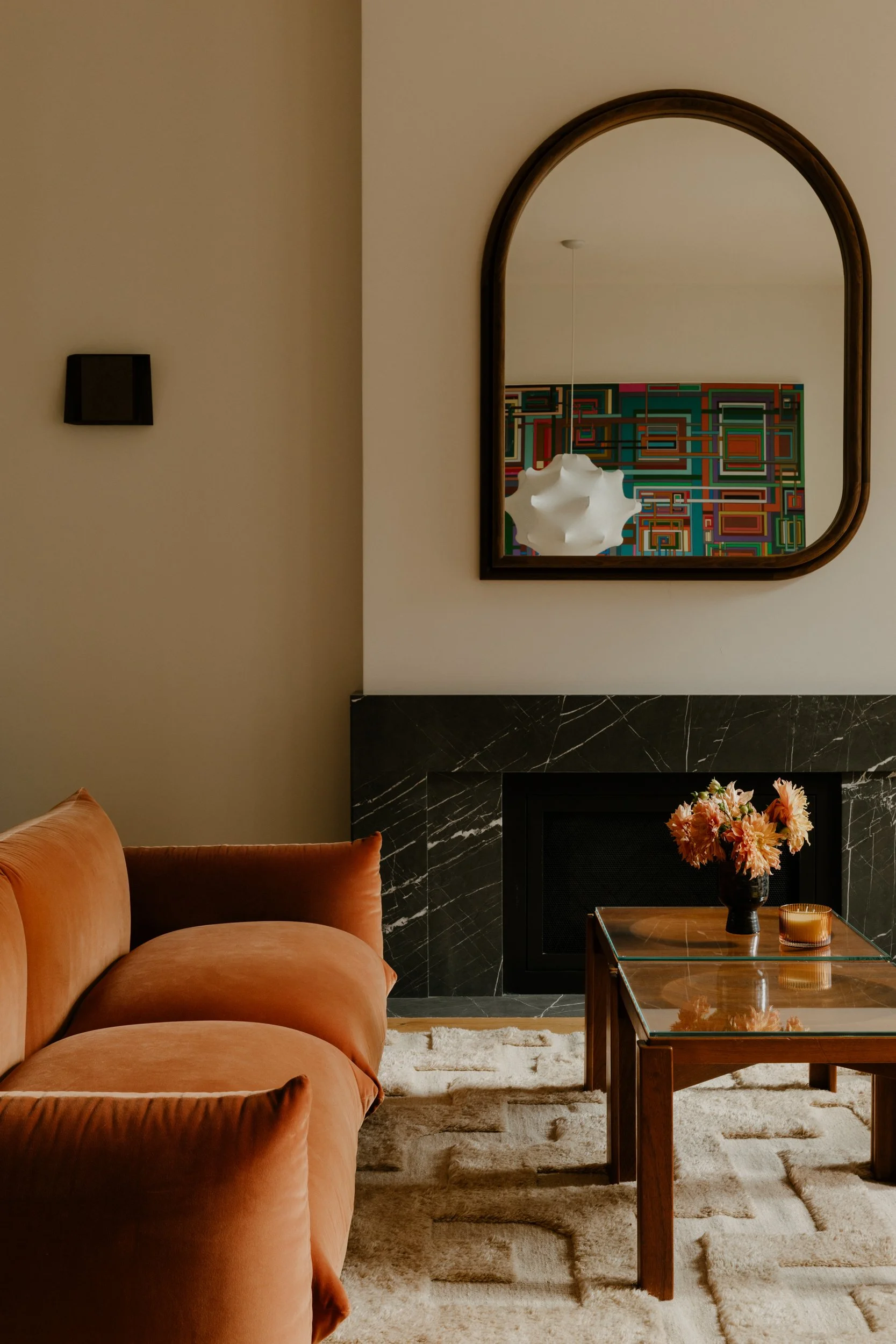
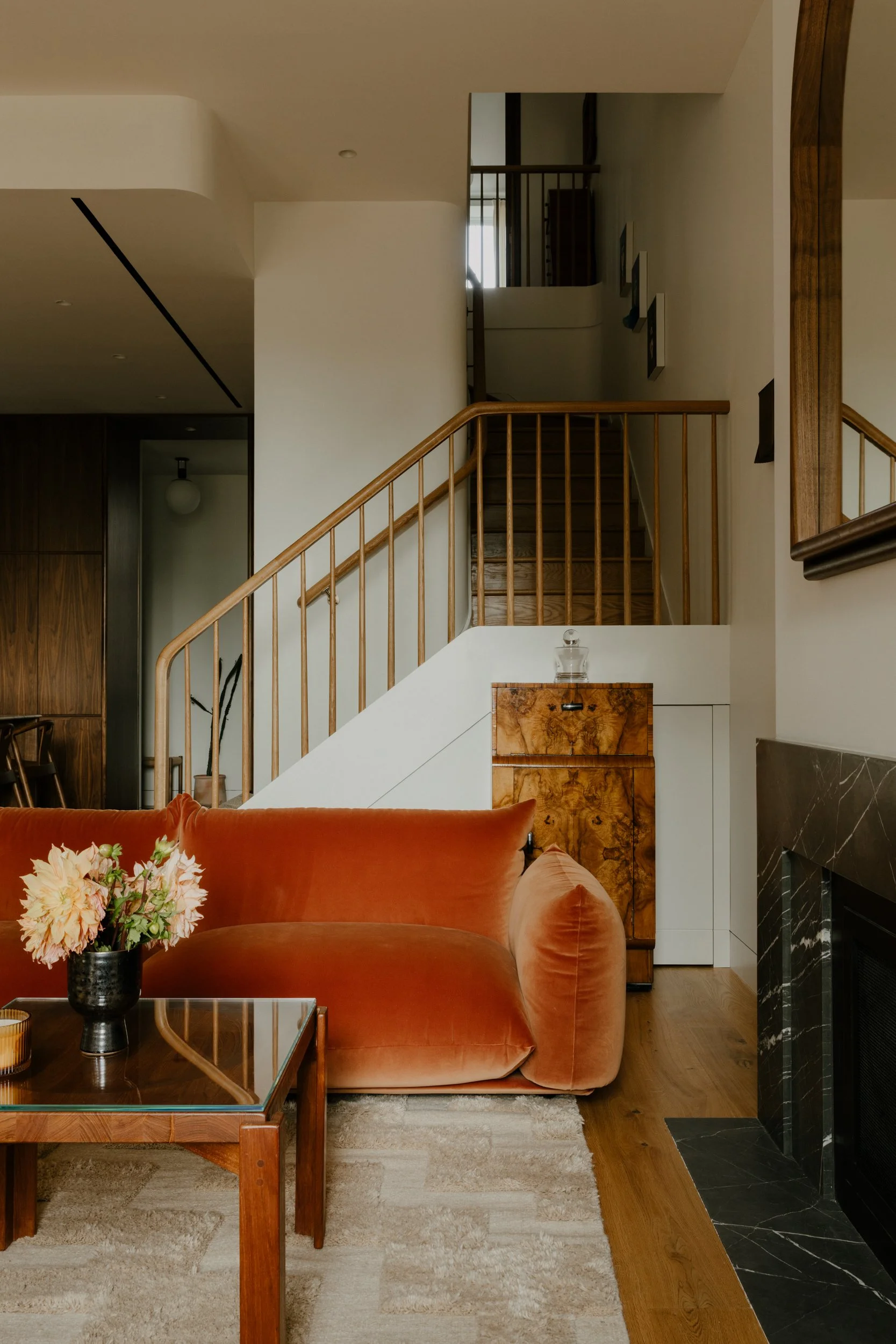
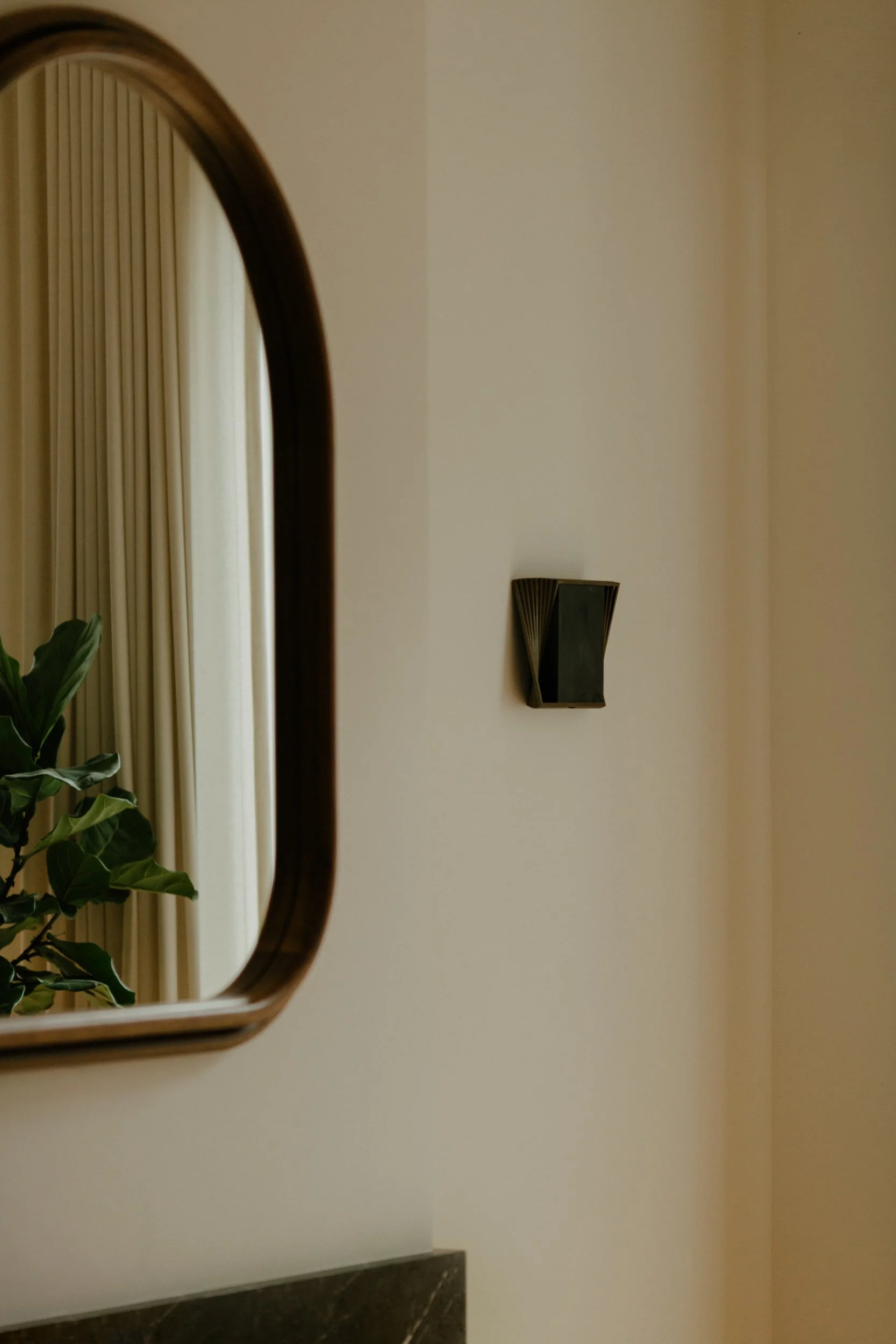
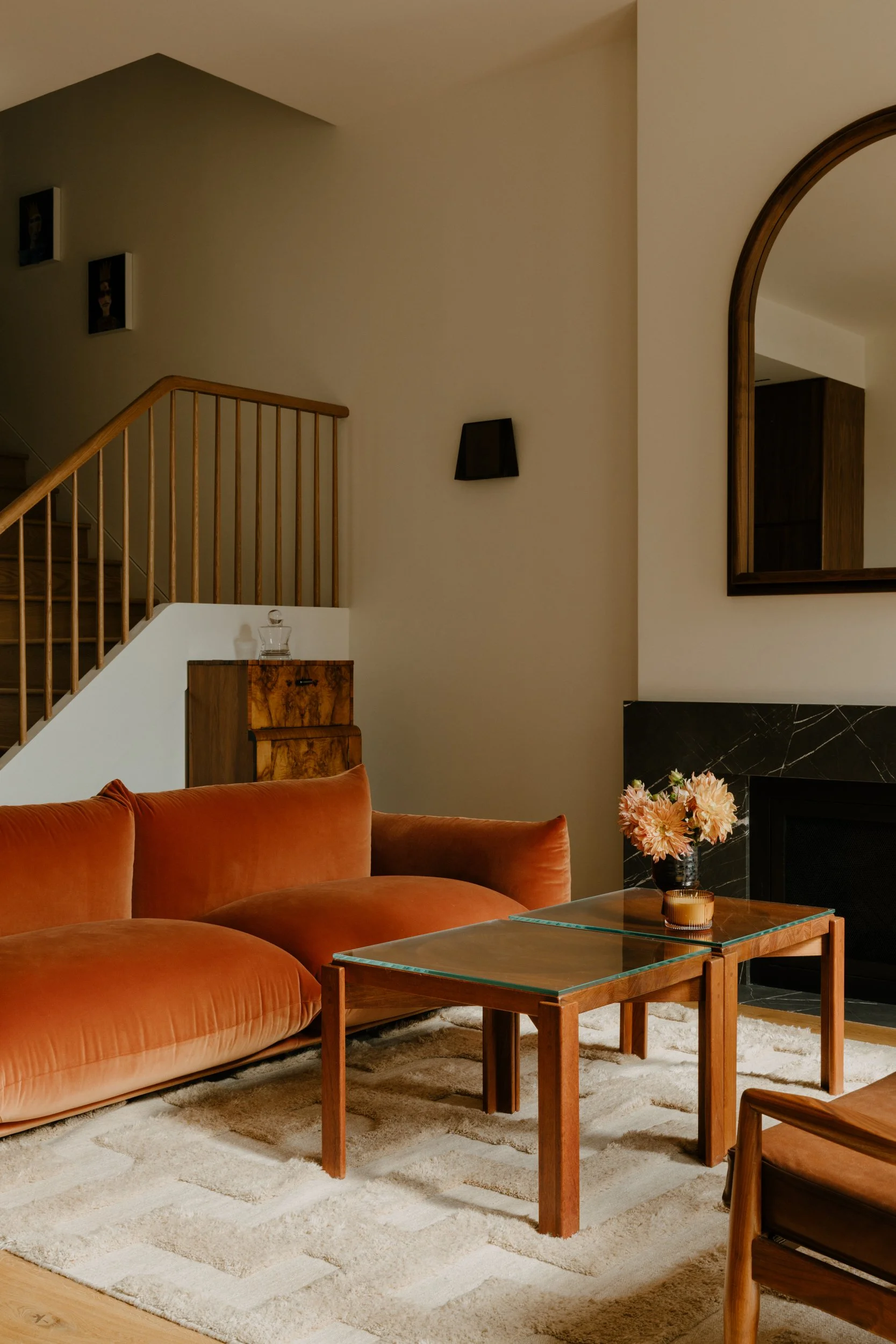
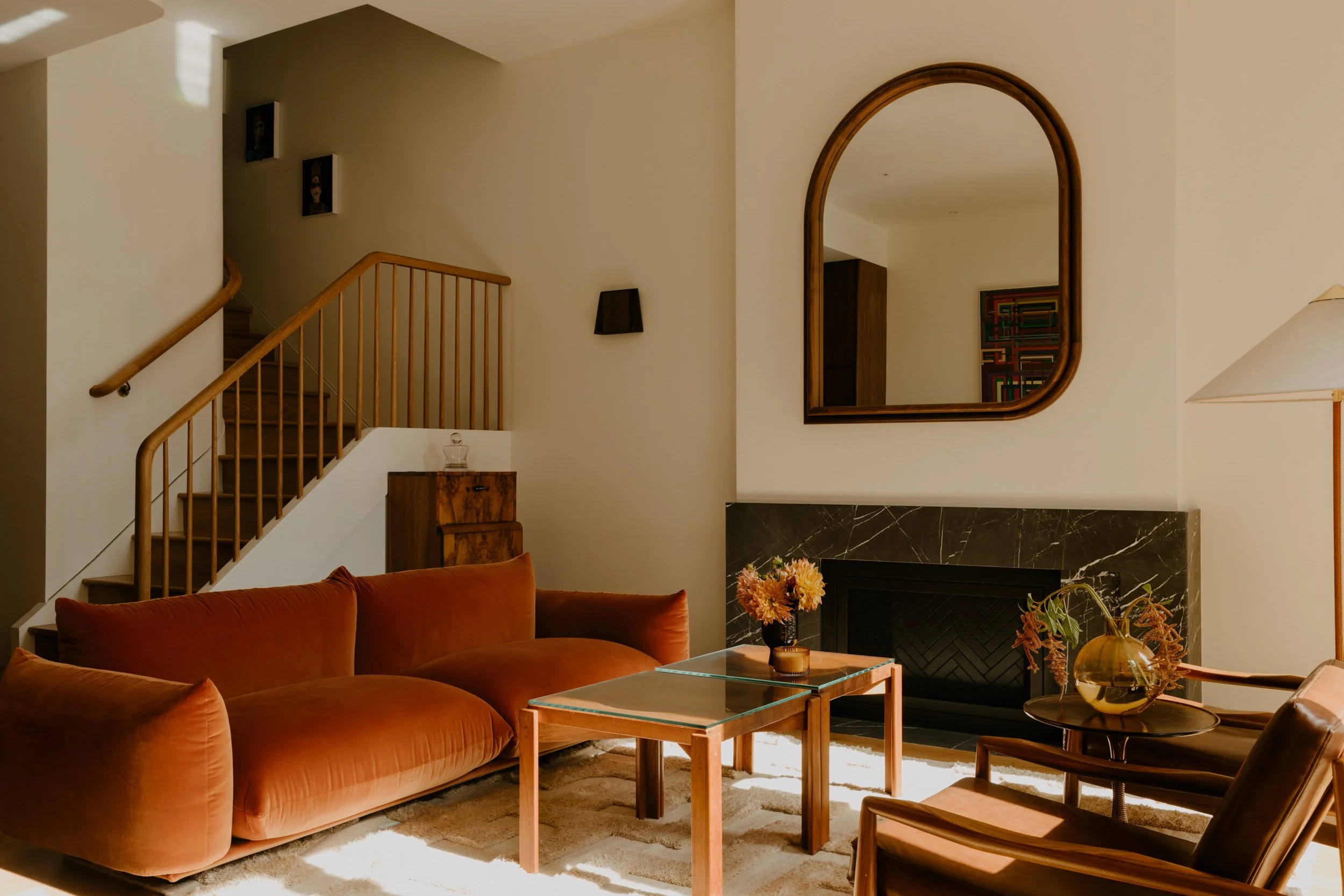
Where once a kitchen stood is now an open living space anchored by a pieta grey marble surround and flush hearth. A serendipitous trip to visit Bower Studios during design week led to finding the mirror with the same detailing from the millwork and door casing giving the mirror a sense of purpose and belonging. Auction finds sit among enduring and new icons of design, while ten-foot high doors bathe the room in sunlight softened by white cotton curtains. Flanking the fireplace, artwork by Nils Folk Anderson occupies the walls, punctuating the space with quiet drama and visual rhythm.
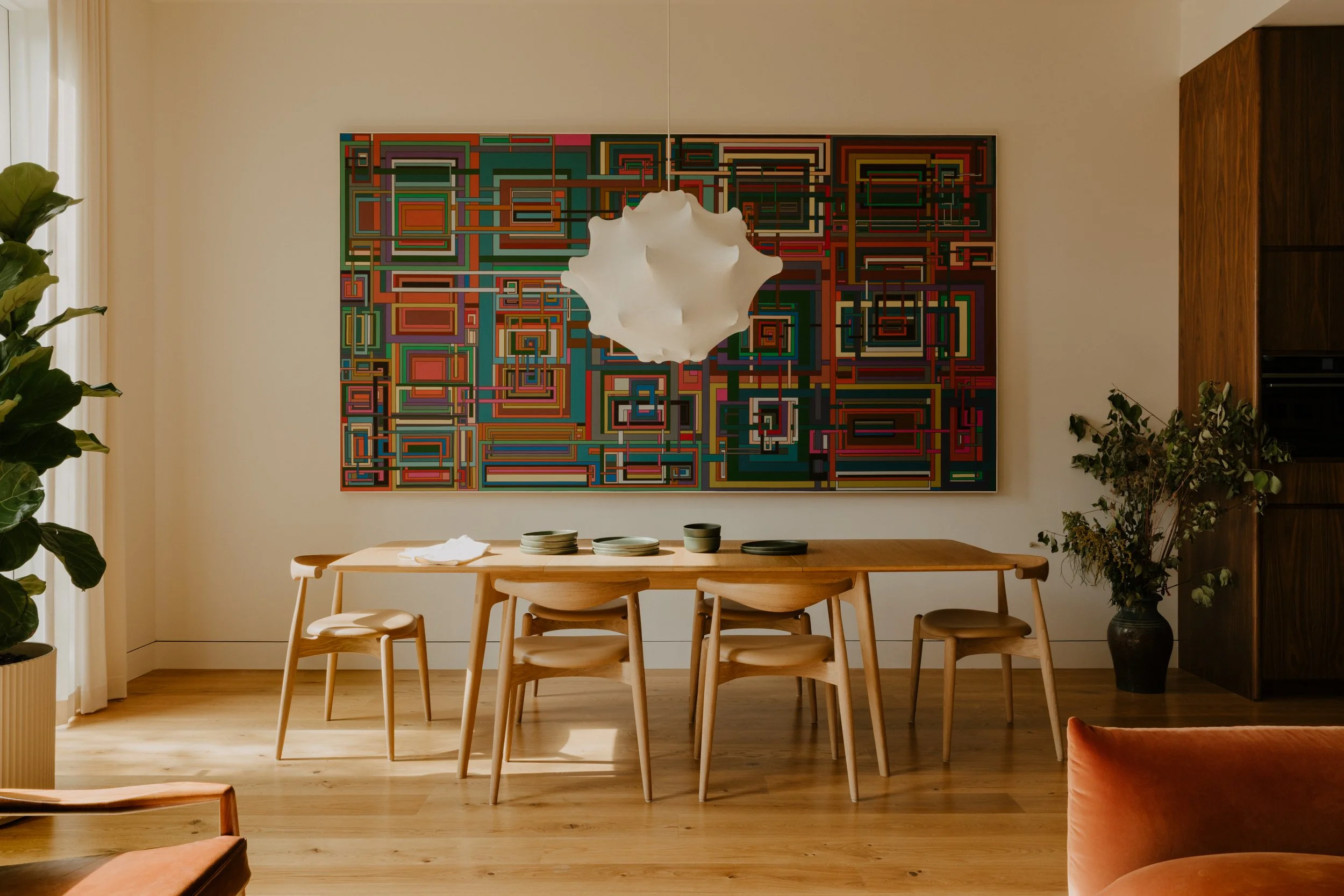
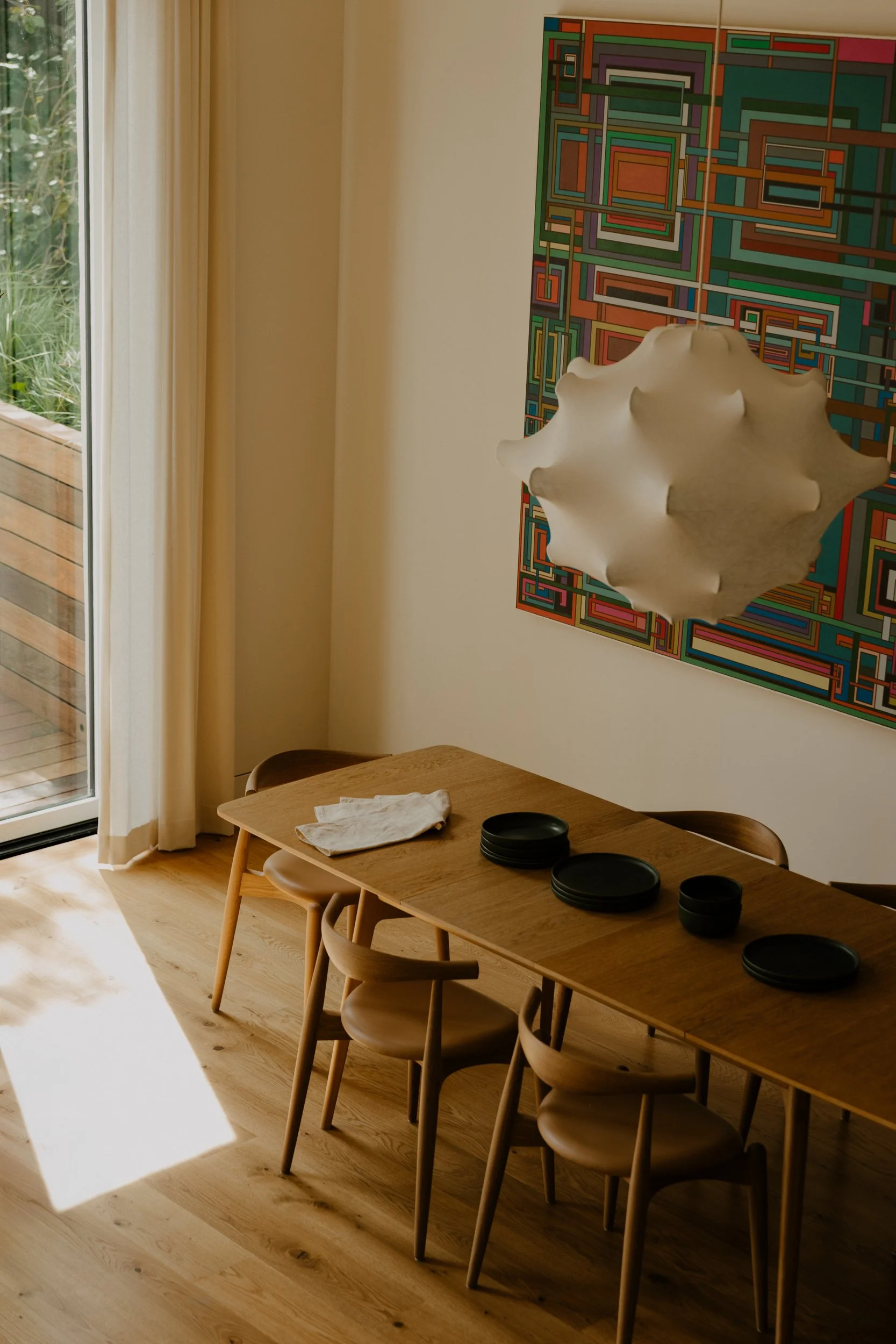
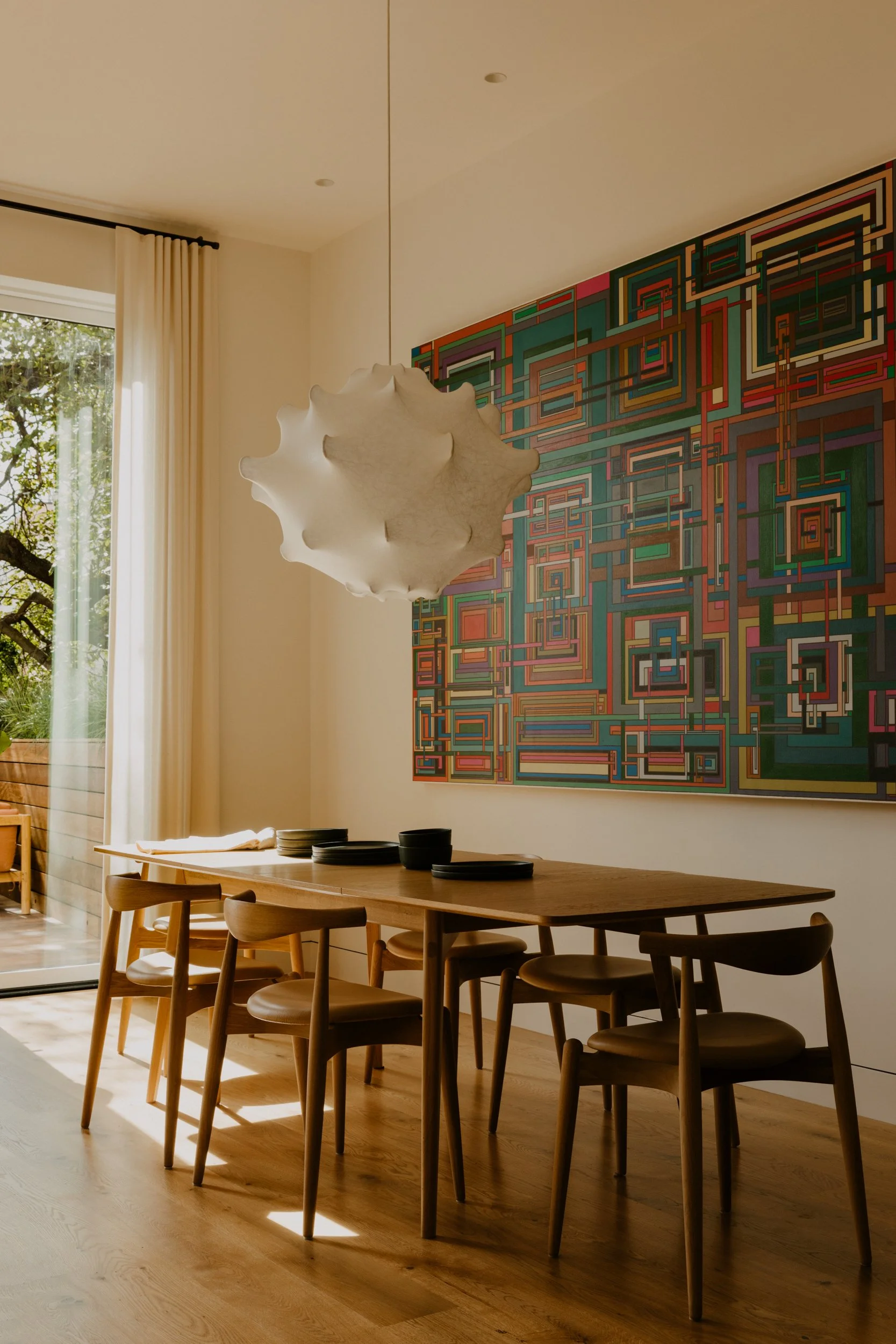
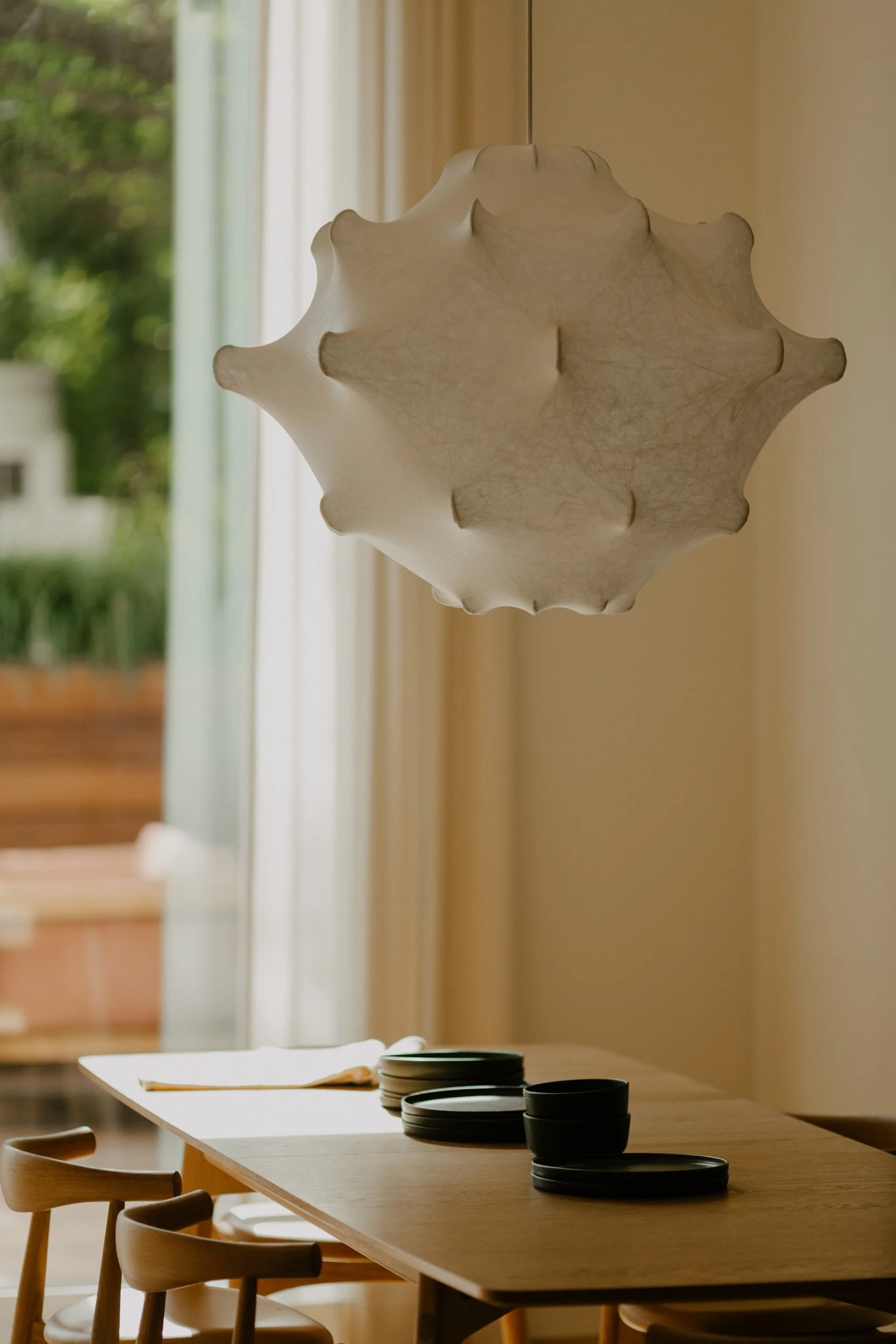
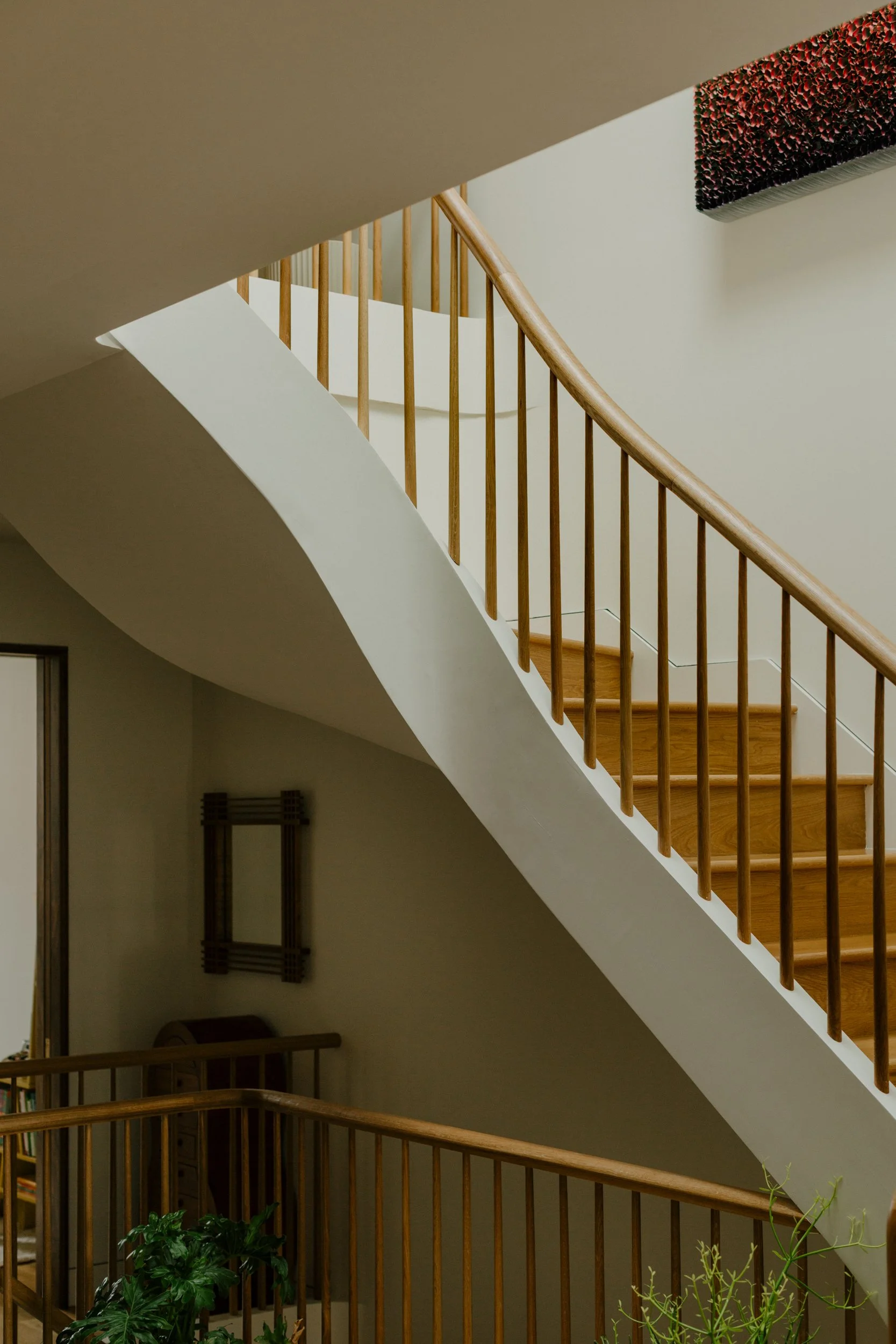
An eleven-by-six-foot painting by Nils Folk Anderson defines the dining area, establishing a bold visual anchor for the space. Above, a Castiglioni Taraxacum 2 drop light floats above the table. Warm oak floors, sourced from Madera, and Benjamin Moore’s Cloud White run seamlessly throughout the home, grounding each space in material continuity and subtle elegance.
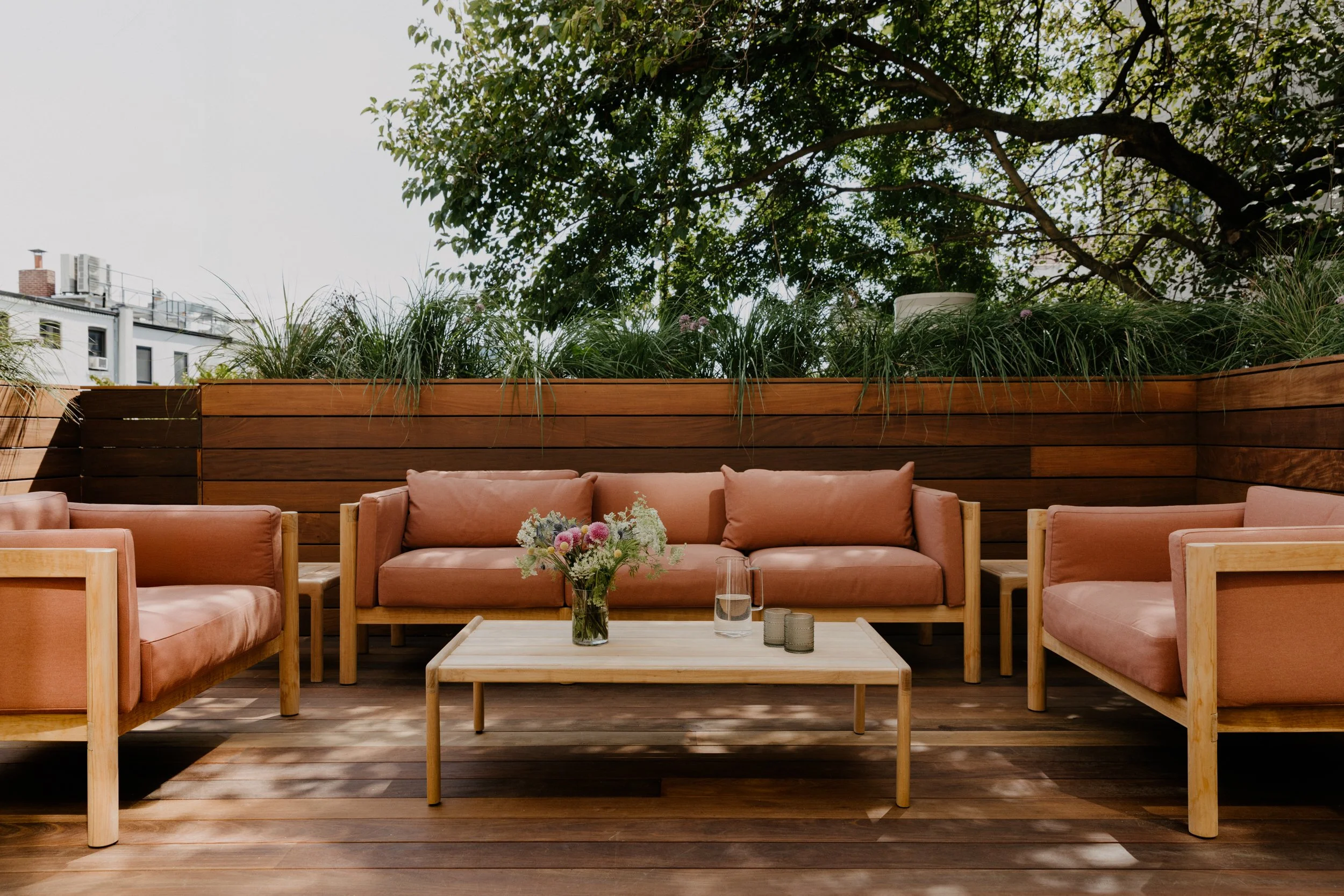
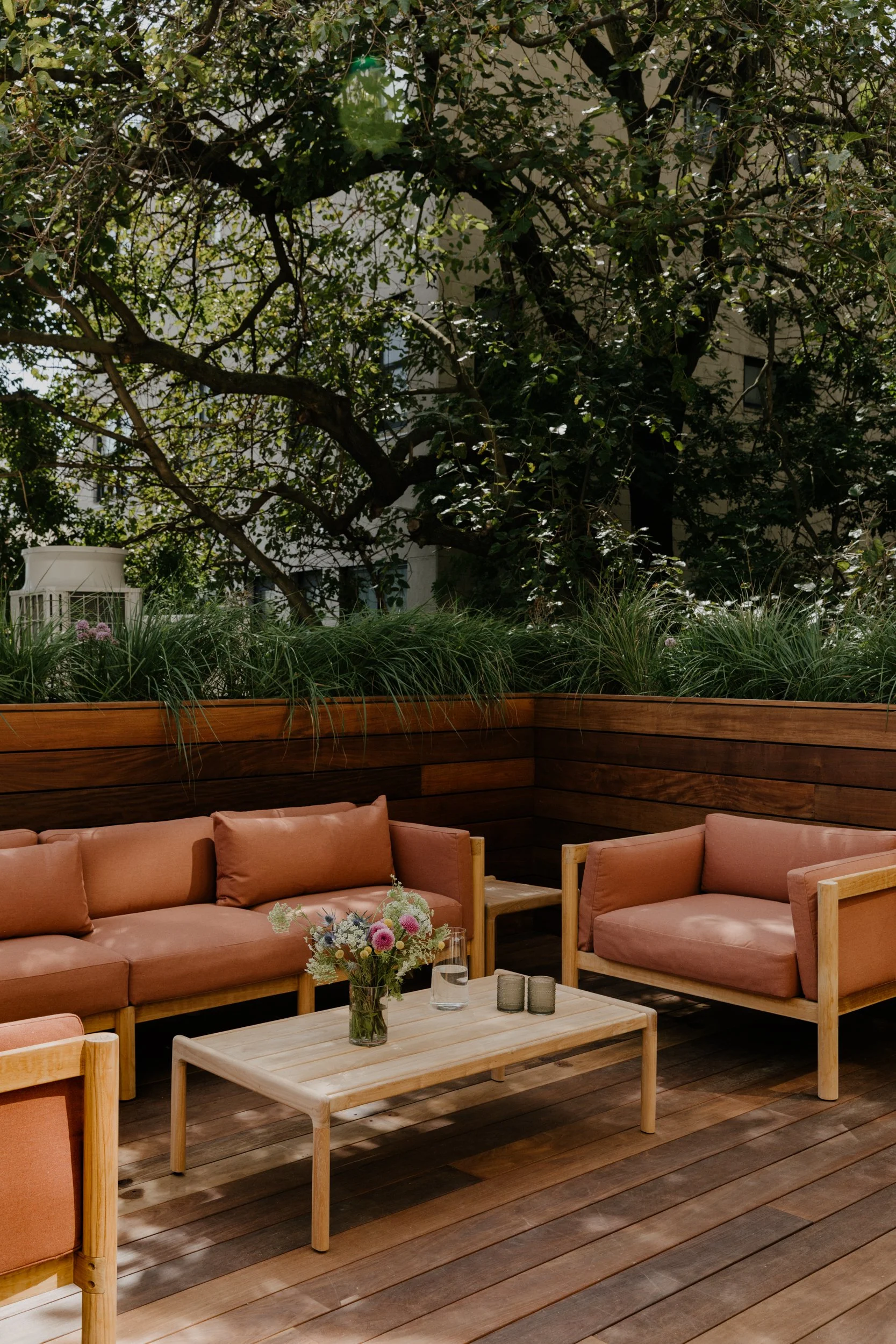
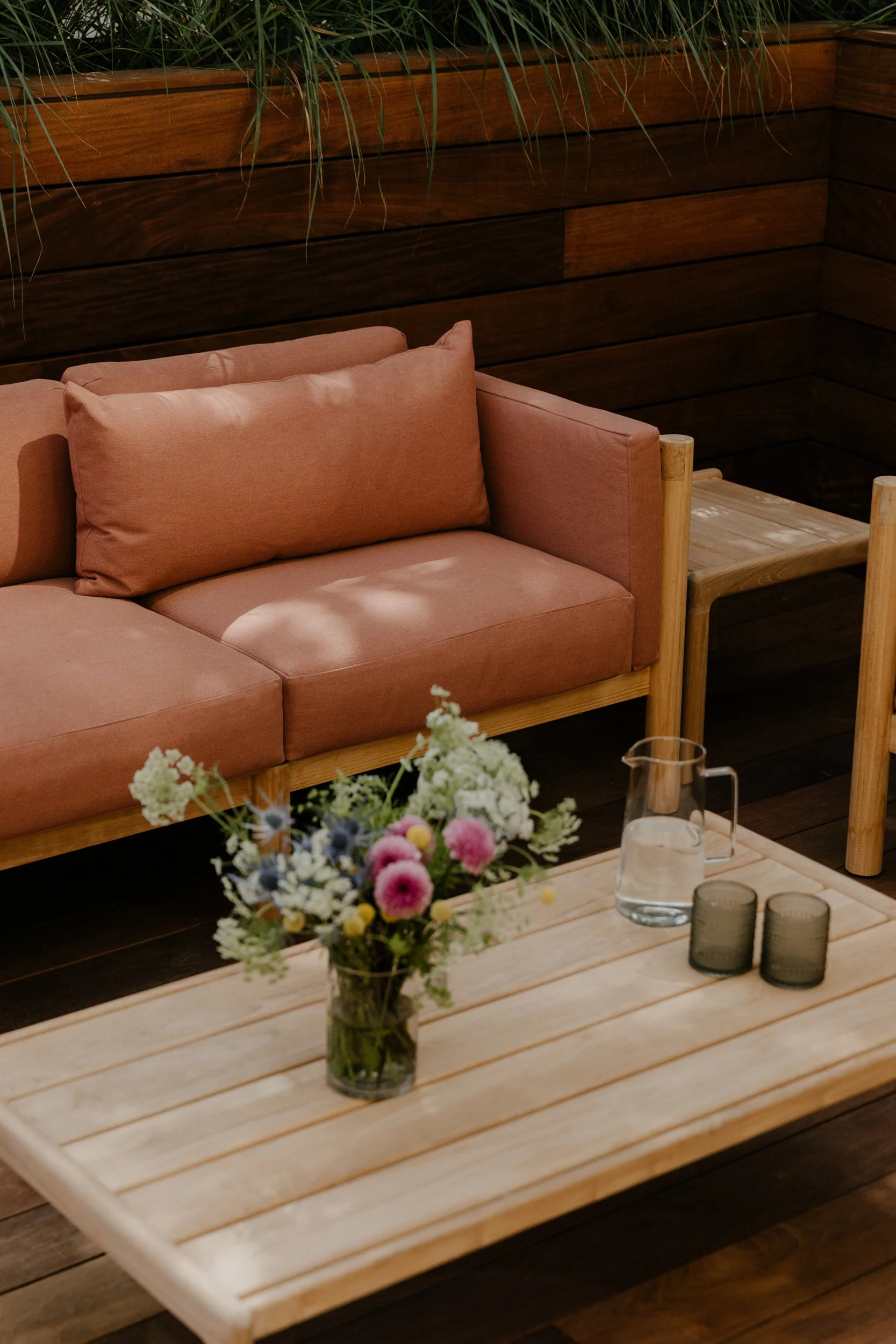
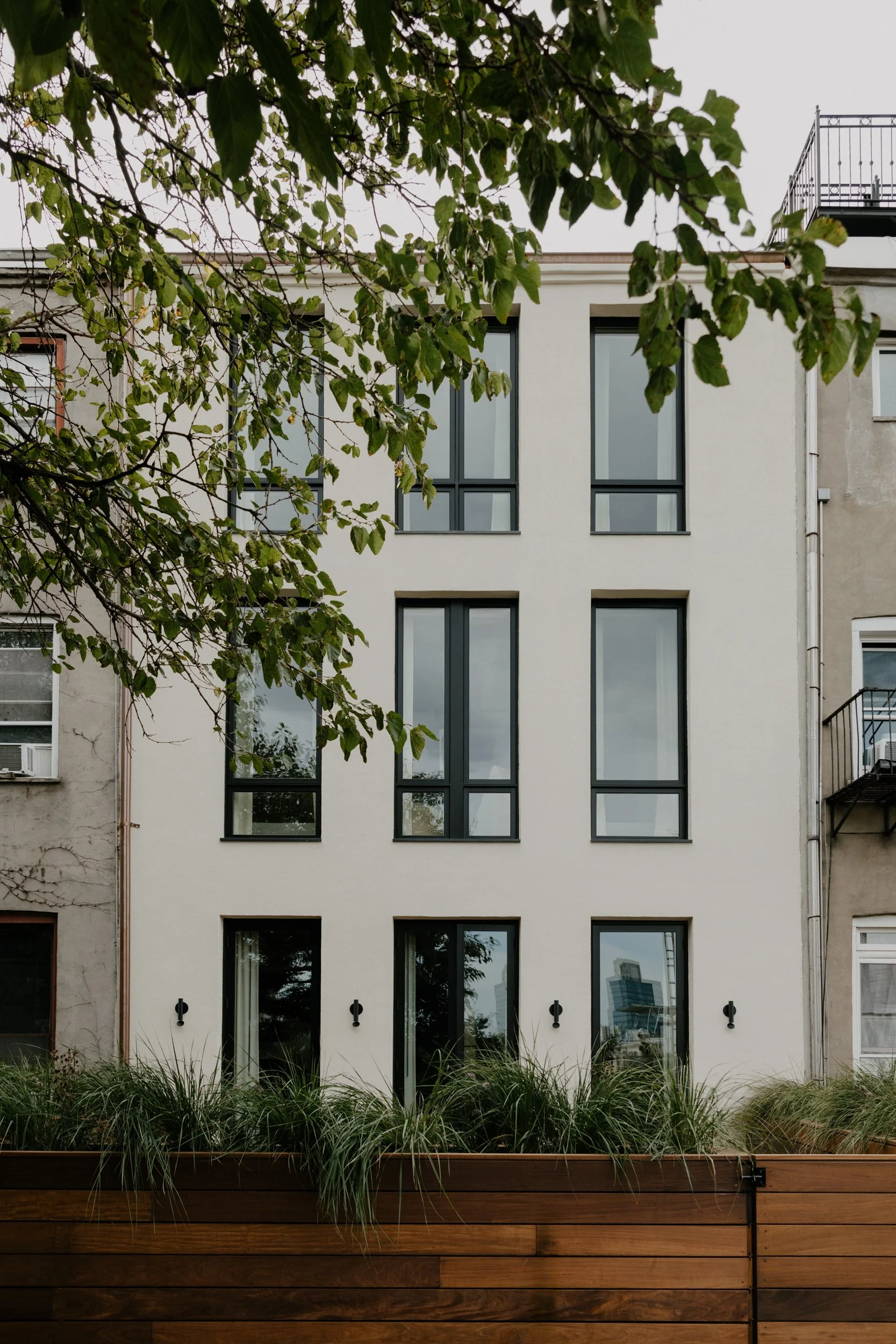
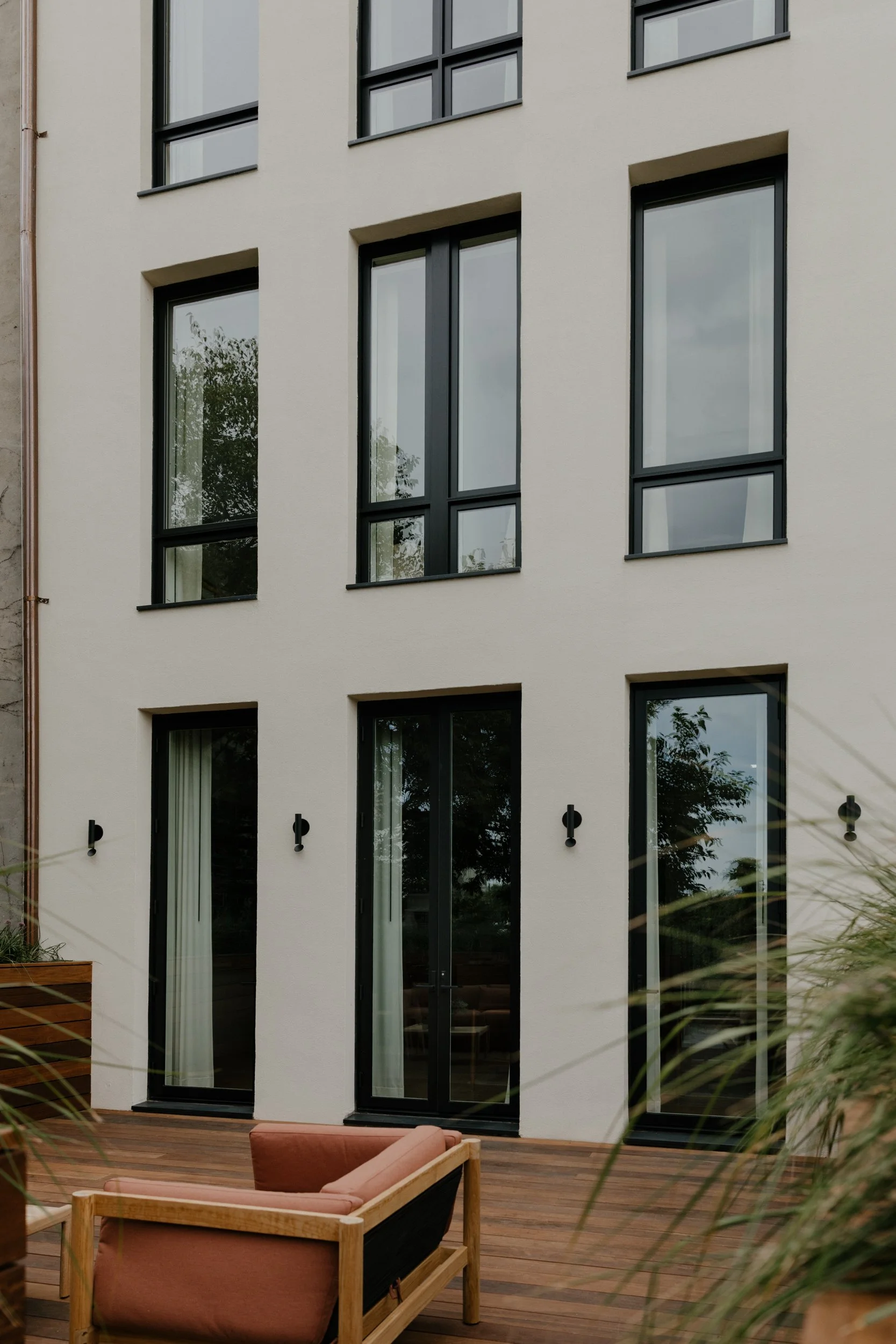
The rear terrace unfolds as a hidden retreat, embraced by a wall of Ipe planters brimming with Karl Foerster grasses and punctuated with alliums, their movement whispering in the breeze while offering both privacy and discreet storage. A neighboring tree, gracefully positioned, conceals the essential mechanical equipment, preserving the terrace’s calm and contemplative character. The rebuilt rear façade creates a seamless dialogue between inside and out, framing quiet spring mornings with soft light and a soothing backdrop, turning this elevated outdoor space into a private sanctuary in the heart of the city.
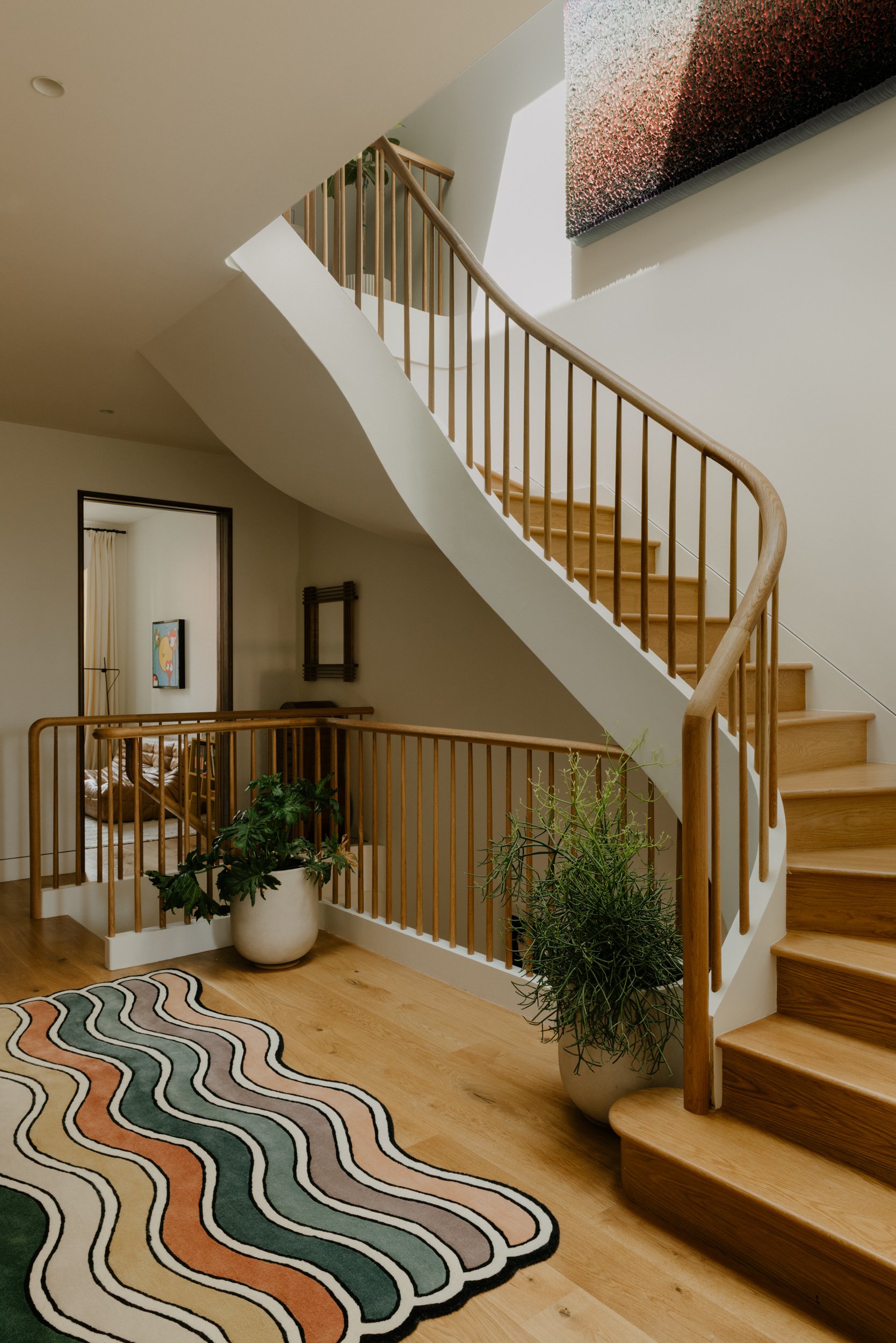
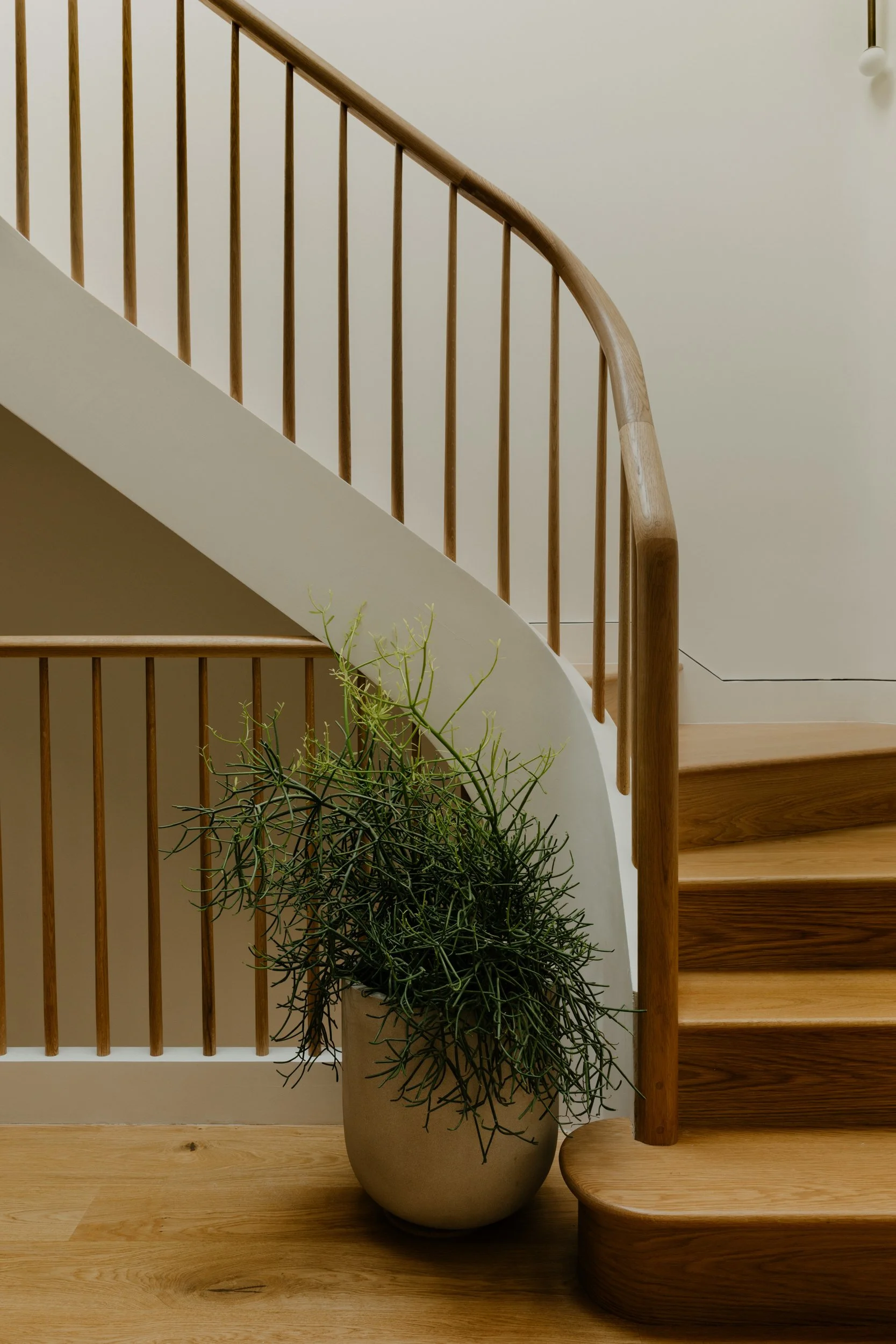
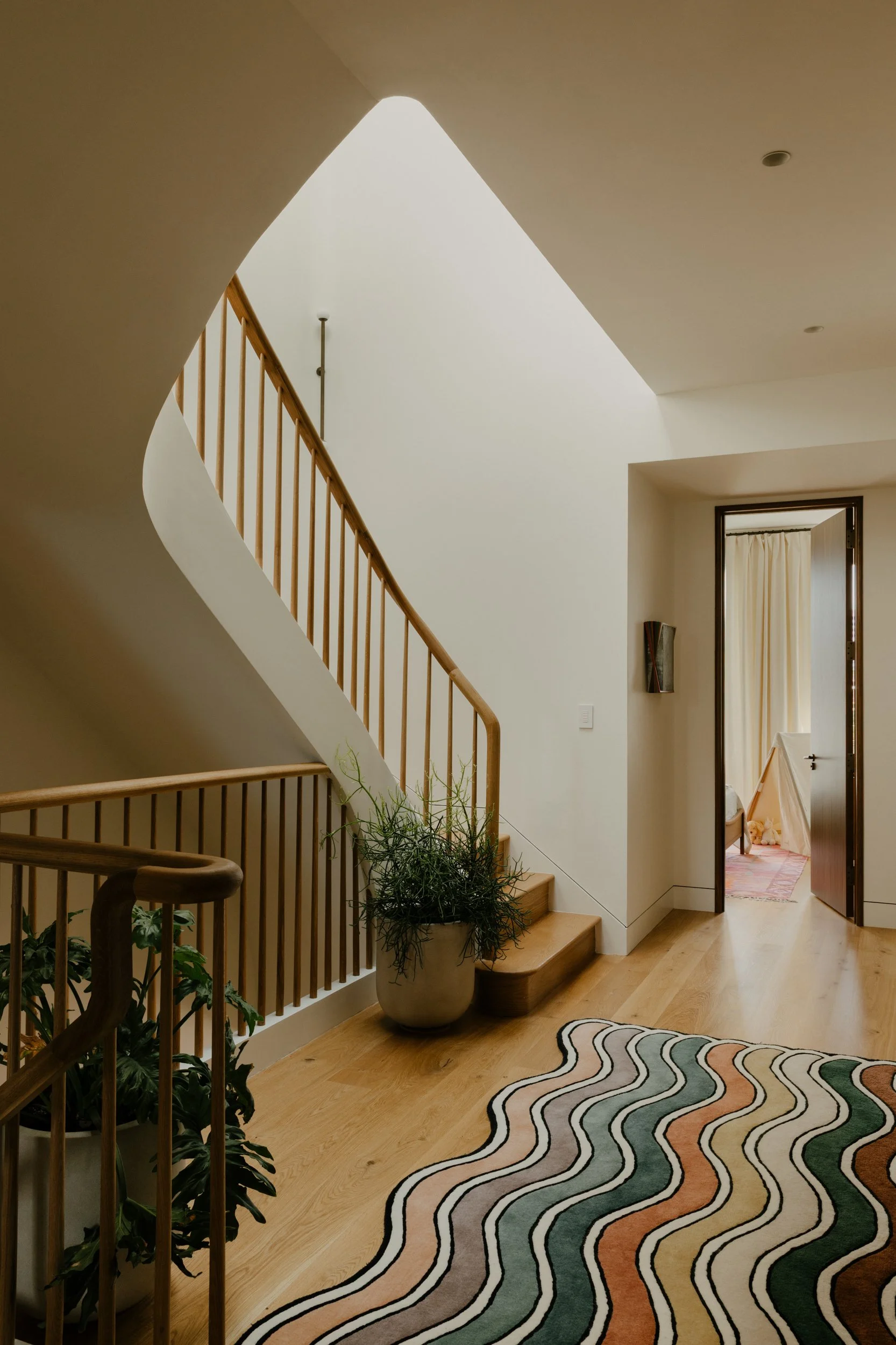
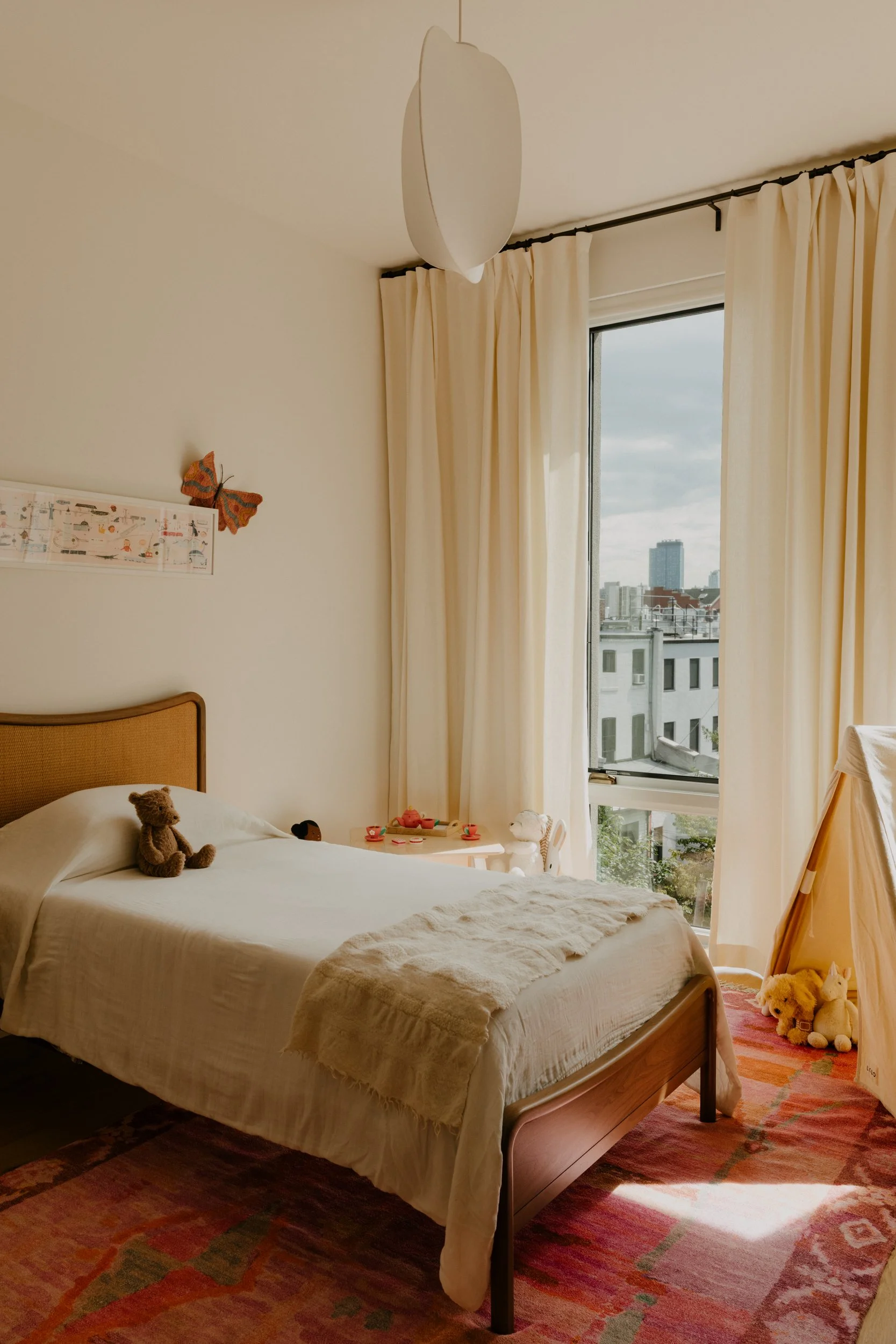
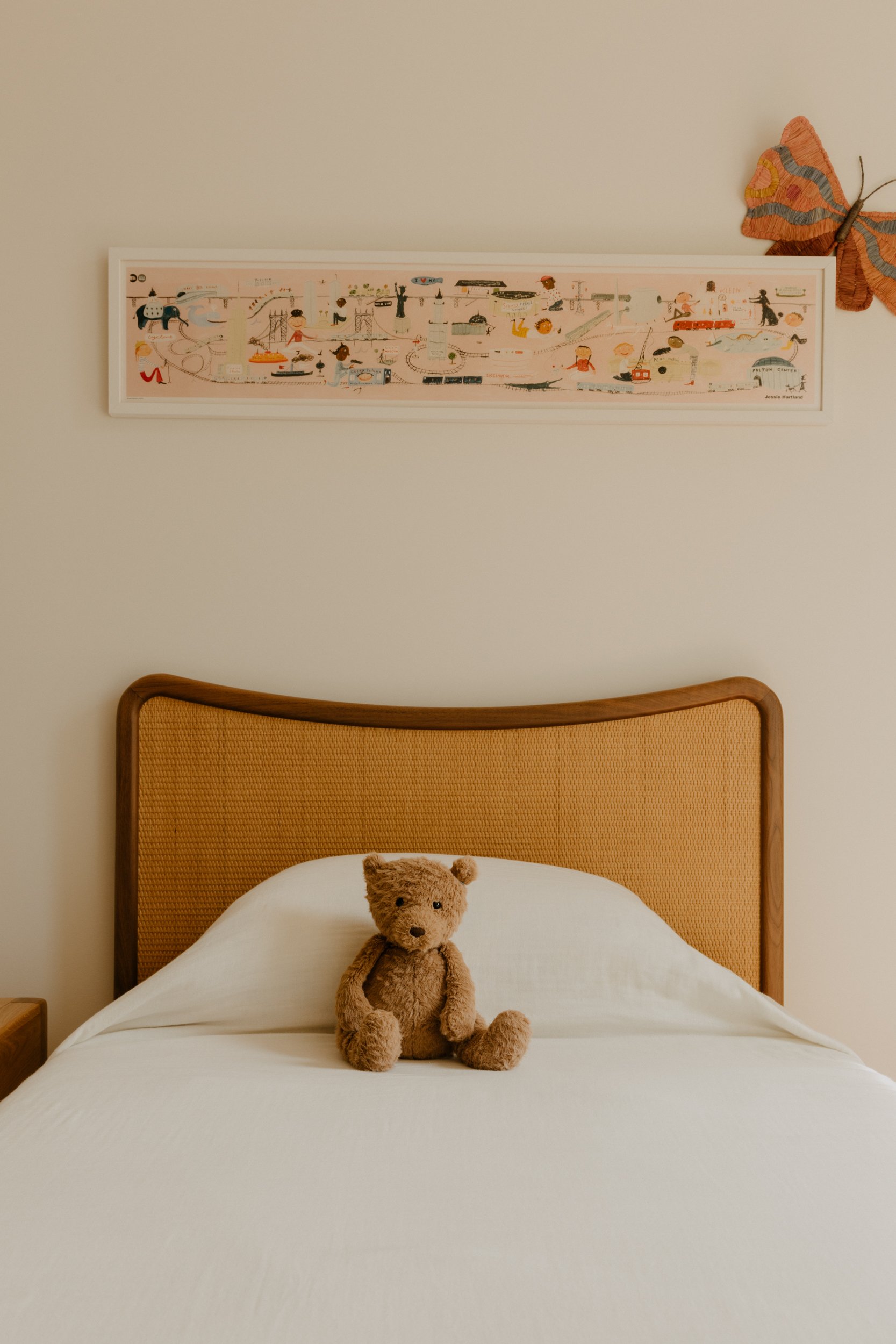
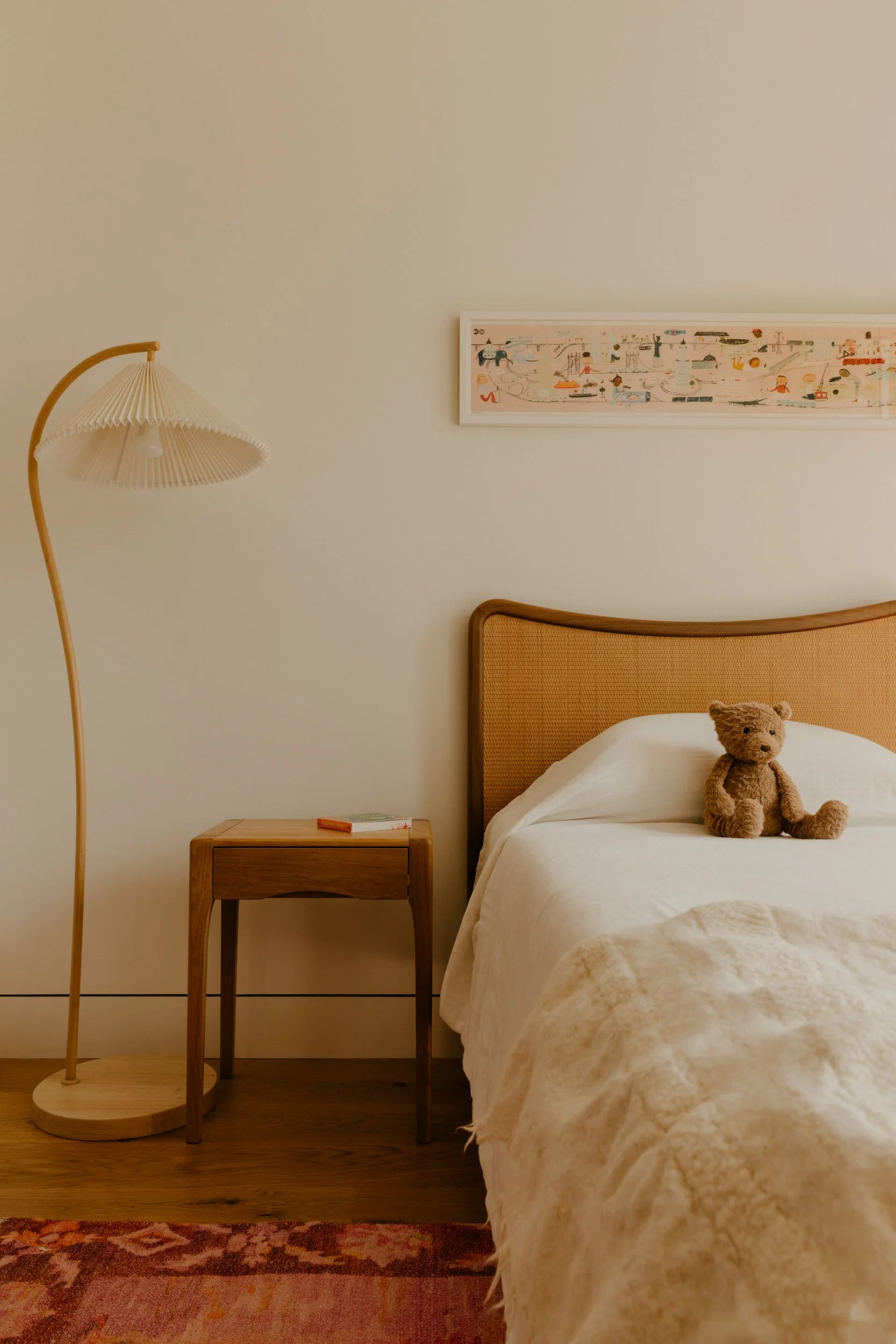
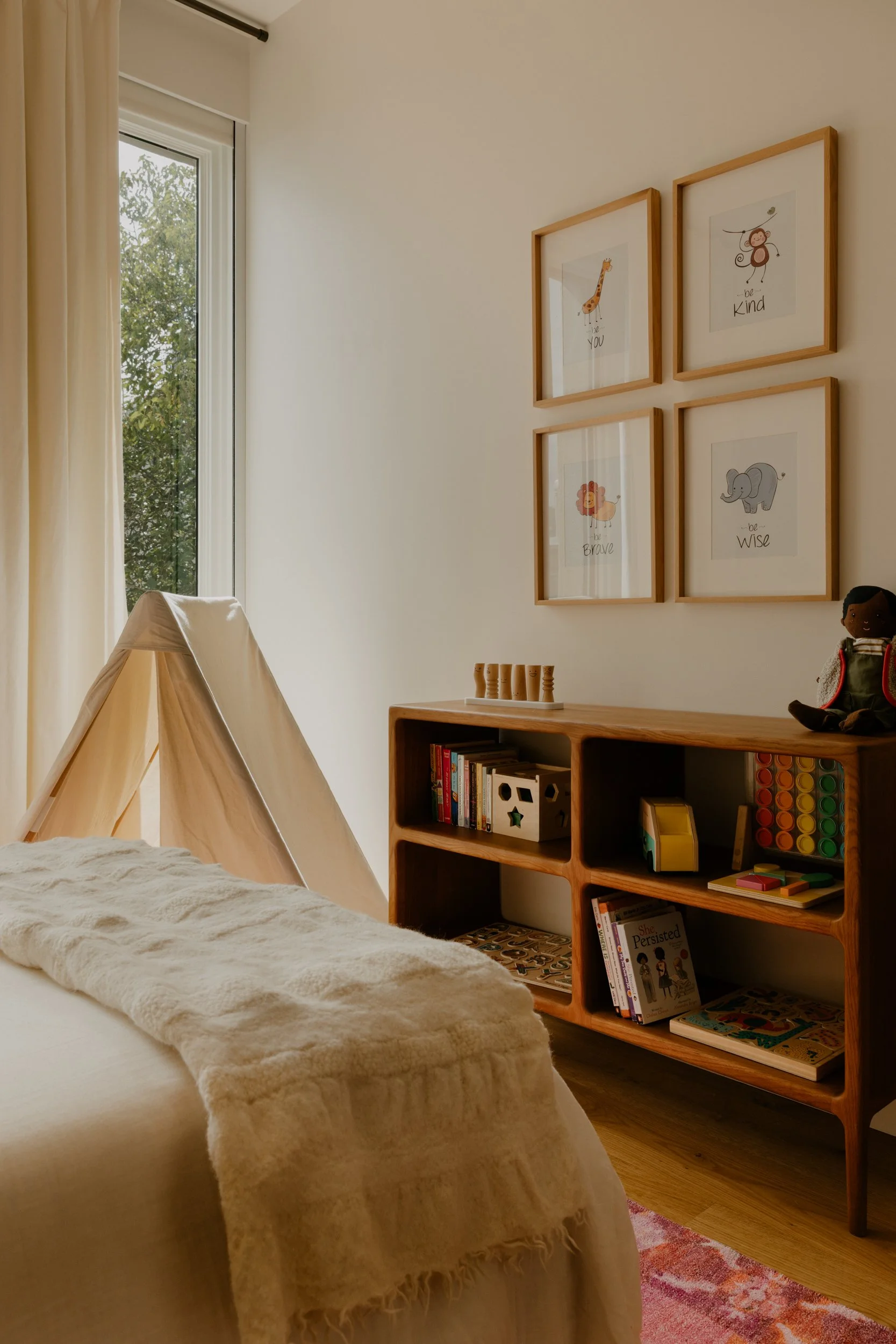
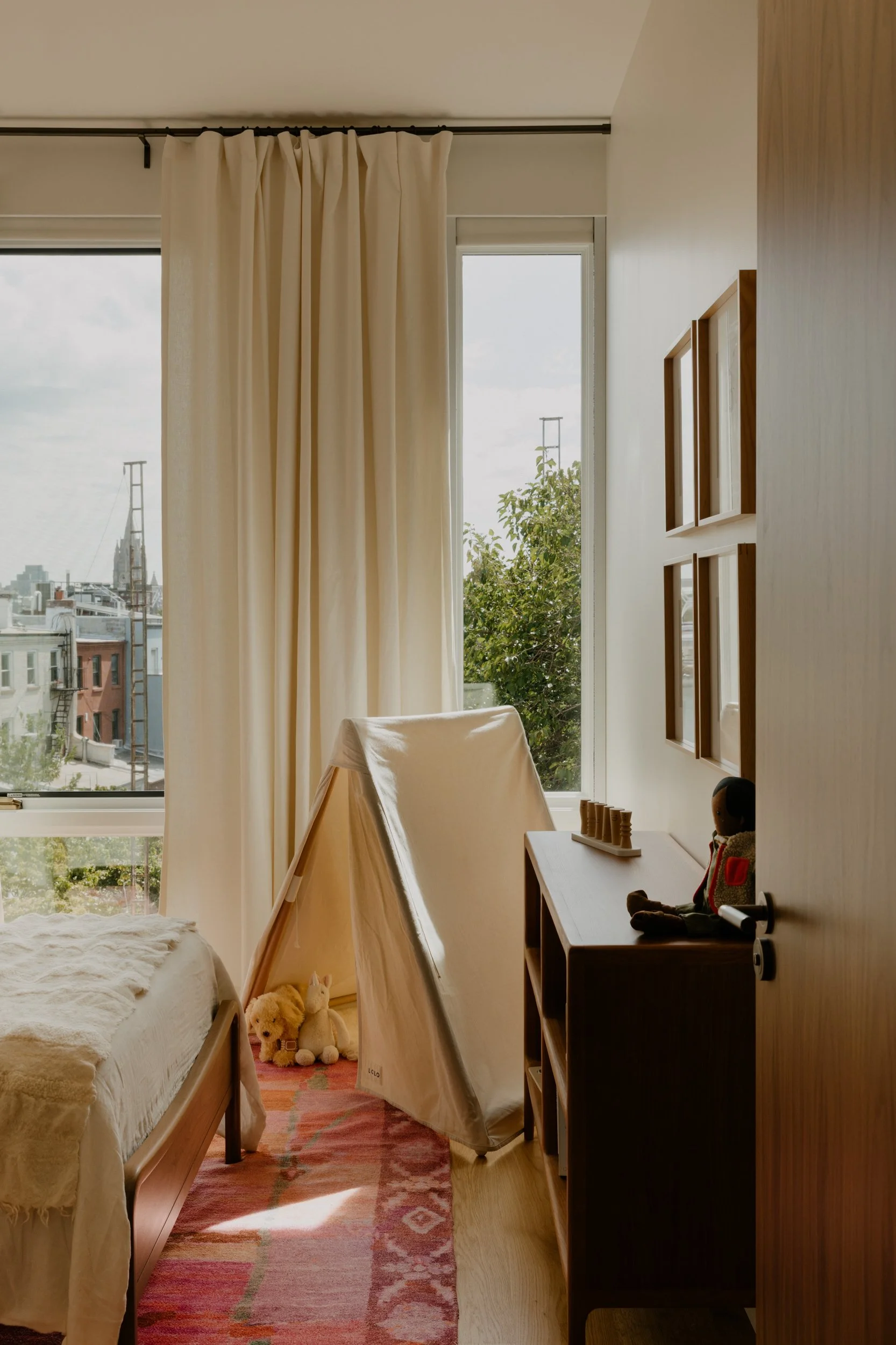
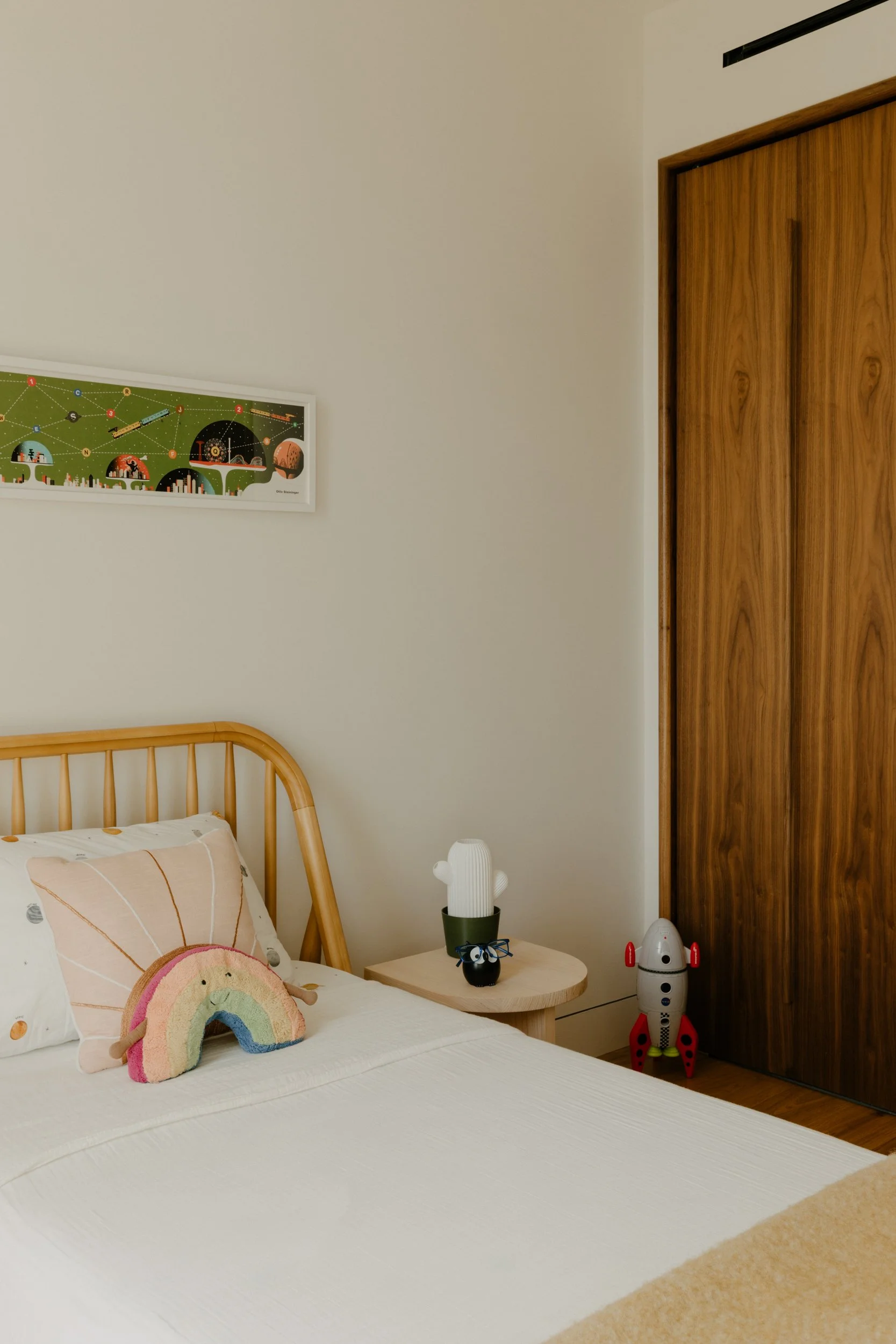
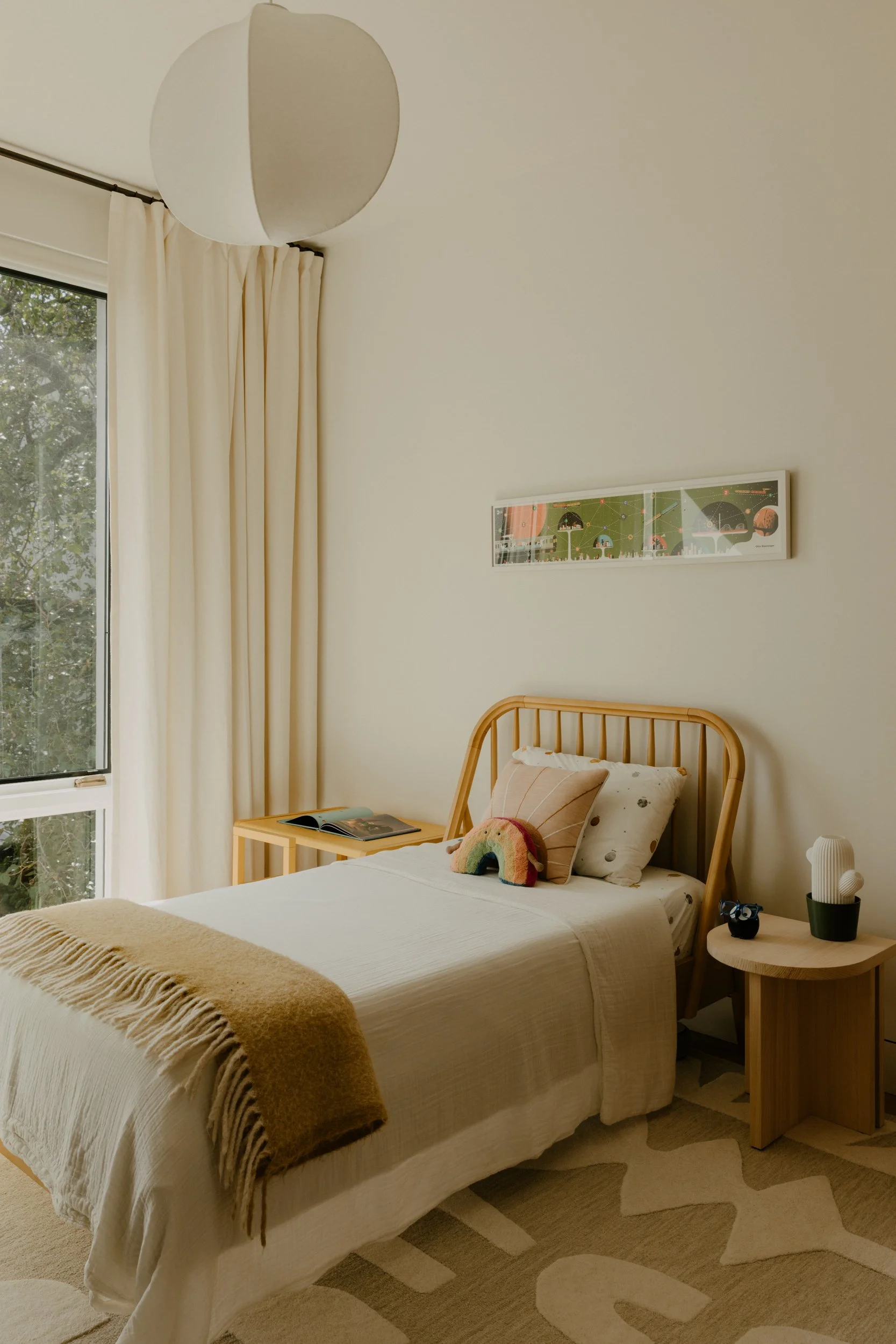
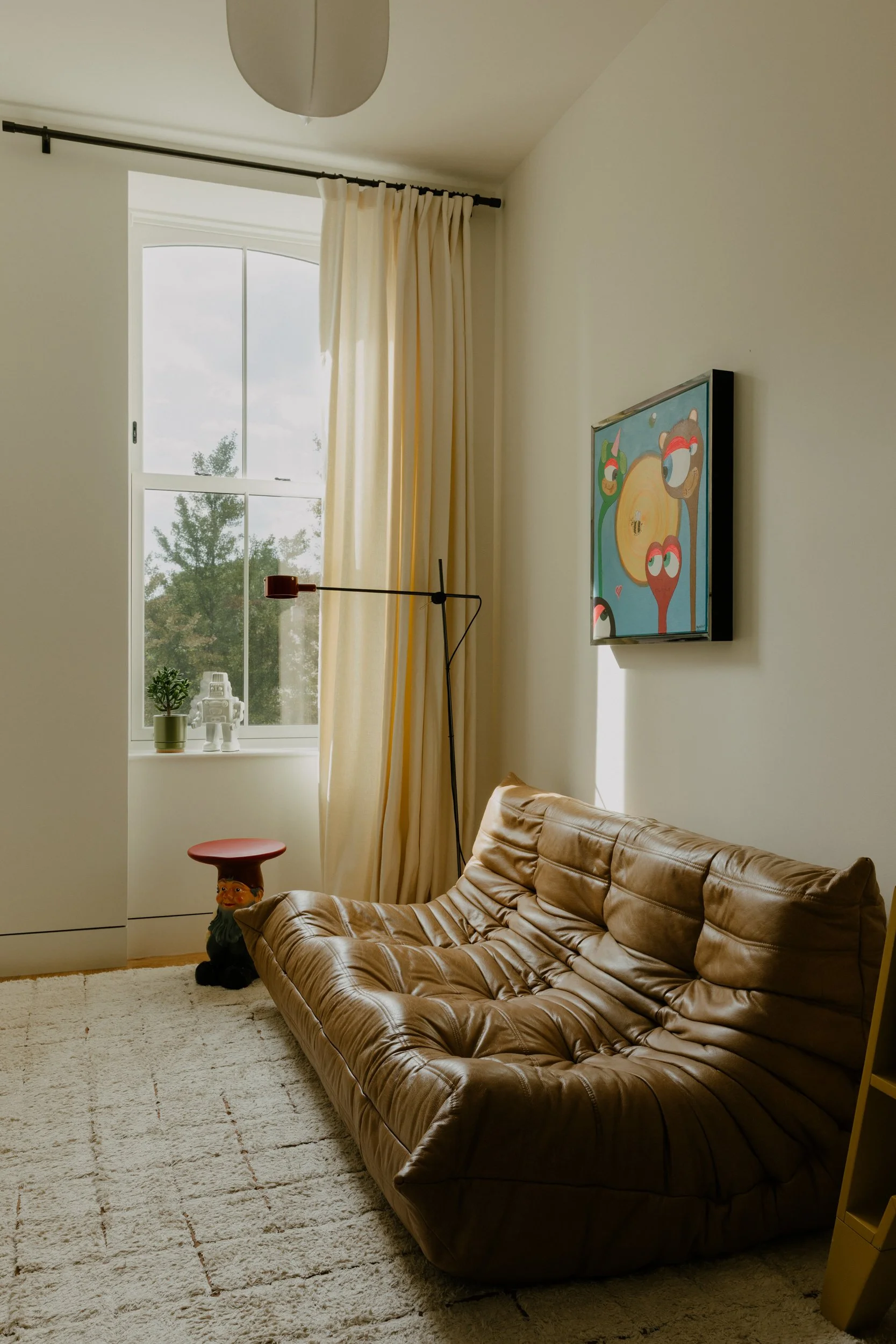
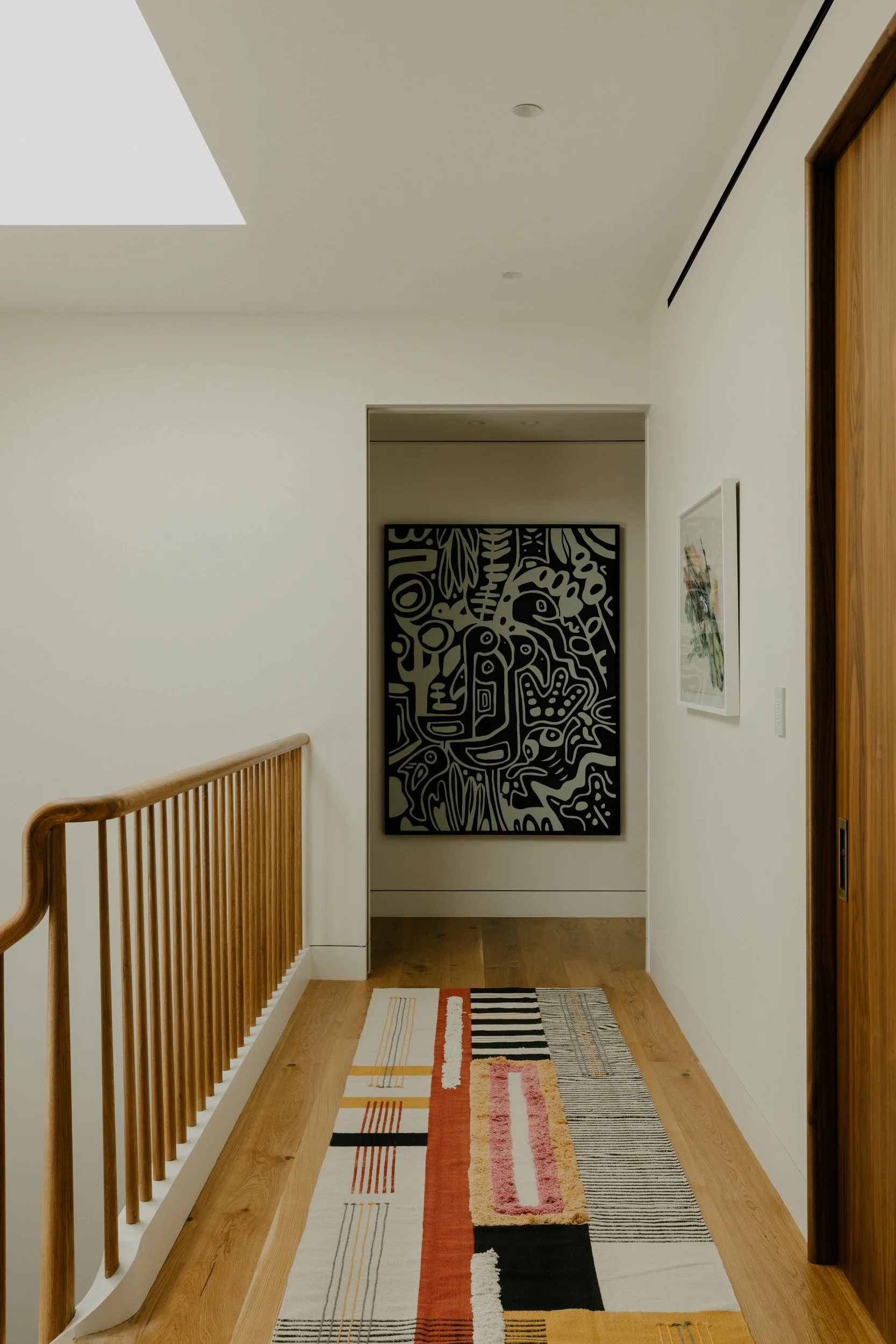
While the second floor is a more social space, the third floor and fourth floors are for the family. Imagined as a place for kids, an open connection to the 4th floor was crucial. The playroom and guest suite occupy the front rooms, while the rooms overlooking the quieter courtyard are reserved for the children’s bedrooms. The generous stair landing serves as a multi purpose space for play, household tasks, circulation and light well.
The children’s bedrooms are mirror images of each other SPACIALLY, but reflect the children’s unique personalities.
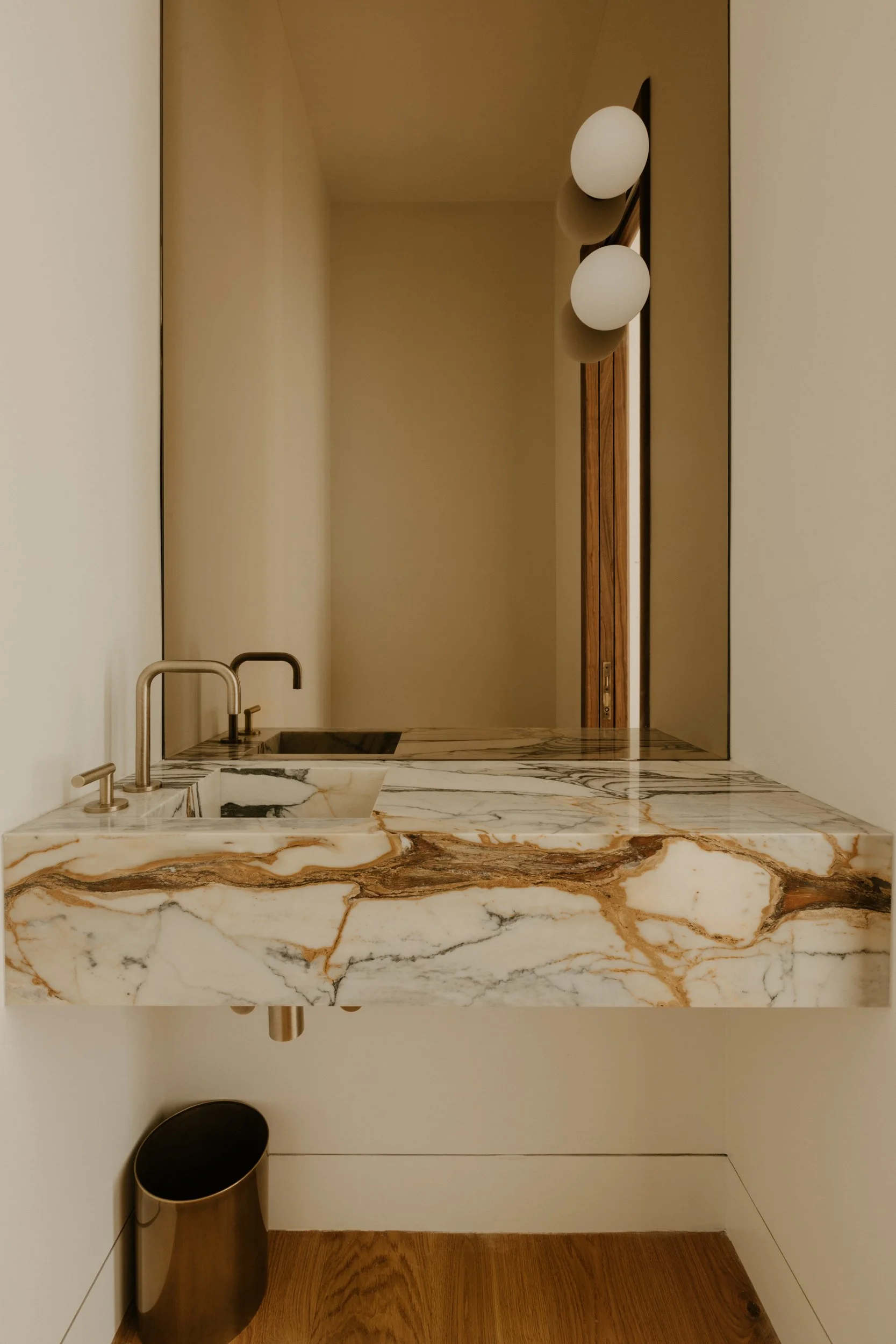
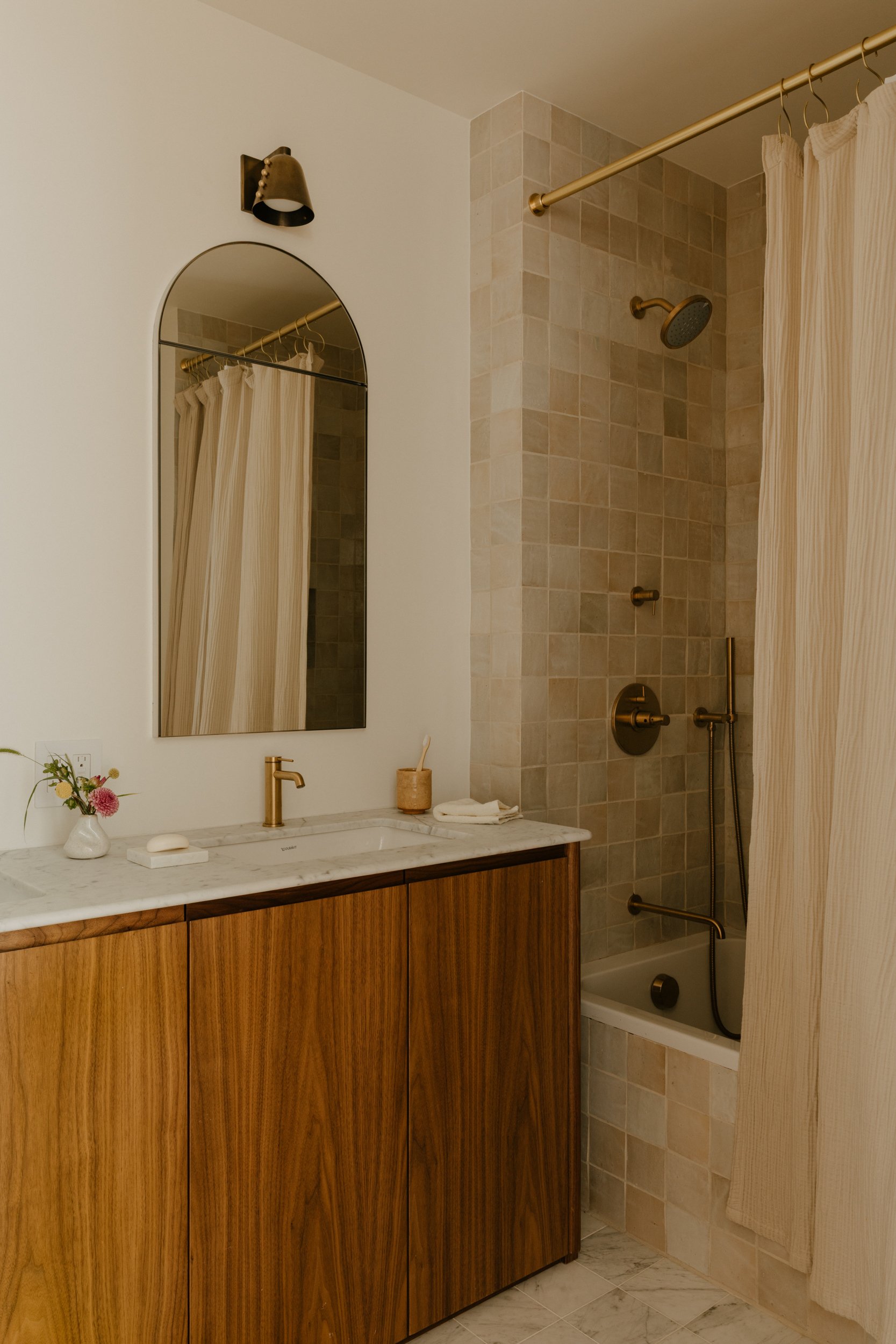
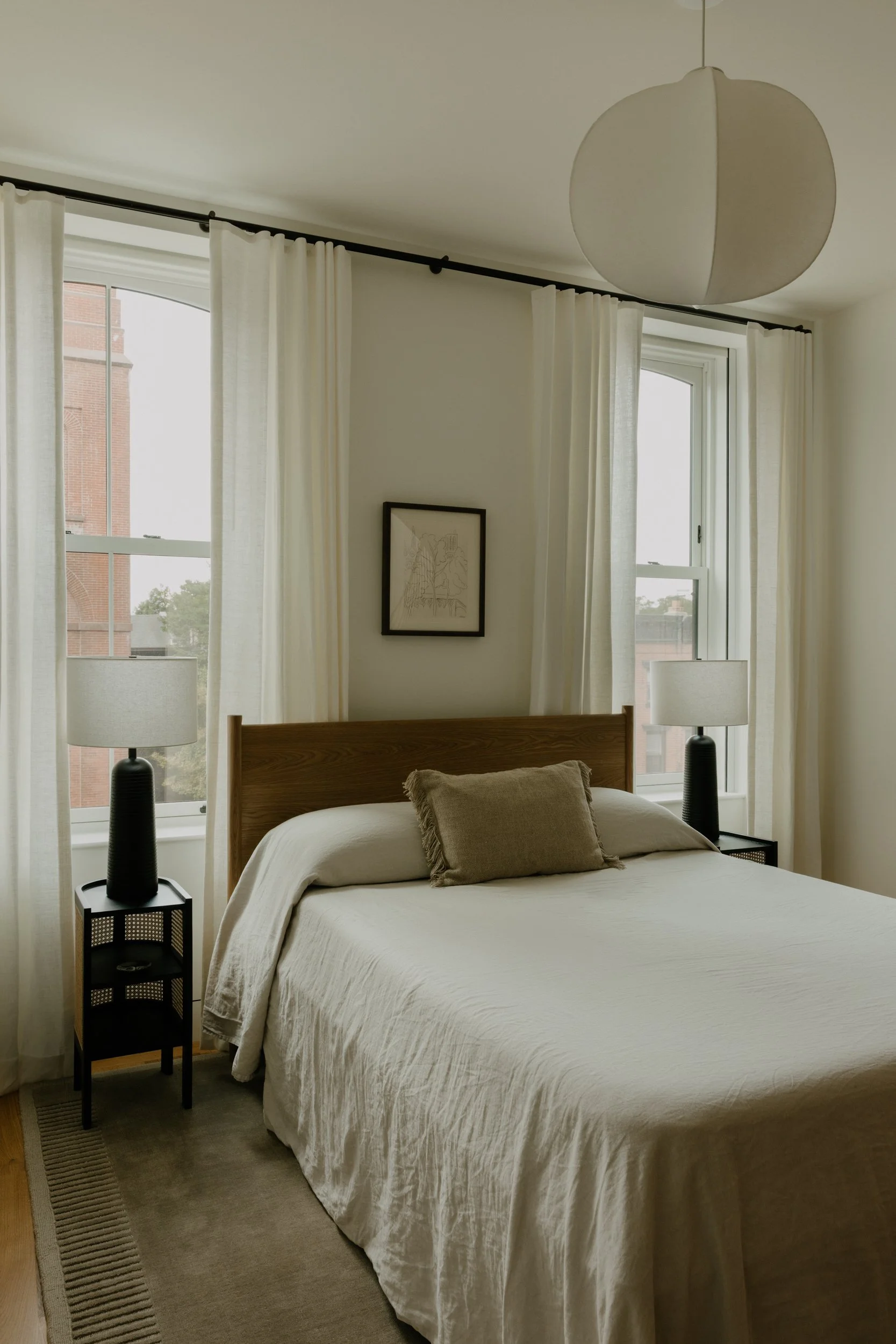
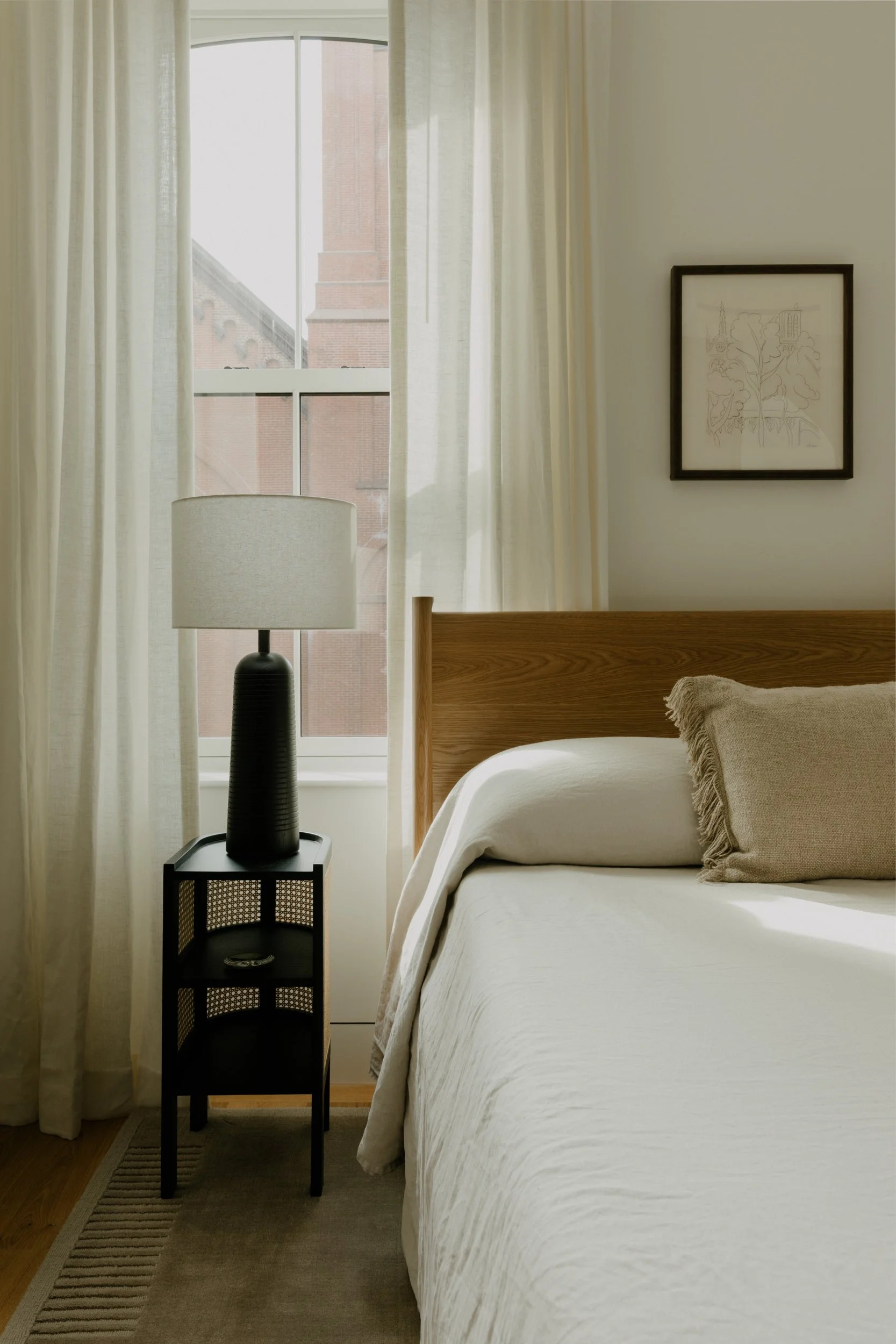
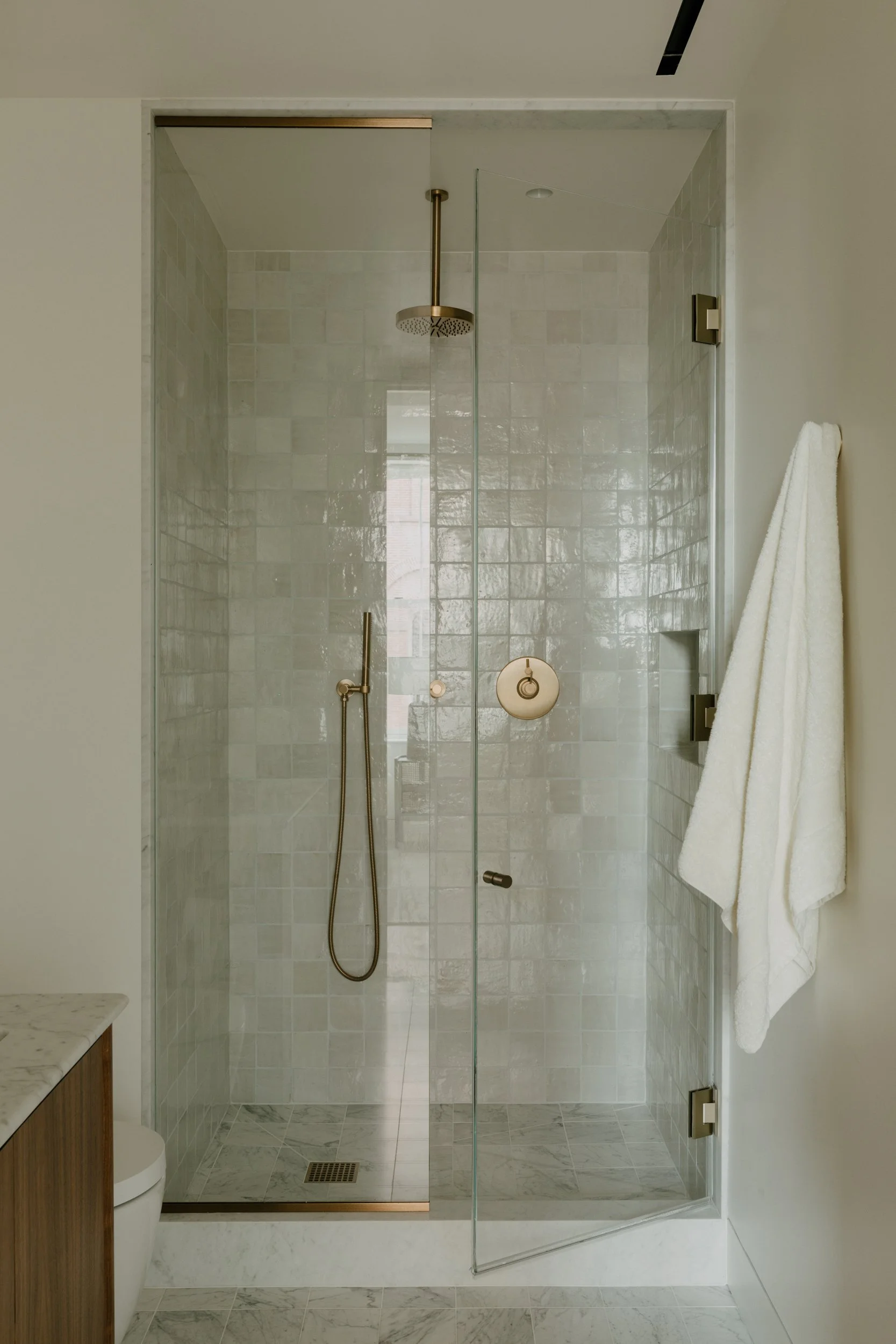
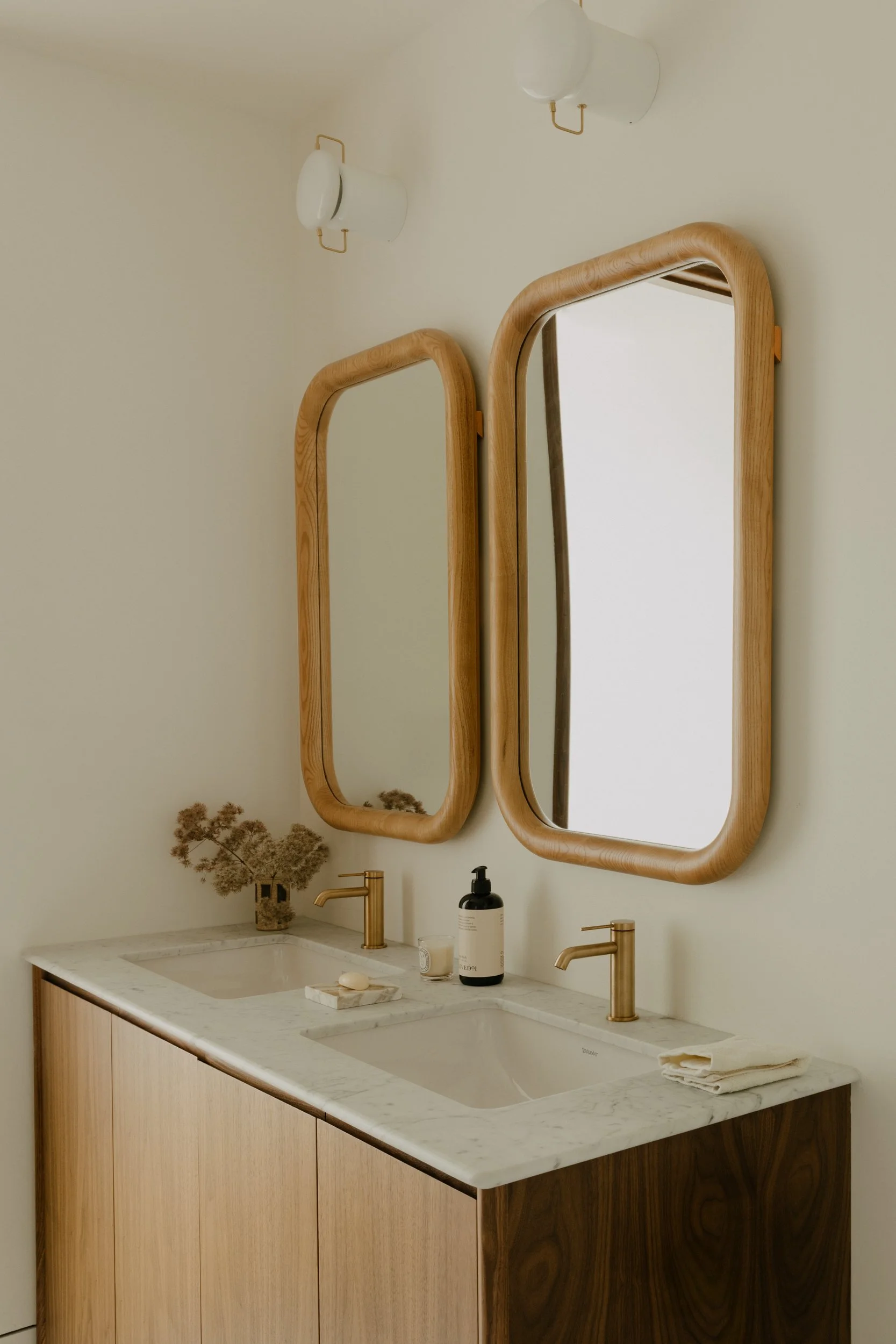
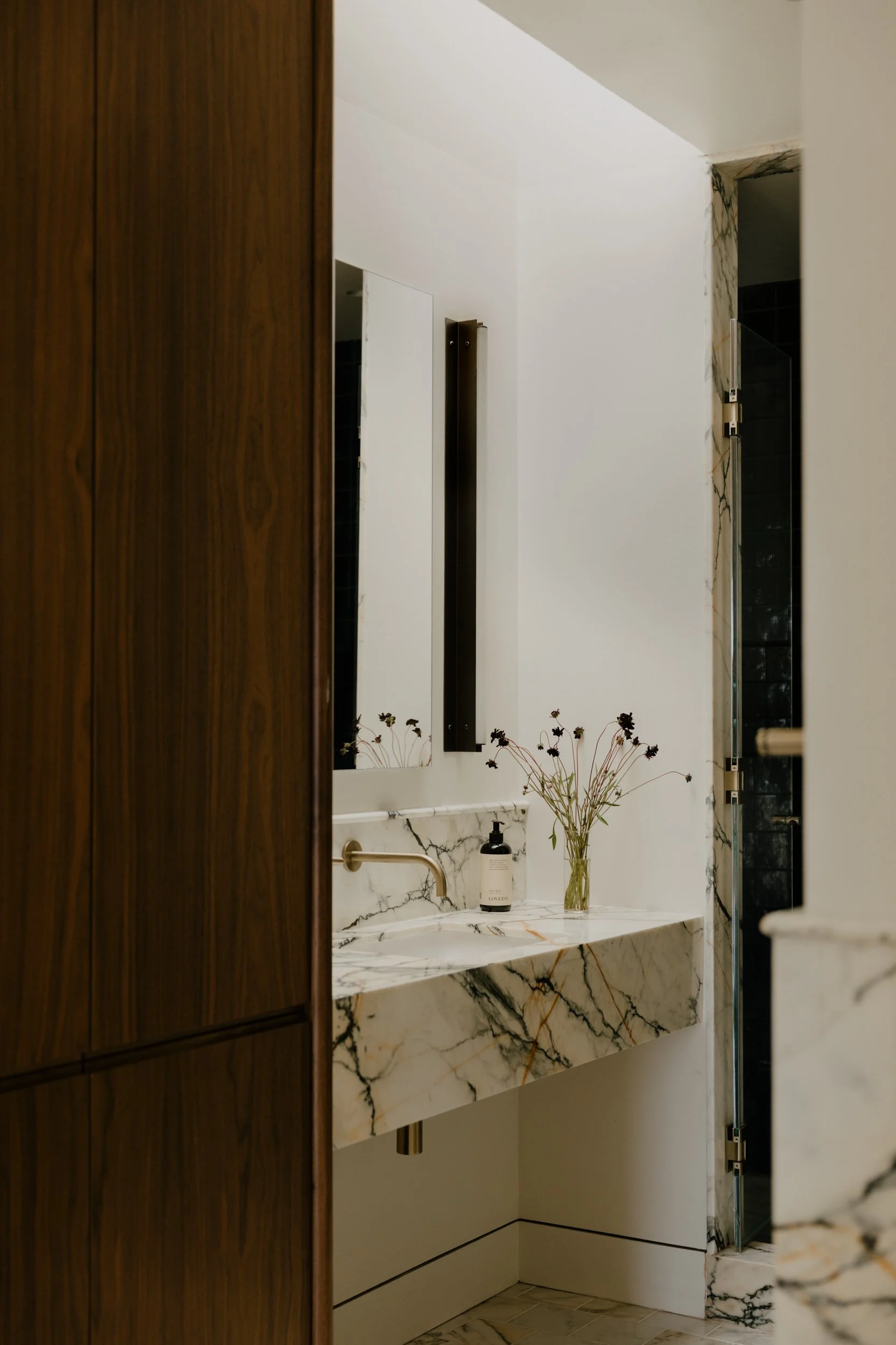
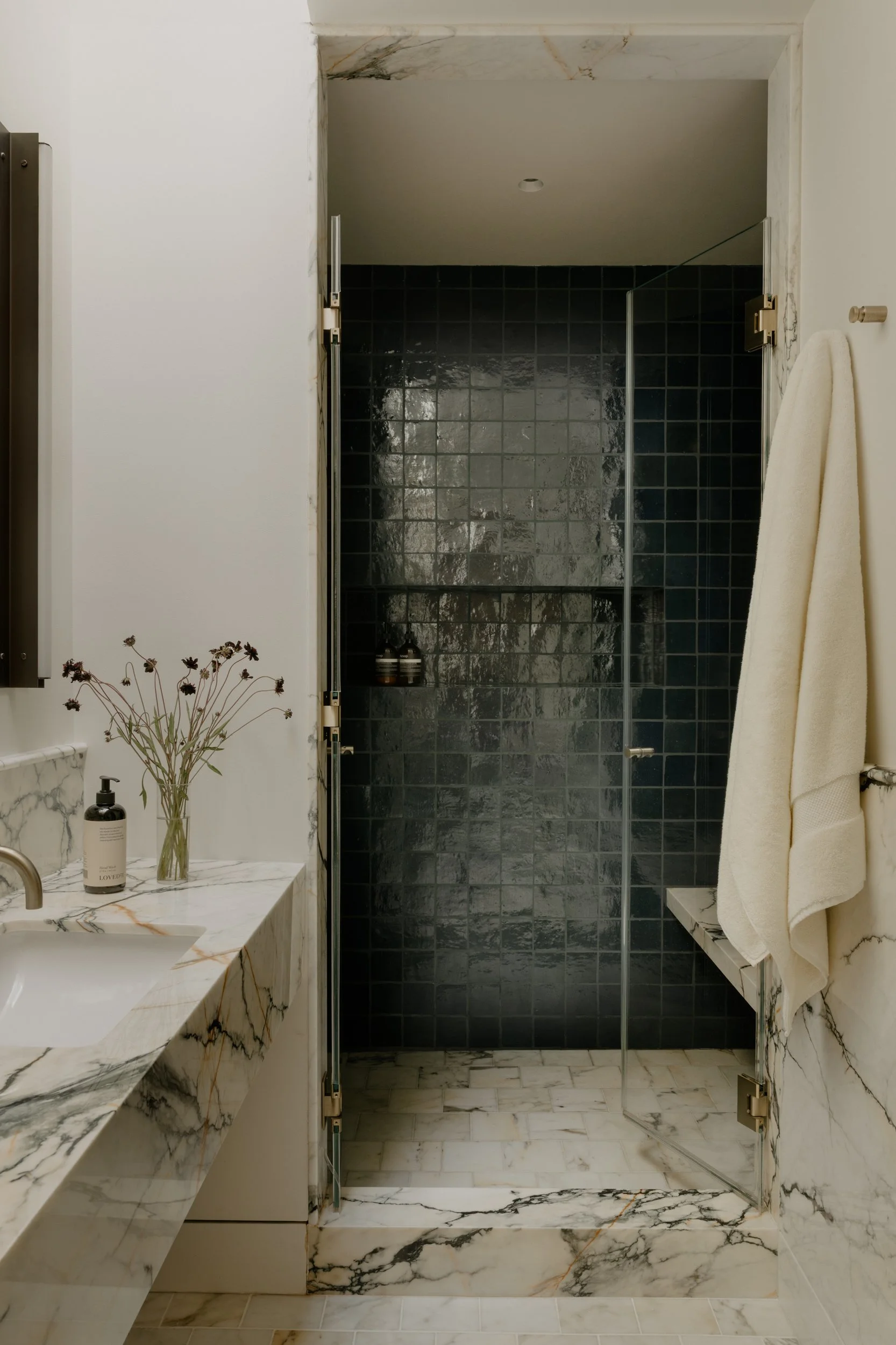
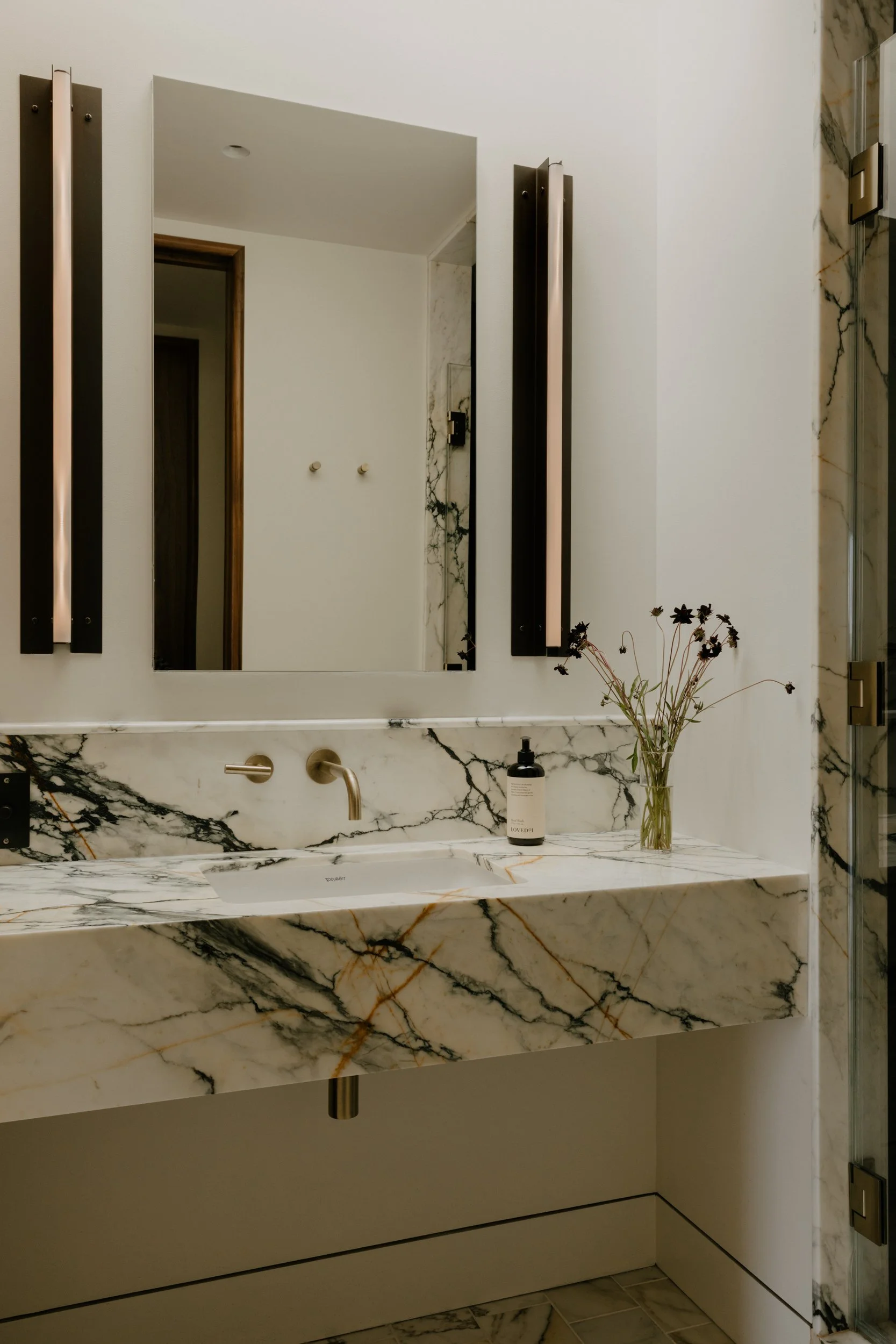
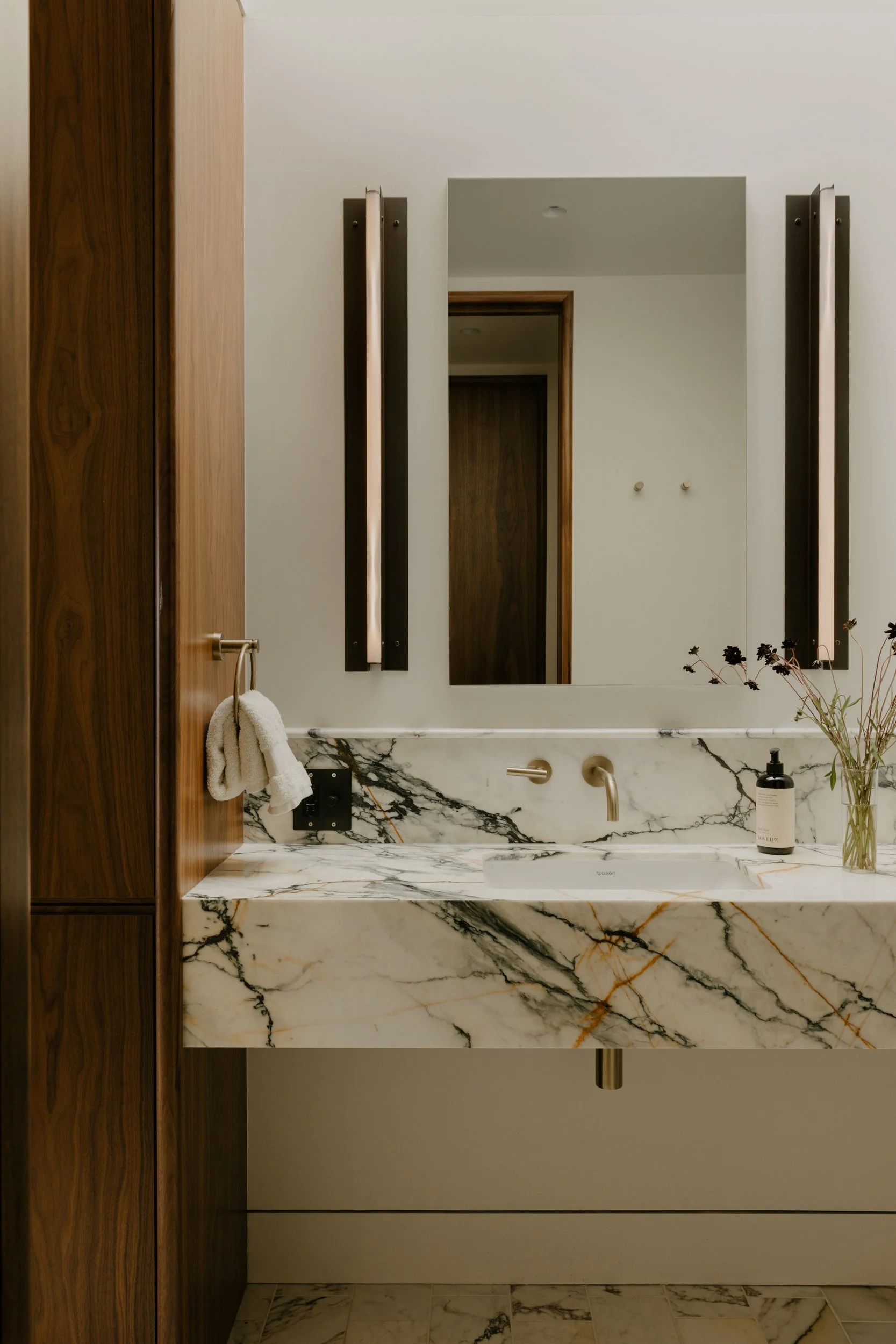
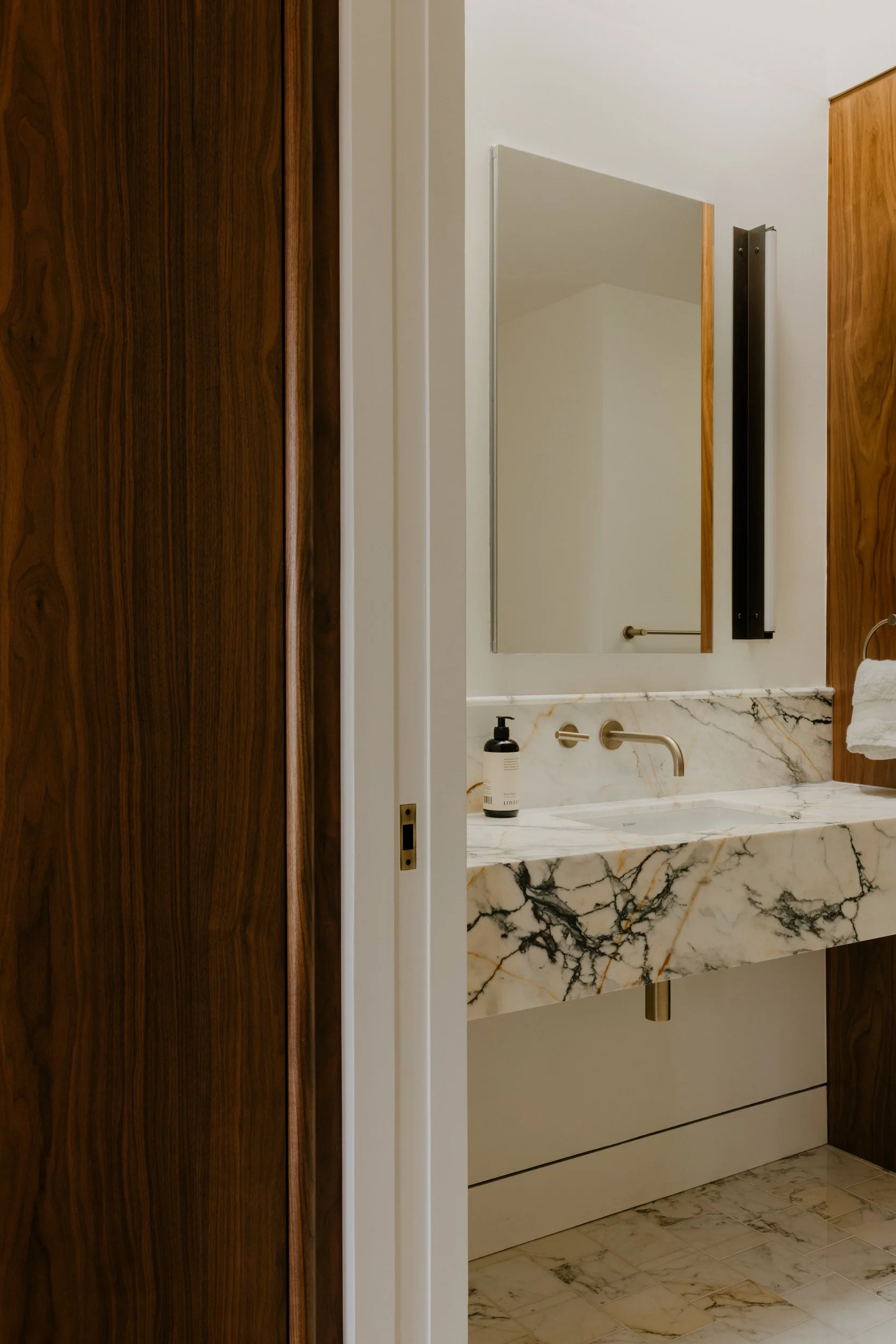
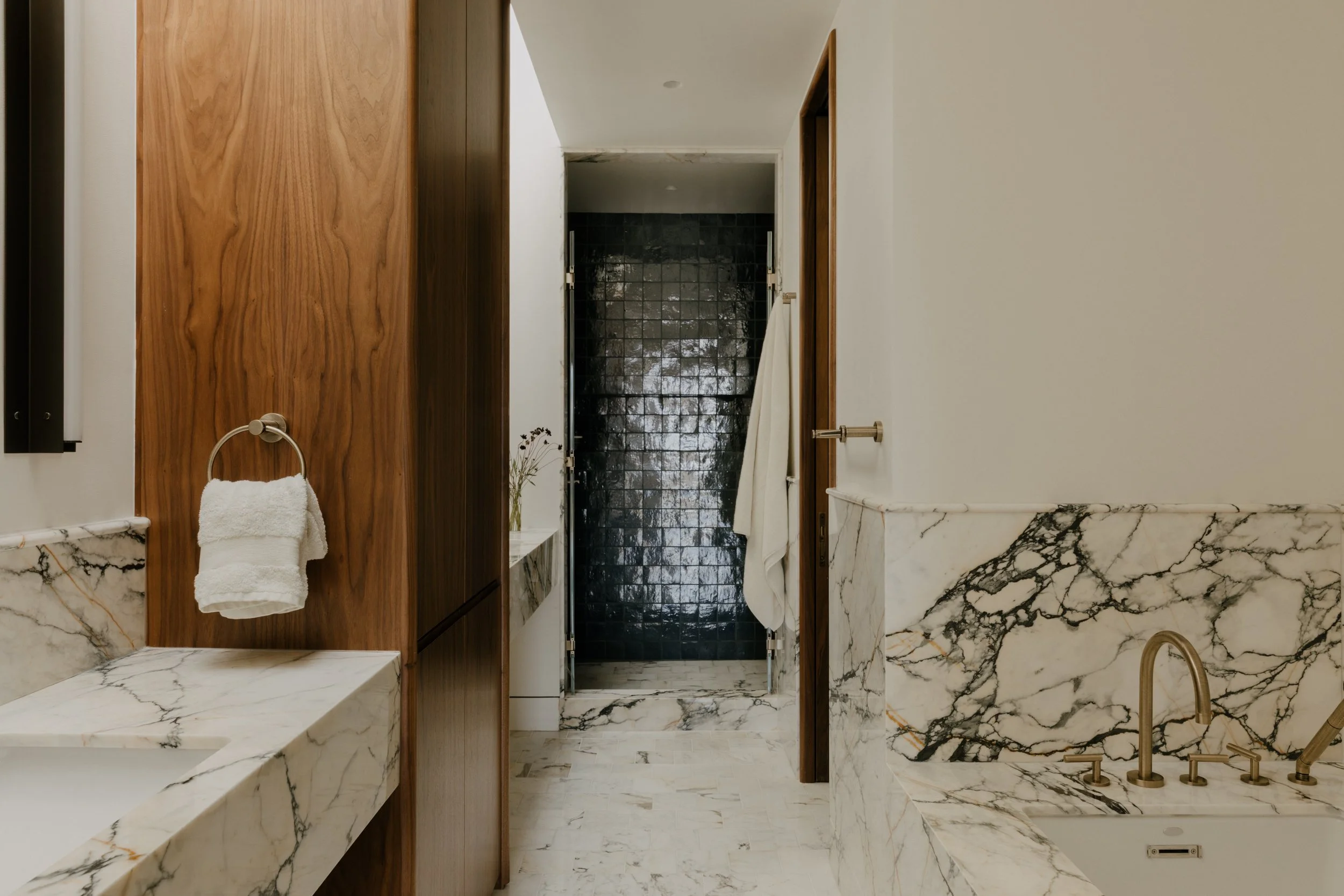
The guest suite unfolds as a quietly meditative retreat, a harmonious conversation of neutrals that soothes the senses. Cloud White walls, off-white cotton curtains, warm oak floors, and walnut doors and millwork anchor the space in warmth. Carrara marble floors and vanity top mixed with Pure White Zellige tiles from Zia reflect light softly, compensating for lack of natural light. A compact shower feels unexpectedly expansive, its clear glass partition and door extending the space, while a ceiling-mounted brass rain shower, paired with intuitively positioned controls, transforms a simple bath into a moment of quiet luxury. Custom walnut closets provide both a place to unpack and thoughtful storage for needed linens, keeping the room visually uncluttered yet fully equipped.
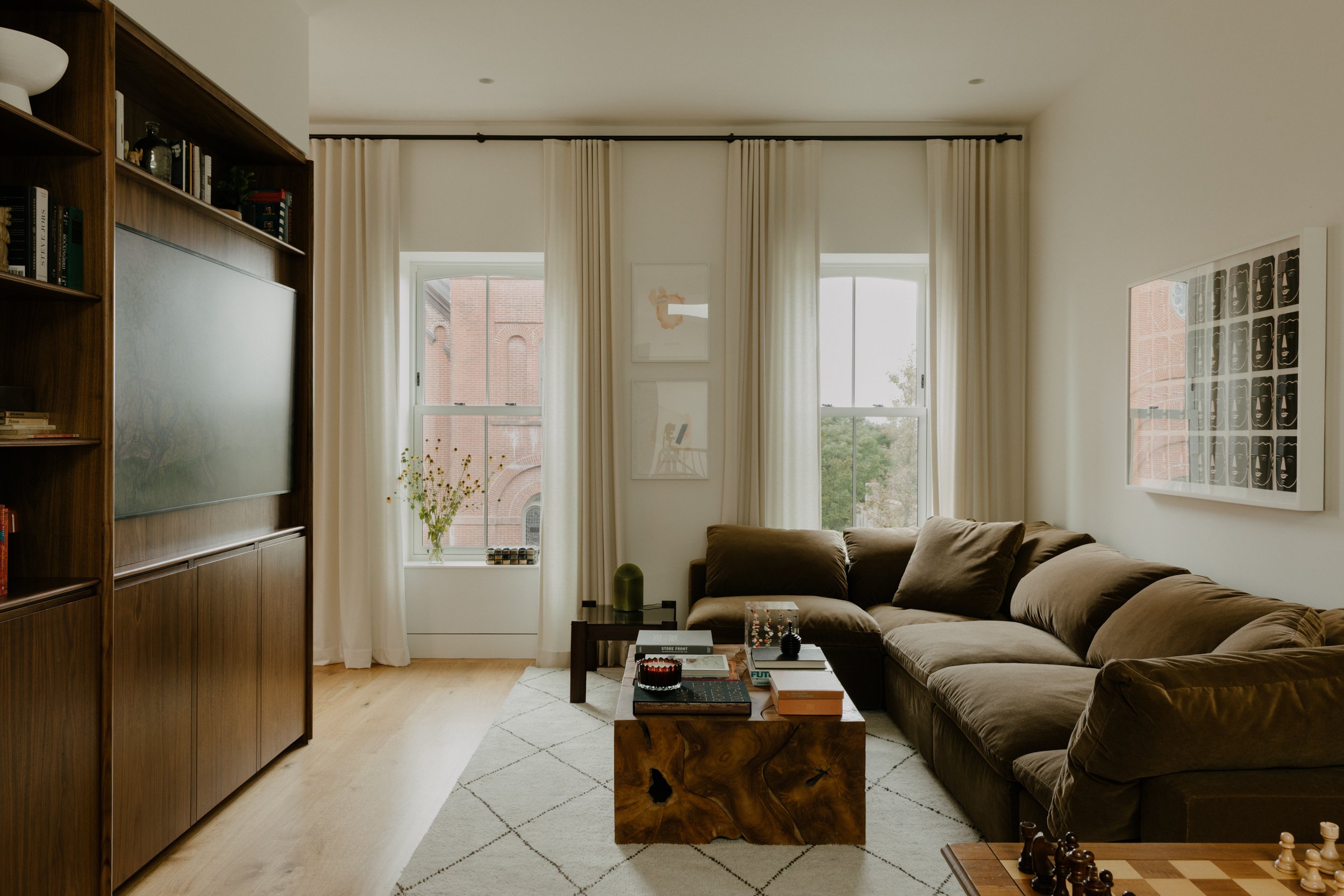
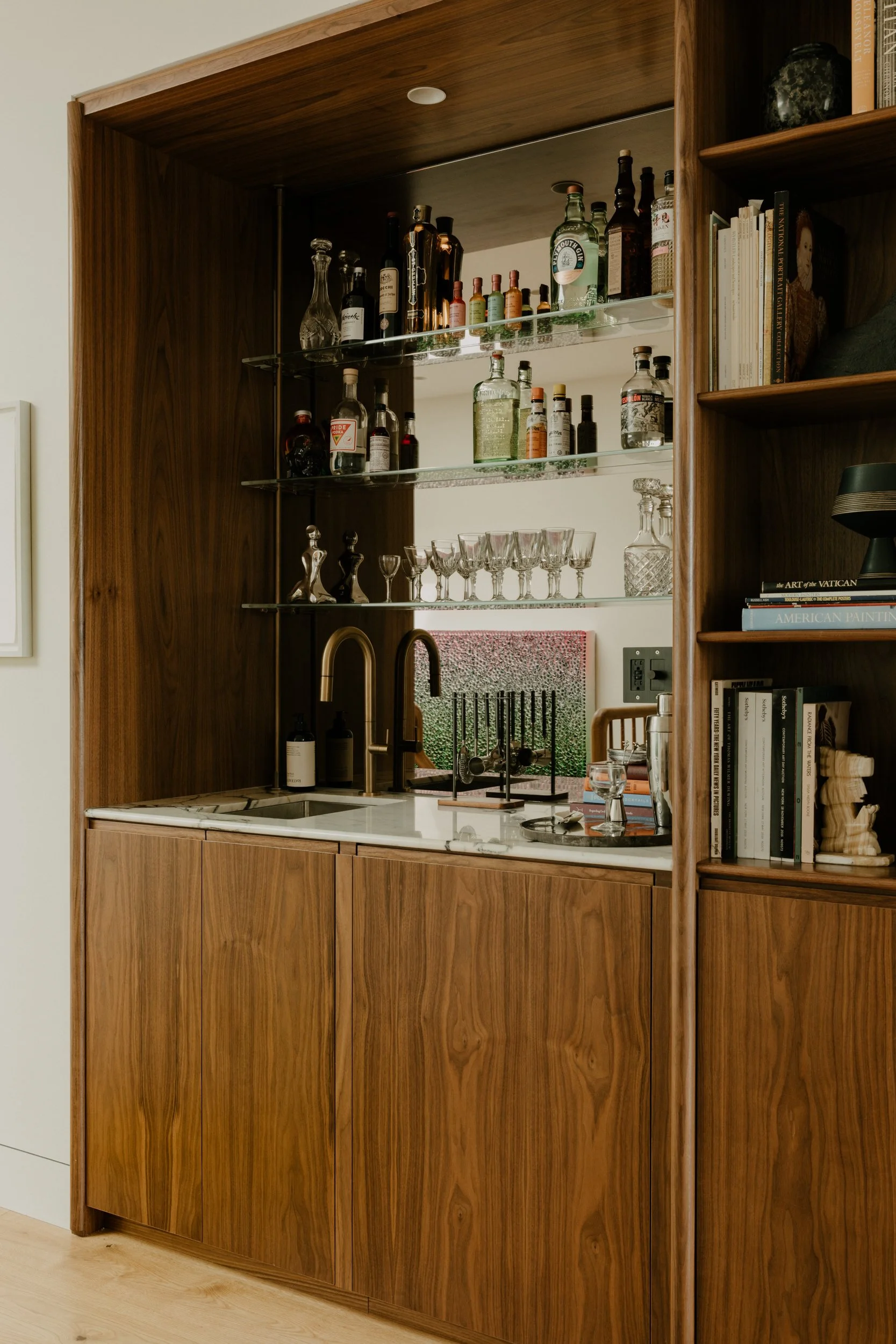
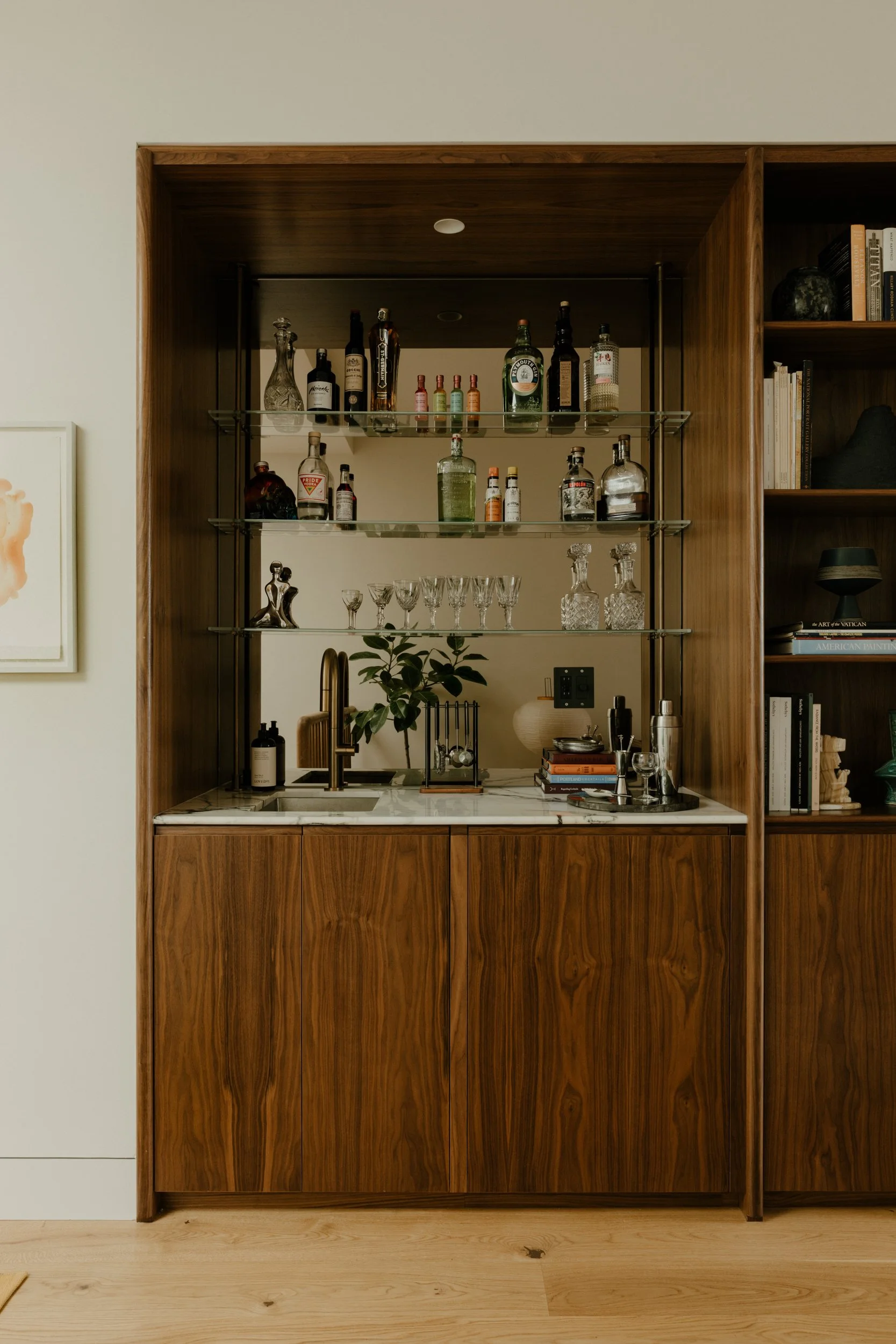
The fourth floor serves as both a retreat from the day’s rhythm and a cozy space for family moments—reading stories, cuddling, or simply relaxing. Strategically placed skylights bathe the level in natural light, illuminating a warm, inviting upper living room anchored by a large walnut shelf. At one end, a wet bar with a concealed refrigerator offers effortless convenience in a space located two flights from the kitchen, while tucked behind the cabinetry, a small home gym remains discreet yet accessible.
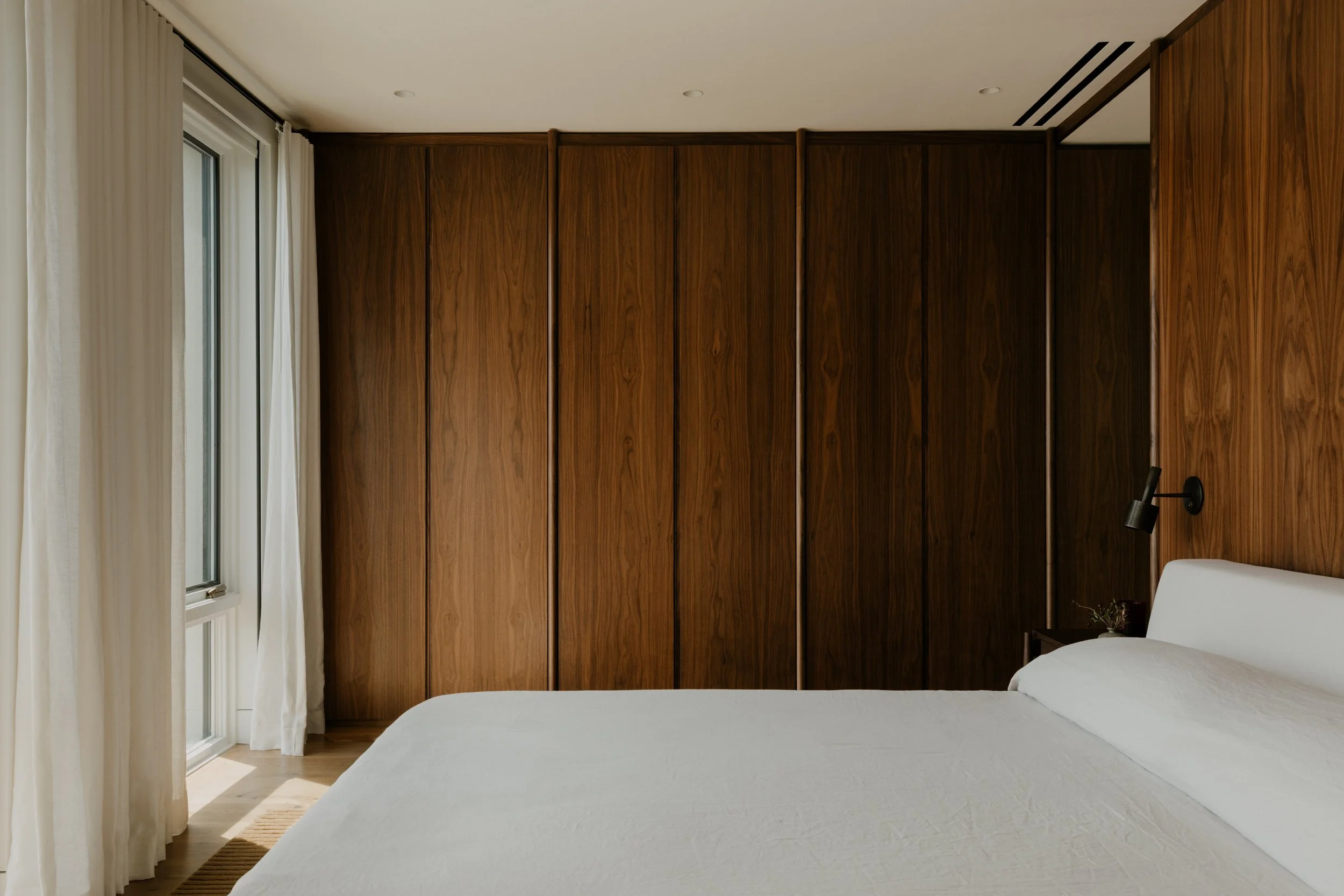
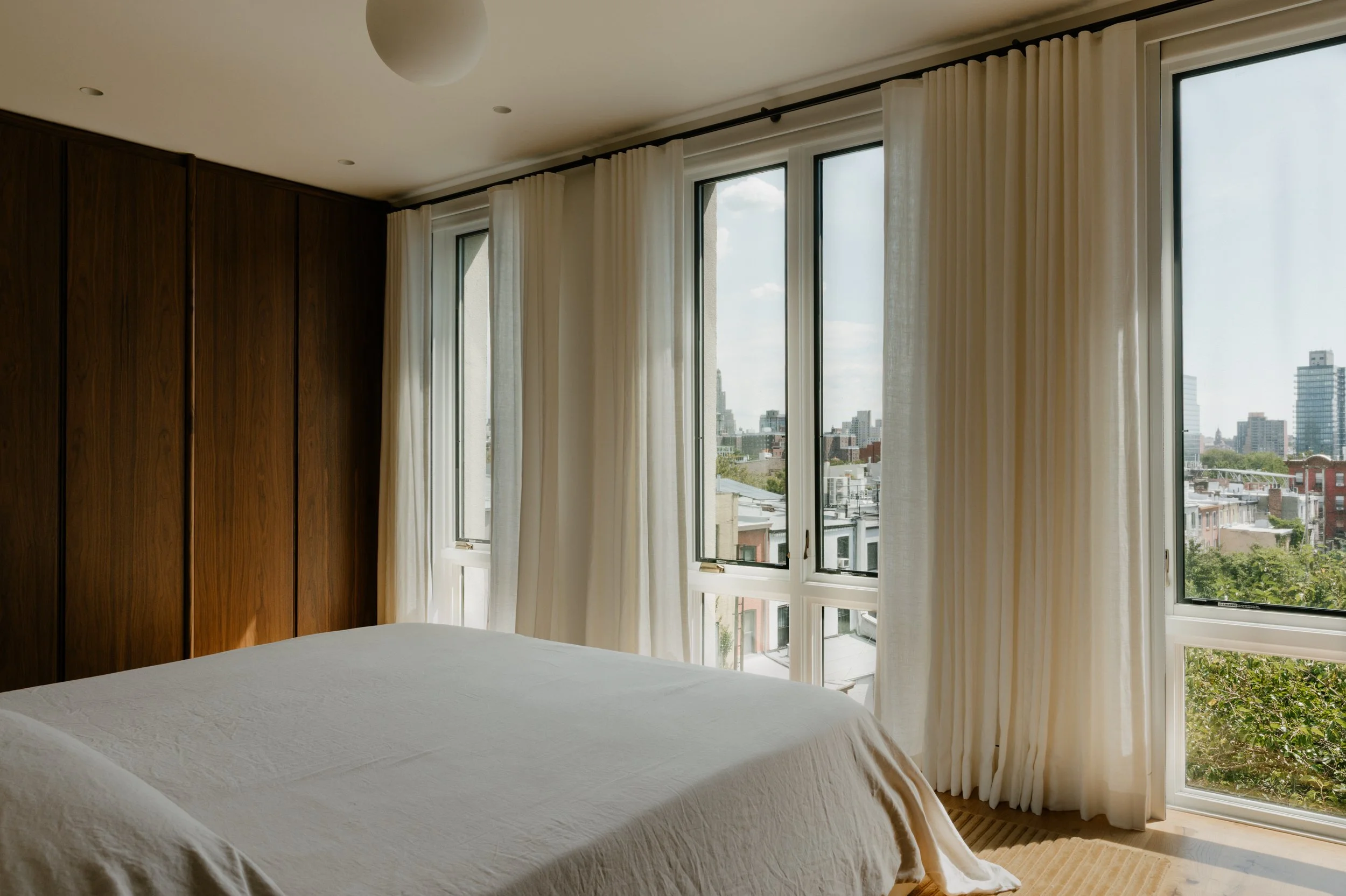
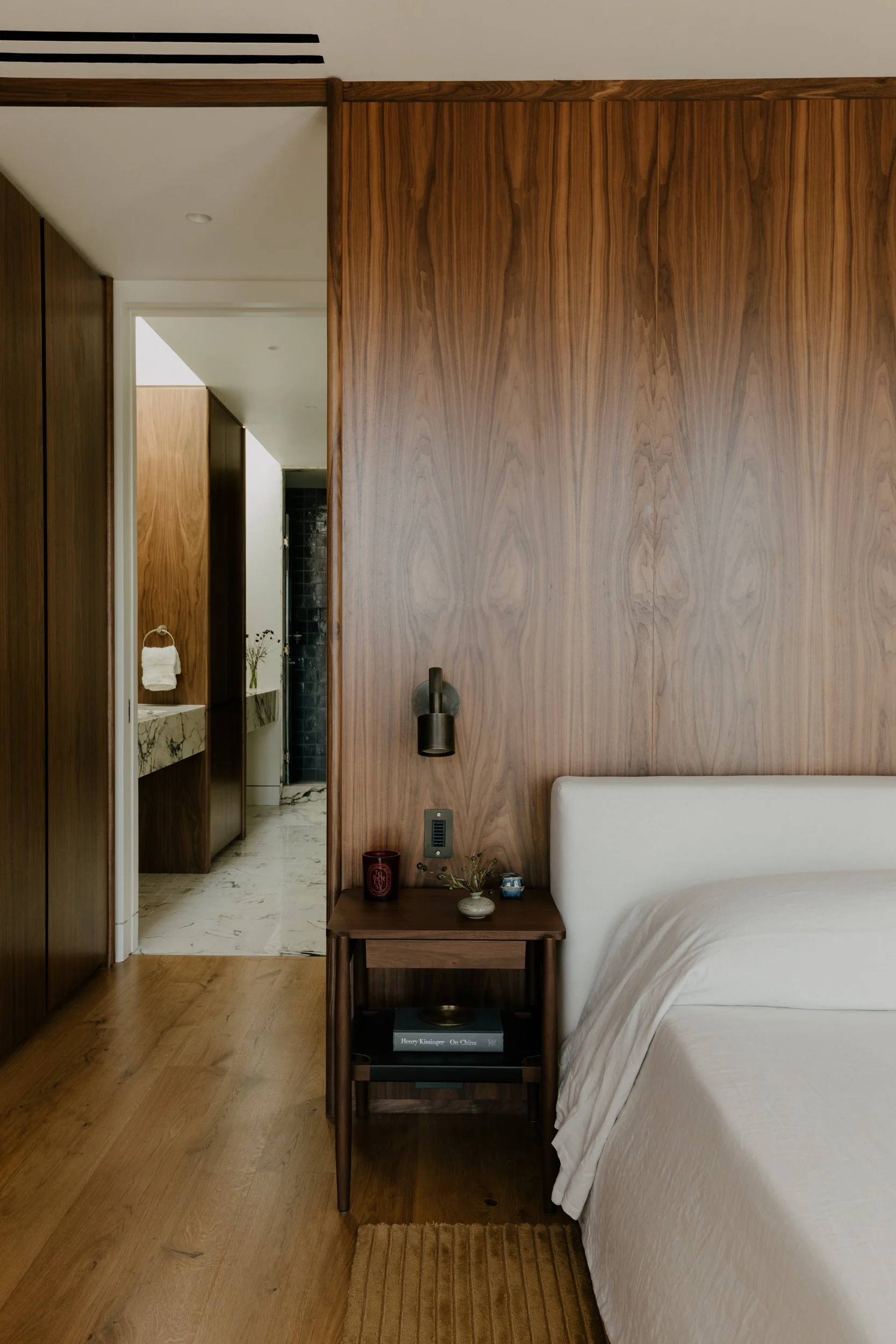
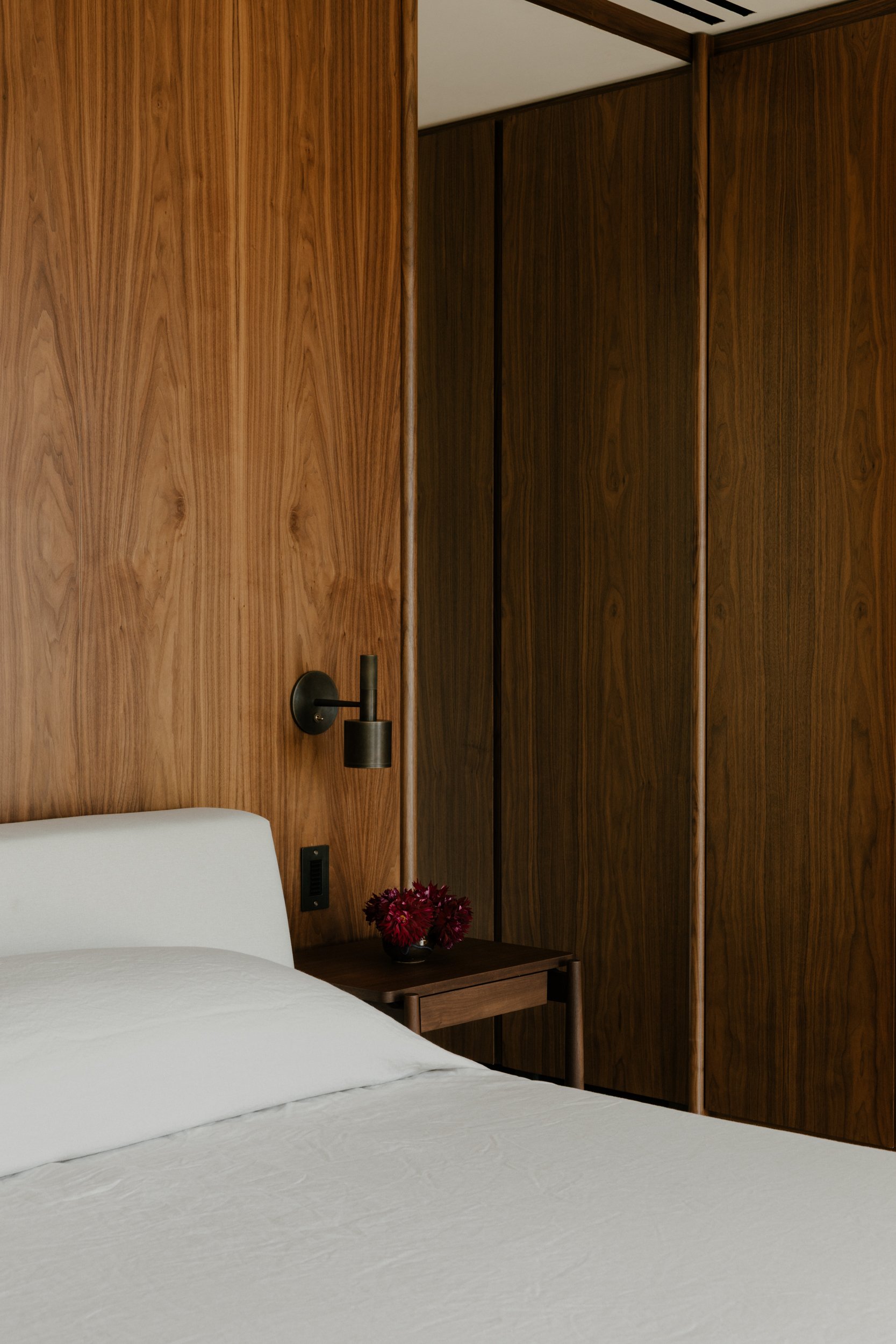
The primary bedroom is a serene, uncluttered retreat. A king bed rests against a wall of walnut, flanked by two walls of hidden closets, creating a cohesive material narrative. Expansive nearly full-height windows frame views of the quiet interior block and Downtown Brooklyn, grounding the space in its neighborhood while letting natural light animate the rich walnut and calm, neutral palette.
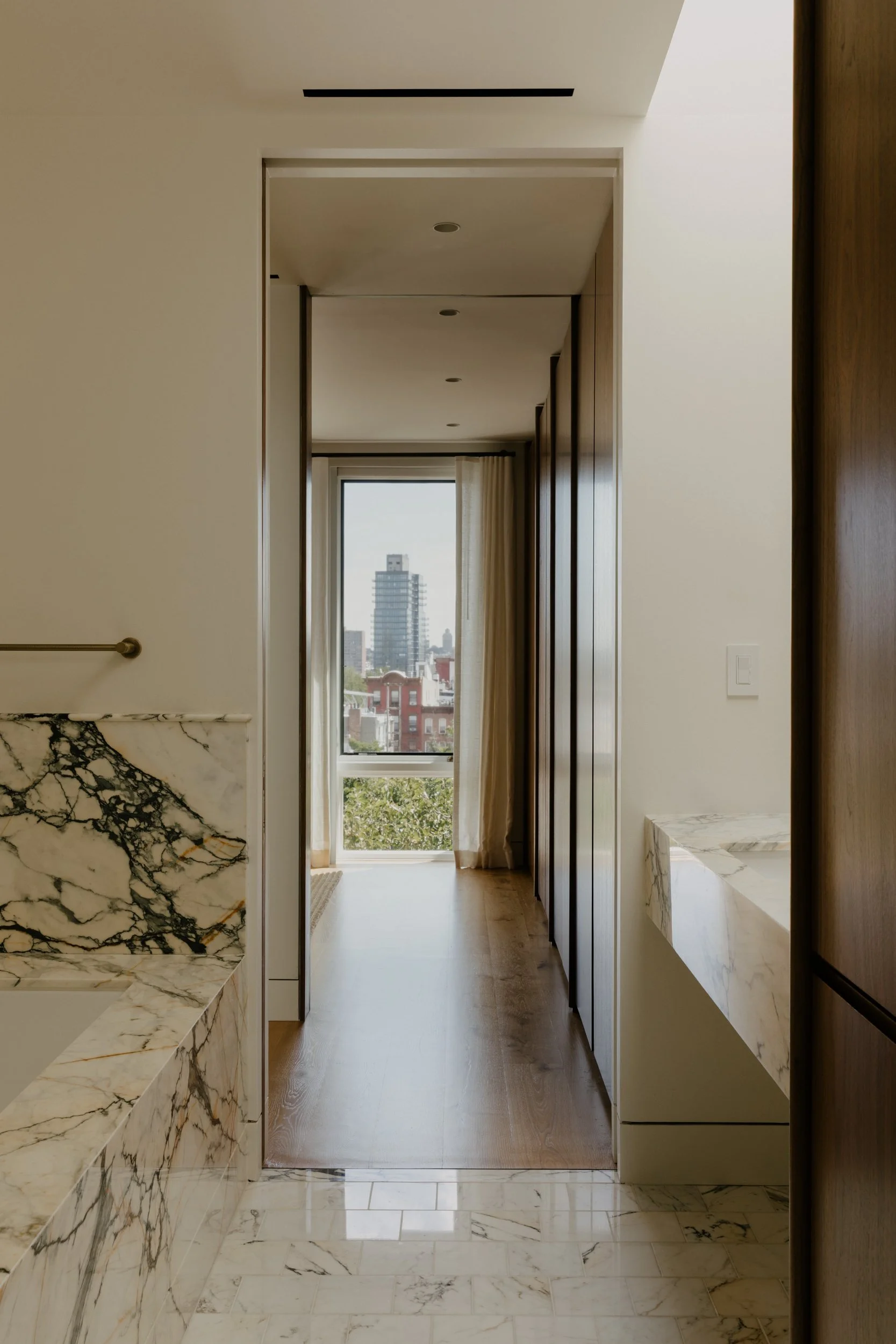
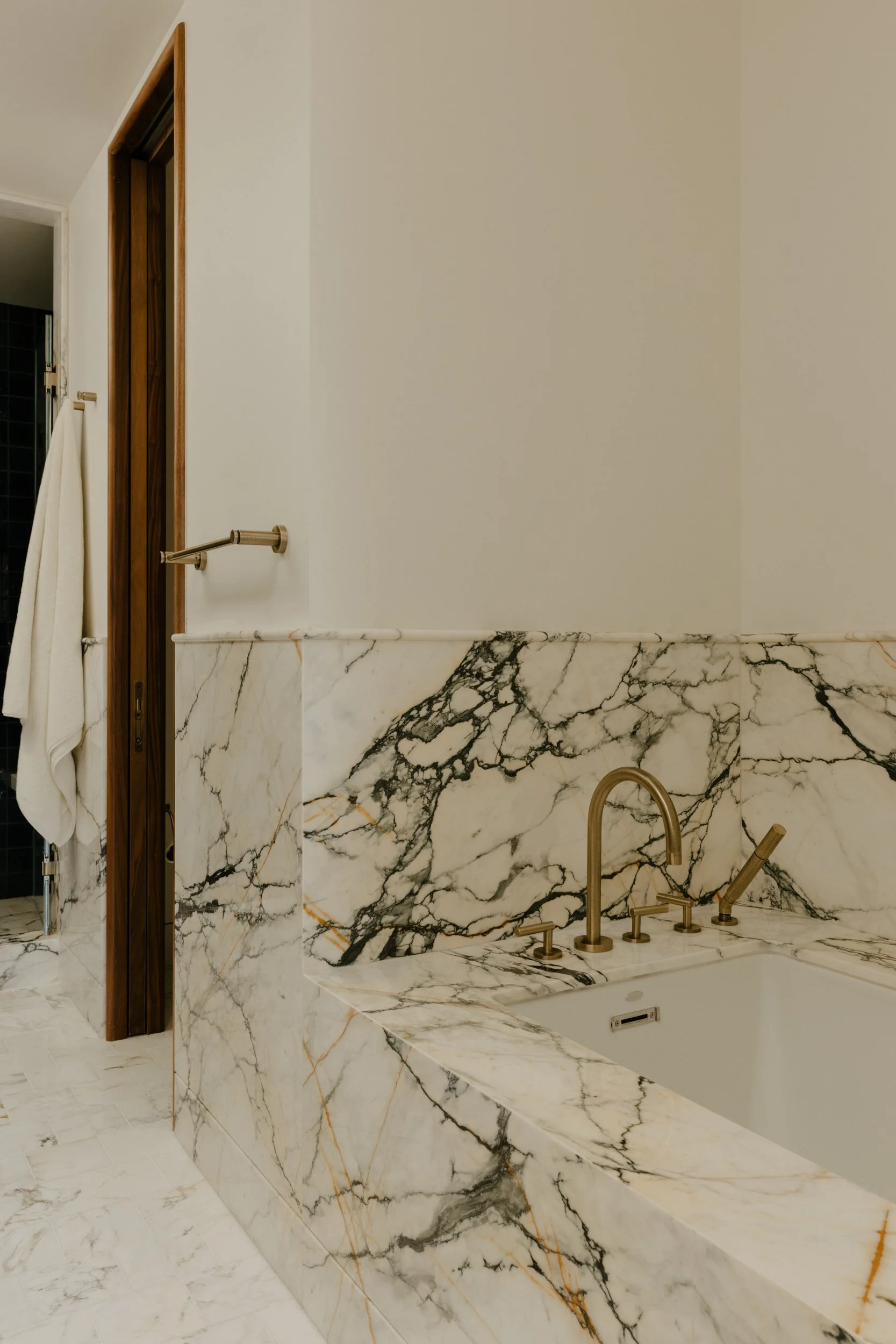
The marble-clad primary bathroom is accessed from both the bedroom and hall. Heated floors keep winter chill at bay, while skylights above the vanities flood the space with light. The marble is punctuated by a roomy shower clad in rich Night Blue Zellige tiles from Zia tile. A subtle ¼-inch reveal above the flush baseboards—repeated throughout the home—is mirrored in the marble slabs, tying the detailing together with quiet precision.
EXISTING CONDITIONS
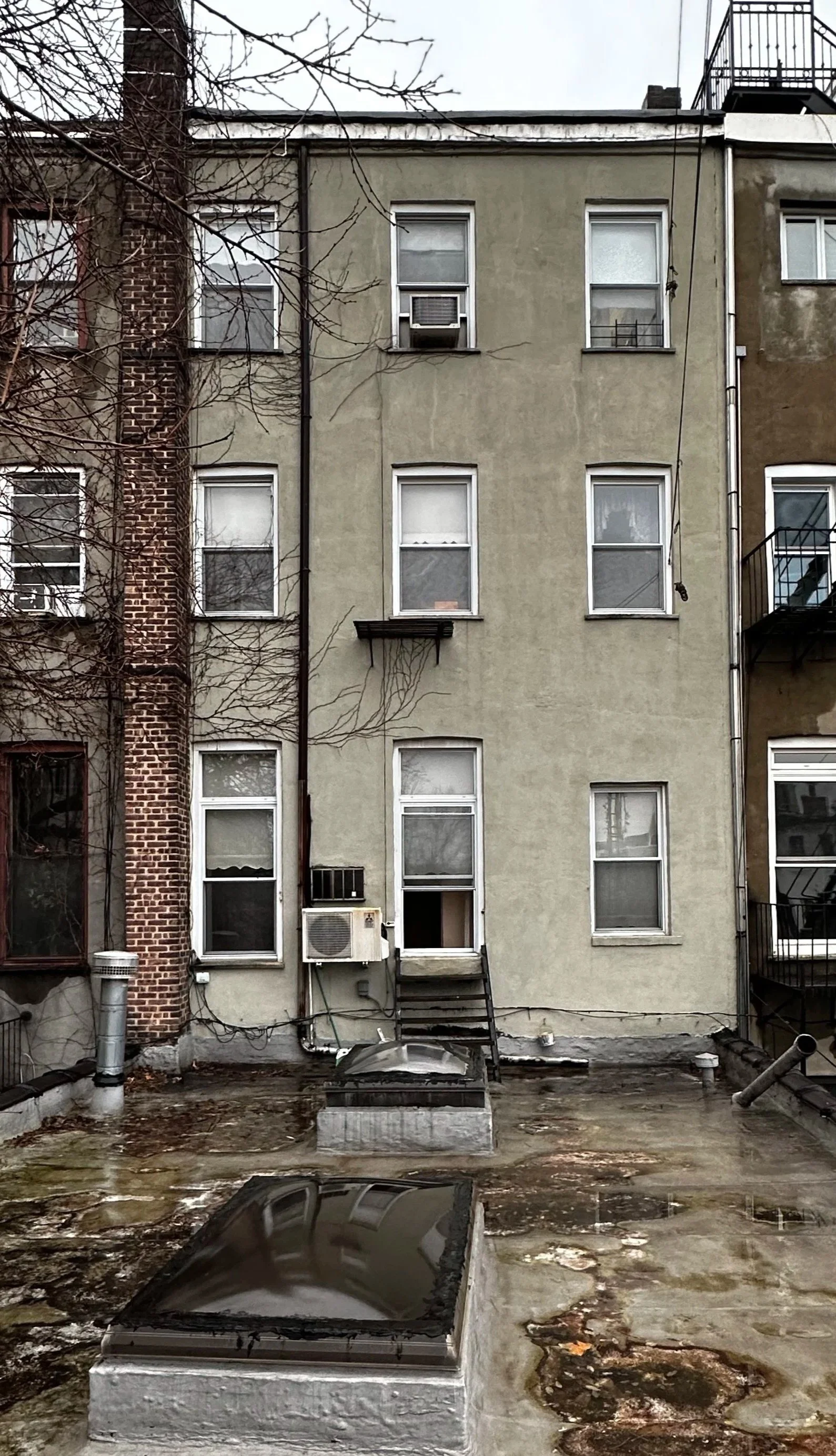
As with many of our projects, this one began with a space ready for a second life. The existing building, shaped by more than a century of occupation, bore the marks of time in both its character and its structure. Working from the inside out, we undertook a comprehensive reimagining—stabilizing a structure that had been stretched to its limits and carefully reshaping the space to support contemporary living. The aim was not simply restoration, but longevity: a building conceived to endure for another 150 years.
The images that follow trace this evolution, pairing glimpses of the original interiors with corresponding views of the newly realized spaces.
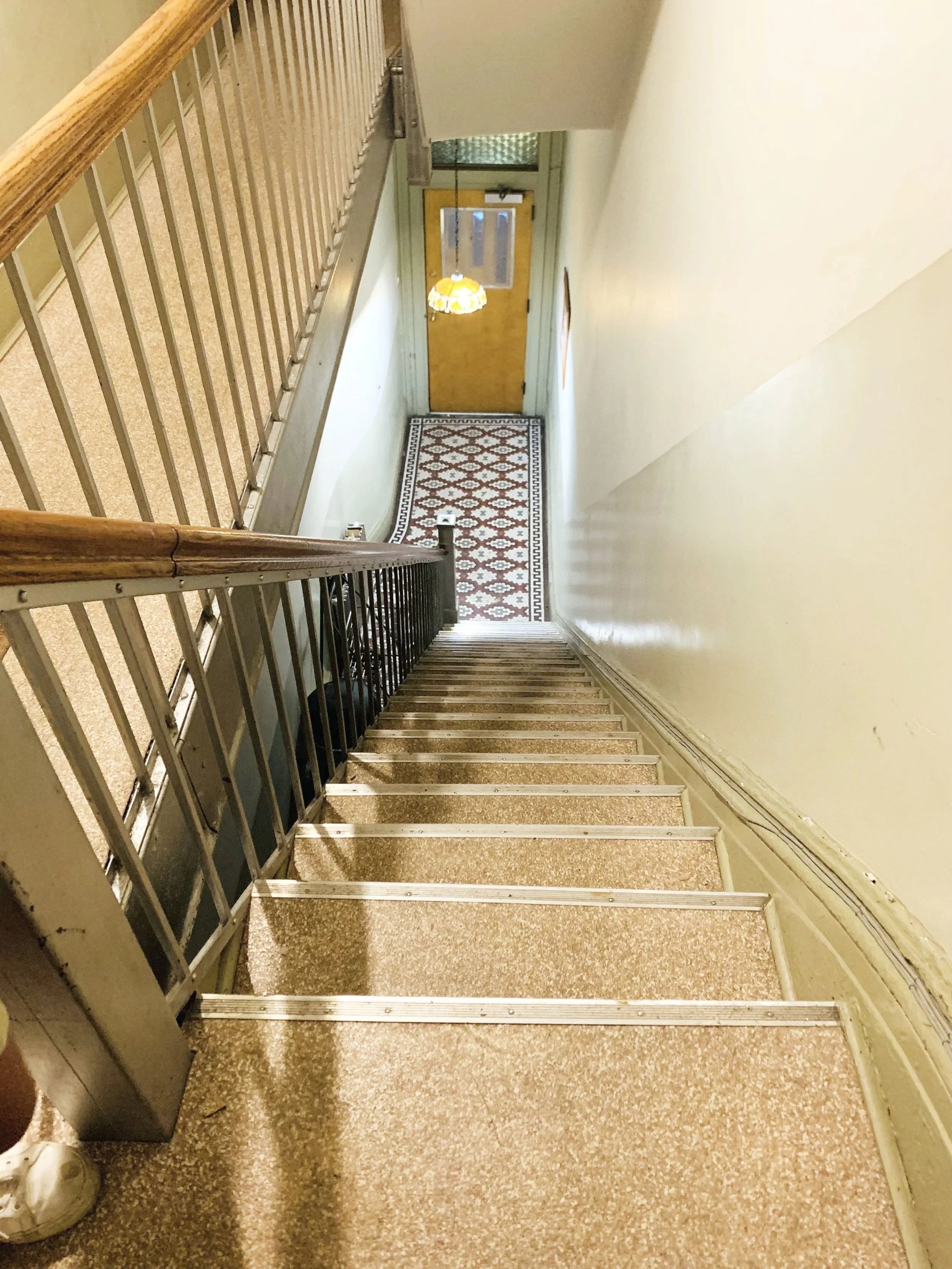
The first-floor entry hall told a story of two distinct eras. Its origins in the mid-1800s, when the building was constructed as a three-family residence, were evident in the finely detailed woodwork and an elegant mosaic tile floor. Later interventions from the mid-20th century introduced a more utilitarian update, including new front doors and linoleum flooring, creating a space suspended between two pasts.
The redesign brought significant change while creating a hint of that history. The new entry hall preserves the language of the original mosaic flooring, reinterpreted in a softer, more nuanced palette that aligns with the contemporary sensibility of the home. And antique doors imagine what once was there.
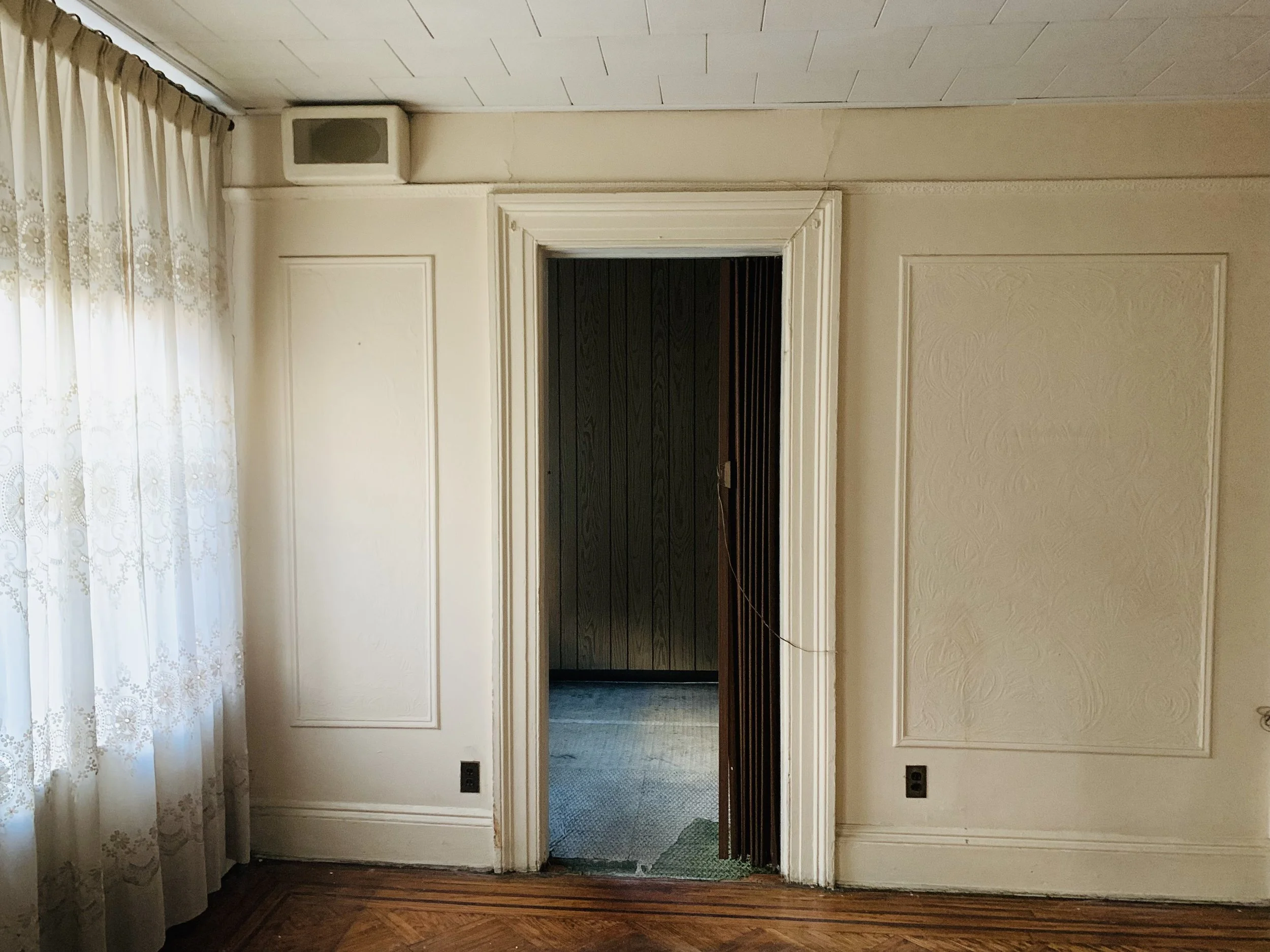
What likely began life as a formal living room was reimagined as the larger of the home’s two offices. Early discussions explored opportunities to preserve elements of the room’s original character, but the extent of the required structural intervention ultimately made that approach unfeasible. The transformation instead allowed for a clean slate—one that prioritizes function and clarity while supporting the evolving needs of contemporary work and living.
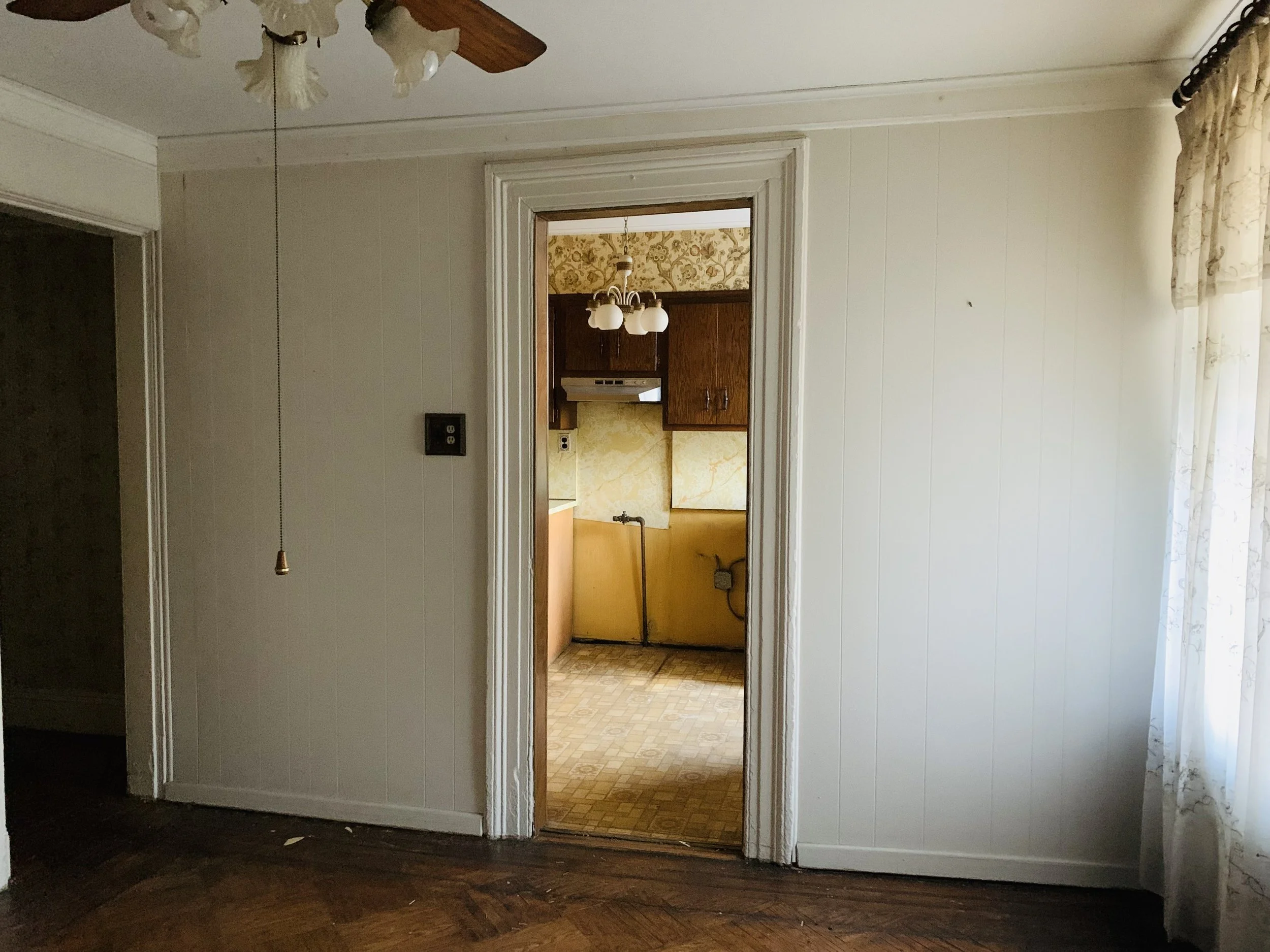
The former midcentury kitchen on the second floor was transformed into a gracious living area. In a subtle but telling shift of function, the spot once occupied by the stove is now anchored by a fireplace—an element that reorients the room from utility to gathering, and from work to repose.
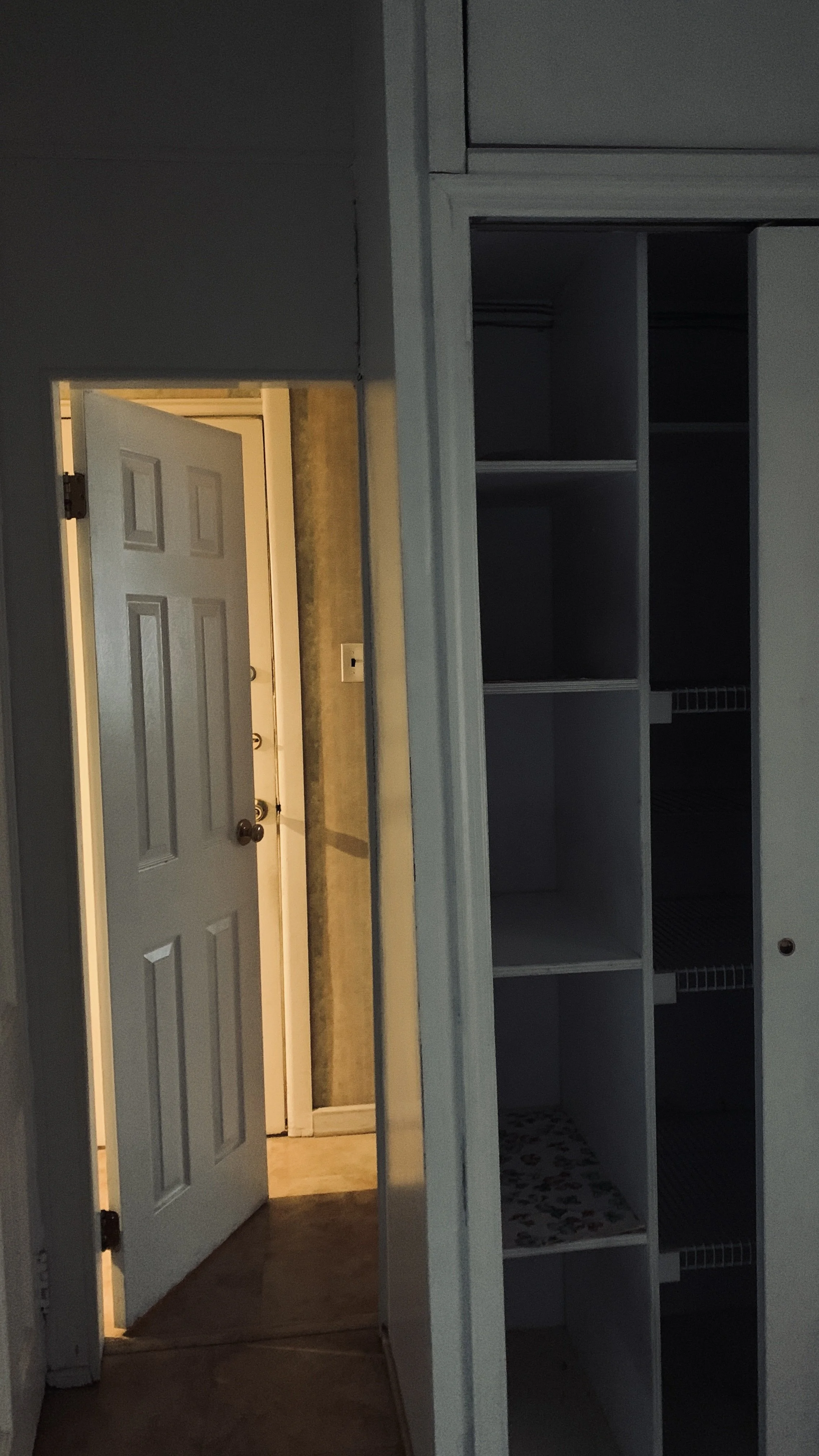
A labyrinth of walls and doors once fractured the three apartments, limiting light and interrupting views. By removing those barriers, the plan was opened and unified, allowing the spaces to flow together as a cohesive family home.
The original skylight above the stair did not survive the renovation, but its replacement is both larger and more generous. The new opening floods the third and fourth floors with natural light, drawing it deep into the home and animating the vertical journey between levels.
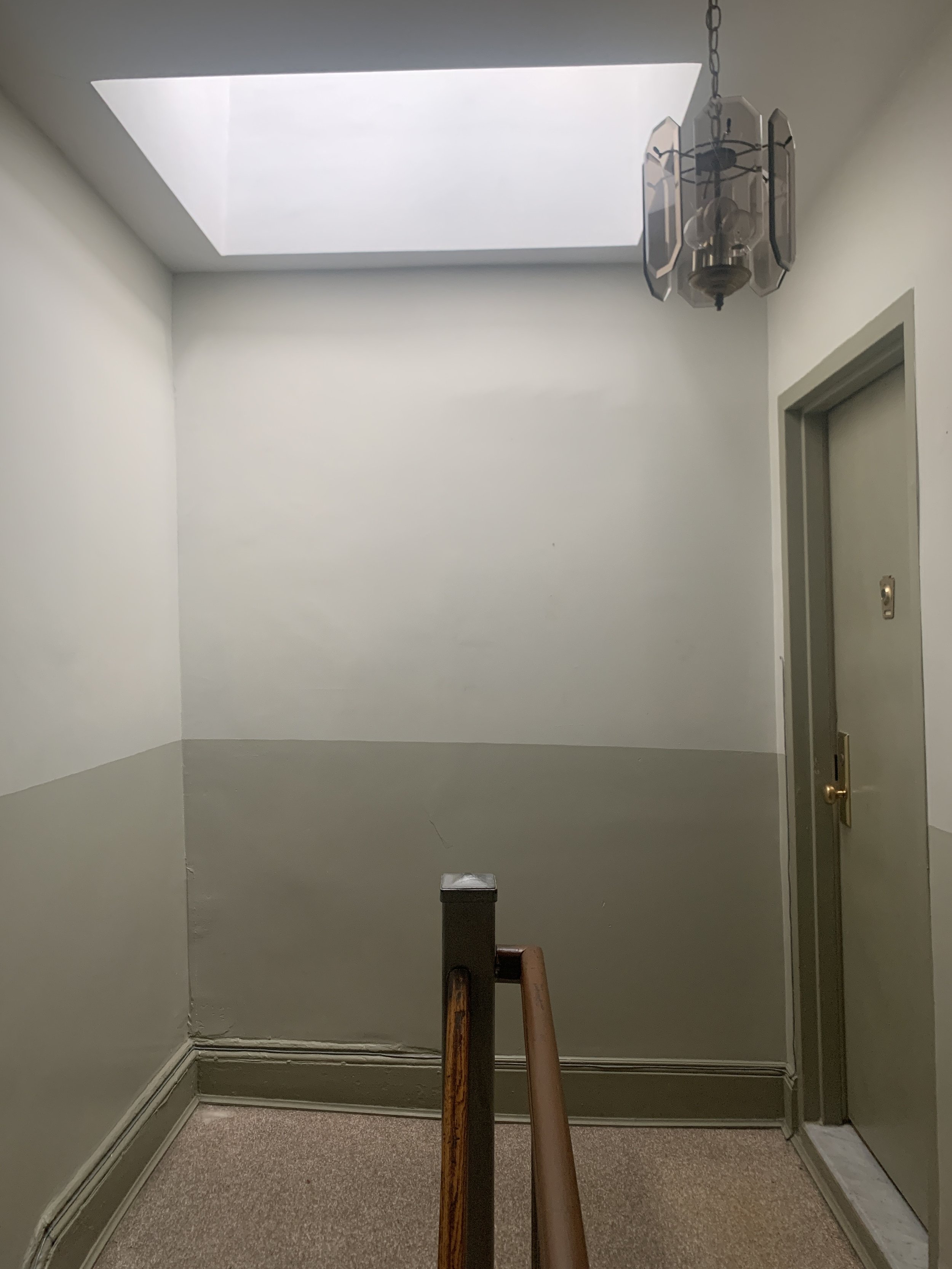
The top floor, the last apartment to remain in use, had been renovated in the 1980s—a transformation that erased much of the original detailing while leaving the layout largely intact.
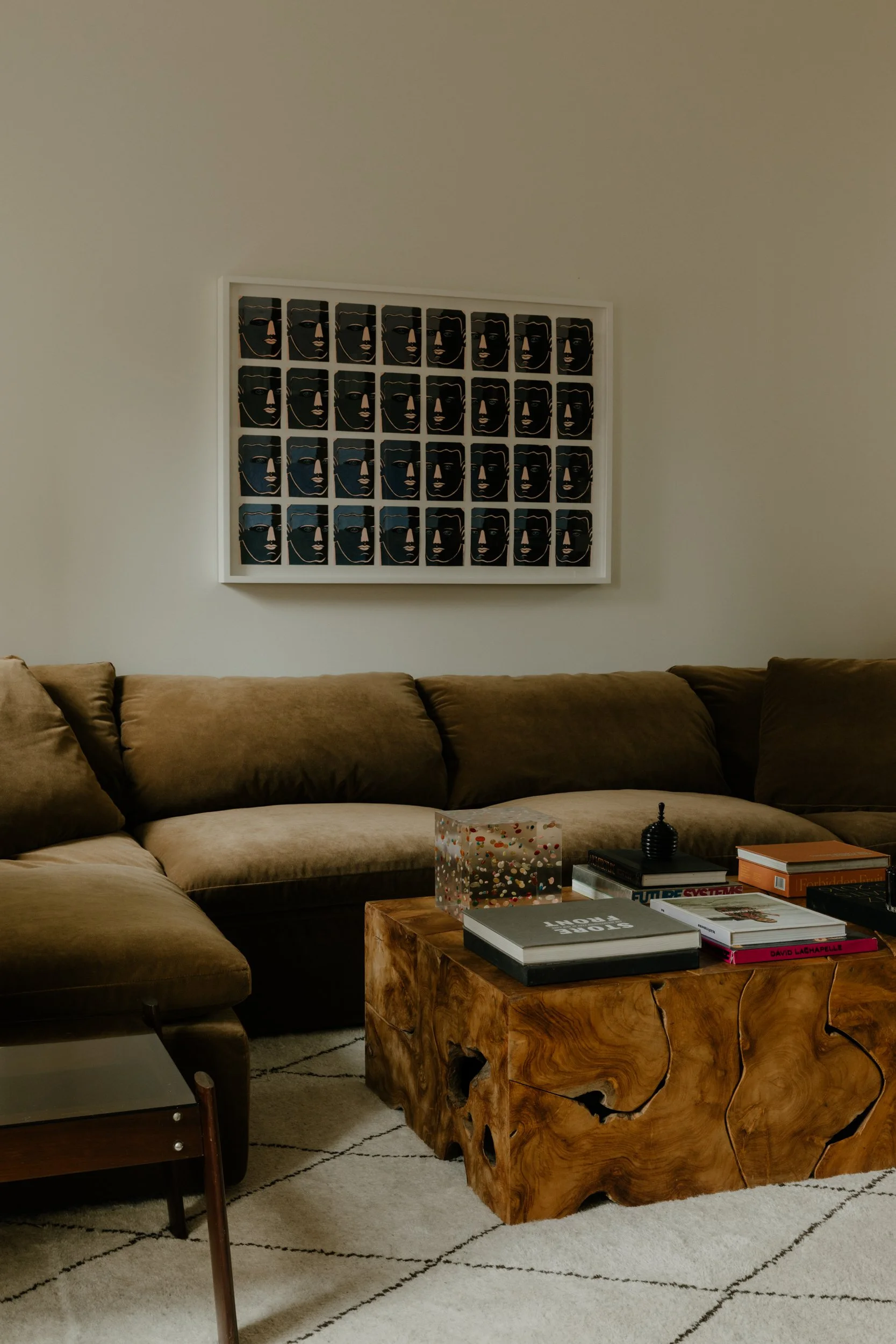
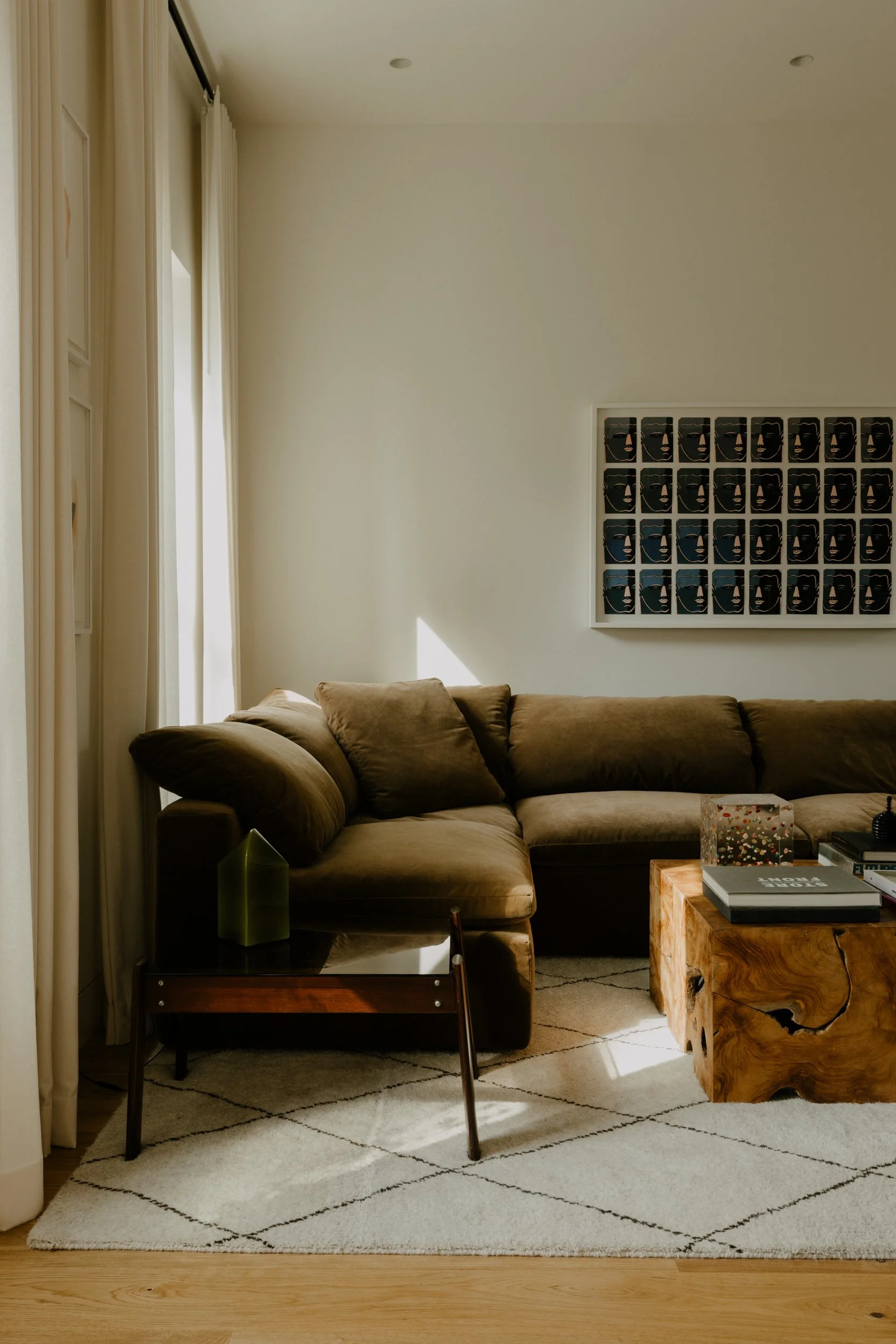
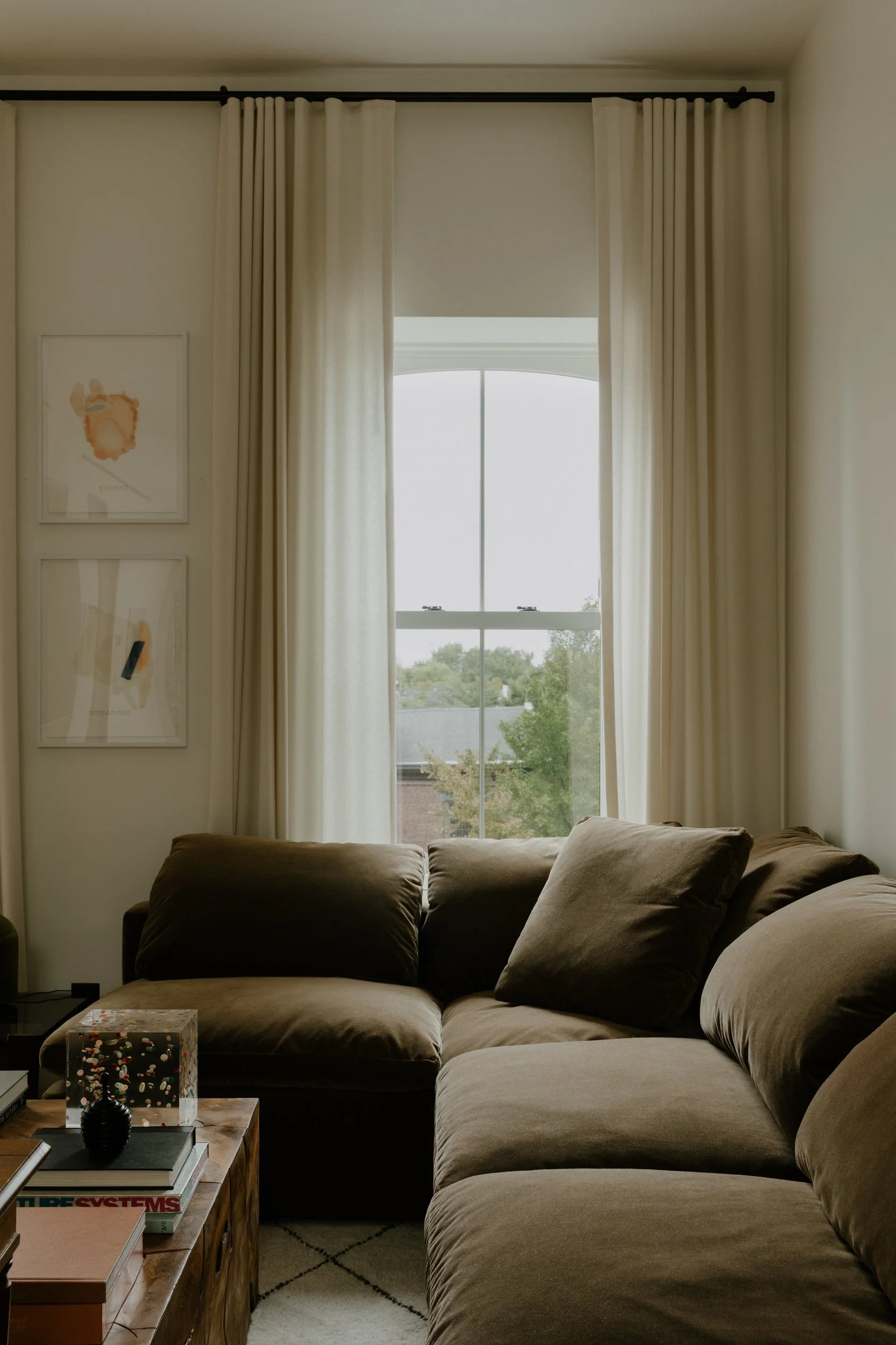
In the redesign, the entire level was reimagined as a private retreat for the family. An expansive upper living room is anchored by a generous Cloud Sofa, creating an inviting place to curl up with the children for movie nights or settle in with a book, removed from the rhythms of the floors below.
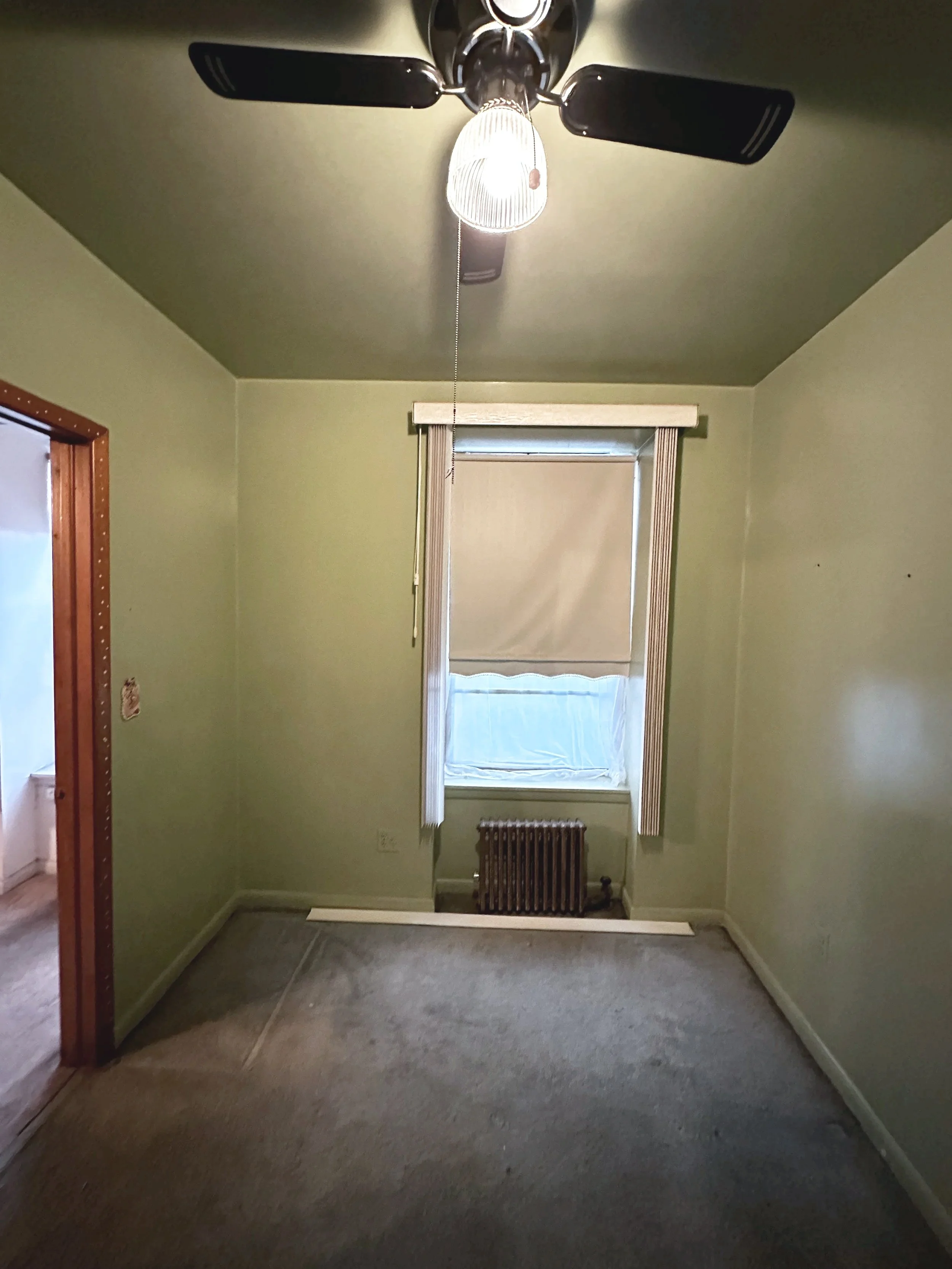
The rear façade and the roof of the bakery kitchen below had long been overlooked, treated as purely utilitarian space. In redesigning the home, our studios brought a sense of elegance and comfort to both the façade and the rear terrace. Expanded windows and doors establish a fluid connection between indoors and out, extending that relationship across all three floors of the residence.